

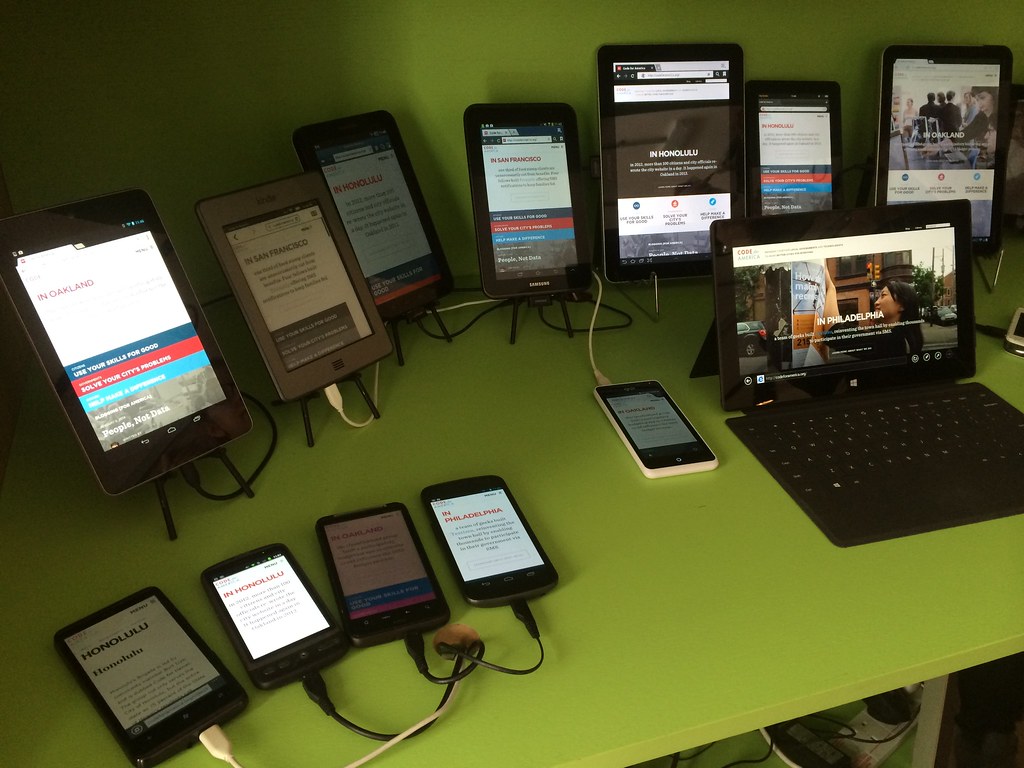
Editor’s note: This article was first published in December 2013; its picture of the app market, including smartphones overtaking the PC, glasses as a future device and Apple keeping 30% of store sales, reflects conditions at the time. Apple’s commission rules have changed since.
Isidoro Pérez, coordinator of the technology area at the Universidad Internacional de La Rioja (UNIR), shares his view on the growing mobile app sector and the business opportunities it offers us. According to Isidoro, app stores are going through the same boom that websites went through 15 years ago.
Can you get rich with your mobile apps?
If you have an idea and develop a marketing strategy, you can at least make a living from them. Anything can be tried in the mobile sector. Building apps is a profitable business: it has become an established business in a global economy of scale, with a new ecosystem of tablets, TVs, glasses (in the future)… and the phone as the medium of media. We use it to communicate, socialise, work, read the newspapers, watch videos or listen to the radio.
With this message and a few “secrets from the kitchen”, he encouraged the audience at an open class to create, develop and nurture mobile apps.
The business models are very varied and must be adapted to the market, sector or profile the app is aimed at. In Isidoro Pérez’s view, success requires social, local and mobile to come together. The range of options runs from completely free to a paid licence per user.
(Read: Six impressive technologies of 2013)
The UNIR lecturer outlined the sales models for software and content:
Free: completely free; with advertising, sponsorship or cross-selling; ad-free (waiting for a business model); with links, leads or sales; free for a while (try it and you’ll be convinced); only certain features or content free; and free depending on your profile.
Paid: licence per user (with installation); licence (in the cloud); subscription; and pay per use (cloud).
For Isidoro Pérez, mobile app stores are booming just as websites did 15 years ago. Now there is a big business opportunity in sectors that don’t have a single mobile app.
“It’s true that app stores are limited, there isn’t much room for search, but I’m sure there will be new, improved versions. It’s important for your app to be among the first ones, because mobile users are very fickle,” he said.
Make users fall in love
Without forgetting the quality of the content, ranking on websites, “phone to phone” (word of mouth), the unavoidable online marketing campaign (“knowing how to sell”), advertising on social networks, the geolocation component and improving content, Isidoro Pérez pointed to three key points when creating and growing a mobile app:
- If you are alone in a specific sector, you score twice.
- You need a name, a logo and a description “that make users fall in love”.
- Encourage your app’s users to rate it in the app stores: “Don’t be afraid of feedback on social networks; you have to boost the comments.”
The business options multiply. In the open class, the UNIR expert noted that there are very worthwhile apps you have no choice but to pay for after using them free for a month, and others that sell features inside the app itself. On top of that, entrepreneurs have to bear in mind that Apple, for example, “keeps 30% of everything that goes through its network”, which is why some try to go “independent”.
(Read: 6 business ideas with no investment for young entrepreneurs)
However, in that diversification of the business, an idea Pérez repeated throughout the open class, you can also make money without advertising but with lots of users, as Instagram did, or build expensive apps with few users aimed at professional sectors or a VIP audience (for example, a dentist doesn’t mind spending 300 euros on a mobile app built for their profession, because they’ll recoup that investment with a single patient visit to their clinic).
The business possibilities of the smartphone have already overtaken those of the PC; in fact, mobile apps have contributed to spectacular business growth. As Pérez, CEO of Seeketing, pointed out, the business “that has grown fastest in the history of humanity” is Groupon, the leader in discount coupons.
Isidoro Pérez’s open class closed the series of workshops held in December by UNIR’s Master’s in Mobile Applications, which responds to the growing demand for professionals able to design, develop and roll out new mobile services and apps in many fields such as education, advertising, healthcare and leisure. On this master’s programme, students develop web apps in HTML5 and native apps for Android and iOS devices.
Further reading
- The future of business: the 7 technology trends for 2014
- 40 of the best business ideas of recent years
Featured image: Jeremy Keith, CC BY 2.0, via Flickr.


