

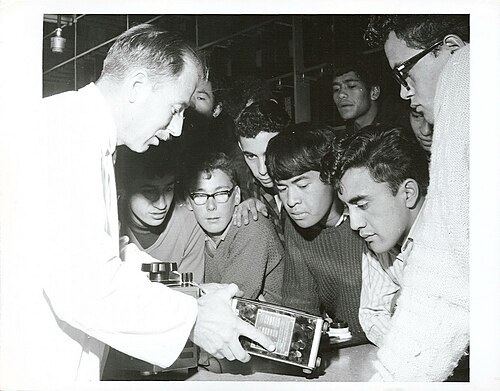
Picture a company that has routine jobs on the one hand and, on the other, very high turnover among the people who do them. The training for these jobs is well developed, and training and supervision are the only quality-control mechanisms they have.
These tasks are given to young people, often as their first job, after some prior training. The same figure is also what new hires in any company lean on, and that support can mark a step forward in their personal and professional development.
The tutor or mentor is the person they’ll turn to for help and for work, and the one who will solve all their problems. Depending on how the tutor behaves and works day to day, the new employee may go on to become a great professional.
The definitions
By definition, a tutor is the one who safeguards and oversees the interests and conduct of those in their charge. A mentor is someone who advises or guides another person in some area thanks to their experience or professional knowledge, acting as a guide for less experienced young people.
Combining both roles creates a position in the company that, with proper training, can bring great benefits to the organization.
Why create this role
There may be several reasons why a company needs to train employees as tutors or mentors for its new hires.
Supervision: they are responsible for checking the work new employees do. They answer their questions, solve any problems that come up, keep them busy and oversee the quality of their work.
Productivity: hiring young candidates for routine tasks is probably a way to cut production costs and free up the permanent staff for more valuable work, so less of their effort goes on jobs that would demotivate them or waste their abilities.
Selection: these routine jobs are often the first rung in a company, and a tutor or mentor who is used to new generations of workers has a good nose for spotting raw talent among the newcomers. It becomes a way of identifying possible candidates for the company based on their enthusiasm, teamwork, training and so on. Afterwards there will be other ways to keep an eye on the talent of these young recruits.
How it works
It’s about image, it’s about output, and it’s also about potential talent. These are the simplest jobs, but they’re still part of your company. So the tutors or mentors, and the content and attention they give new colleagues, will determine how satisfied an employee is when they leave your company. If the job is done well, we’ll have gained in productivity, and the colleague who has worked with us will leave with a greater or lesser degree of satisfaction and a better or worse image of our company.
For this to work, we need to have drawn up a good training plan for the new colleague. We should have set a series of clear, measurable, quantified objectives so the young colleague can start with the simplest tasks and move up a level as they take on new challenges within the company.
It’s the tutor or mentor who introduces new tasks, teaches them and supervises them: the objectives, how to meet them and the results. The more thorough and detailed these objectives are, the easier they are to measure and control, and the better the results.
The objectives are the tasks to be done and the ways of doing them successfully. The mentor, an expert in these functions, is responsible for overseeing, supervising and answering the questions that come up in day-to-day work.
We’ll talk about objectives in a future article.
Featured image: Photographer: Mr. Riethmaier, CC BY 2.0, via Wikimedia Commons.



