

Editor’s note: This article was first published in February 2011. It is an opinion piece, and its forecast that Mercadona could hit lean times “in about 6 years” (around 2017) has long expired; Mercadona kept growing in the following years.
Mercadona has achieved enviable growth and has financed itself wisely, even turning the crisis to its advantage. But like any company, at some point it may start pursuing completely mistaken strategies, and over time they could come back to haunt it.
According to some analysts, Mercadona could go through a lean period in about six years, because of its heavy investment in new supermarkets, poor coordination in new market studies and, above all, its recent strategic choice to drop some national brands and promote its own label.
I won’t pay much attention to the many open forums claiming the company exploits its workers (bear in mind that every company leaves behind some resentful former employees). But it is true that on consumer forums there are more and more complaints about the very thing that used to be Mercadona’s greatest strength: the Hacendado brand used to be synonymous with low prices and high quality.
These days the Hacendado brand is starting to slip into low prices with medium-to-low quality, given that the chain has removed a huge number of national products from its range. (Whatever happened to that Hacendado cocoa made by Nutrexpa itself?)
I’m the first to shop at these supermarkets, and I’m not keen on buying Portuguese olive oil when, if there’s one thing we can be proud of in Spain, it’s our olive oil. (I have nothing against the Portuguese or Portuguese olive oil, but I prefer Spanish.)
Mercadona has known how to make the most of the crisis, buying cheaper premises to open new supermarkets and, above all, putting far more pressure on the manufacturers that supply it, effectively financing itself by paying suppliers after an average of four months. It is also trying to strengthen its own label, where it earns higher margins but takes away the customer’s freedom of choice.
Right now, manufacturers are keen to get their brands into Mercadona, which can even end up accounting for 50% of their turnover while squeezing their profits. But when the crisis is over, manufacturing for Mercadona will no longer be a profitable business.
Suppliers say that Mercadona squeezes them too hard in negotiations, and many say that as soon as they find other customers, they’ll have to renegotiate those terms. Mercadona must know this, which is why it has adopted a policy of choosing foreign products for its own label, and consumers don’t like that.
On the other hand, according to the data available, since 2008 Mercadona has been opening more stores while its sales and profits have been falling, so it may have entered a downward trend.
And finally, one of the main mistakes it’s making is that it’s no longer listening to the customer, who doesn’t like being forced to choose between just two products. Reducing the number of products on the shelves is a sound strategy for a company, but if you pick the wrong ones, competitors won’t open up around you during a crisis. This crisis won’t last forever, though, and as soon as it ends, the chain will have to face payback for all that hard bargaining.
Above all, if you leave Spanish factories behind as you grow, sooner or later Spaniards will leave your company behind. That’s something it should never forget.
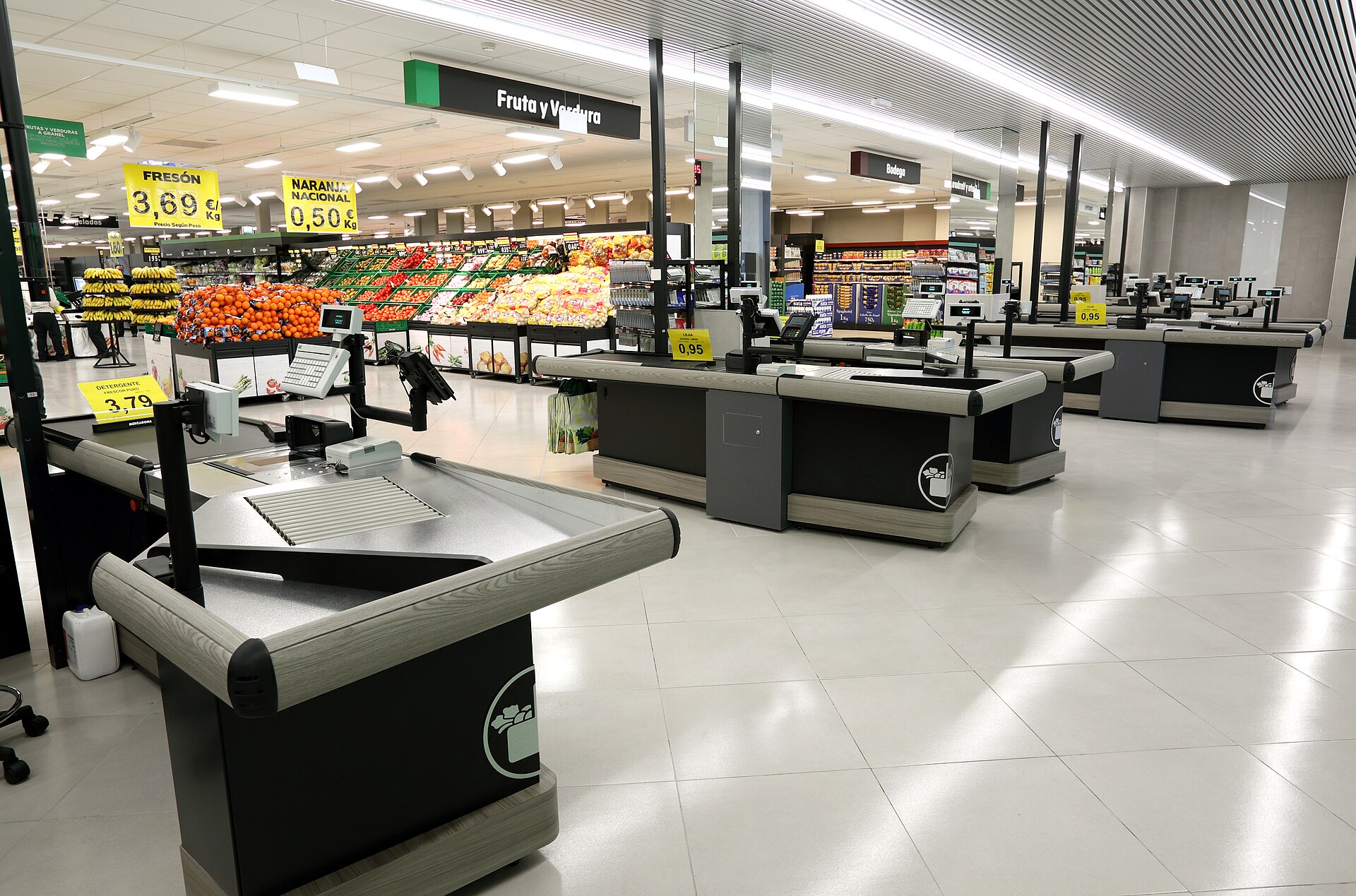
Featured image: Carloss, CC BY-SA 4.0, via Wikimedia Commons.



