

When I talked in our previous article about some of the small businesses you can start, I mentioned the mediation business, which was the first company my partner Victoria and I ran together. And the truth is that it went well for us.
We started out stepping into family disputes over inheritances, family businesses and even divorces, wherever the lawyers couldn’t reach an agreement. And we ended up mediating between companies to avoid lawsuits and reach commercial agreements.
If there’s one thing I learned in this field, it’s that as a rule people can reach a good agreement. In fact, in most cases they already agree, they just don’t know it, because they started arguing instead of talking. And that’s what we did: talk to both sides to work out how far each was willing to give ground, looking for the point of balance where both could come out ahead.
What does it take to be a good mediator and make a business of it?
Although you need a few social and negotiation skills (nothing out of this world that can’t be learned), in our case we’d say the two most important things, each useless without the other, are method and patience.
What was our mediation method?
First of all, we were clear that it wasn’t about screwing one side to benefit the other, even if you could clearly see that one side was trying to take advantage of the other. We had to stay professionally impartial and objective.
To start with, we’d talk to one of the parties alone and have them tell us everything from the beginning. What’s going on? Why have you come to us? Why haven’t you been able to reach an agreement? And we finished with what is perhaps the most important question.
What do you want to achieve? Once we had the answer, we’d ask how far they could give ground on their demands. In other words, if we’re talking about the sale of something and that person wants 50% of the sale, we needed to know in detail whether they’d accept 40% and what conditions they’d ask for in return. Nothing could be left to chance.
Next we’d talk to the other party alone and ask them exactly the same questions. You’d be surprised how many times, when we asked the other side how far they were willing to give ground, they already agreed.
But be careful. Even if at this point it looked as if everything was done, we had to stick to the method and go through the whole process as though they still didn’t agree, because we knew that if a negotiation is settled too quickly, one of the parties may come to think they could have pushed harder. They might even blow up the mediation and make us start all over again.
See also: 4 truths about the art of negotiation
Second step in the mediation
At this point, rules are set for both sides. At a joint table, each will give their version politely. They’ll ask for what they want and say why they think they deserve it, and getting into overly personal matters is forbidden.
Another rule we kept was that neither party could interrupt the other while they were speaking, so we set five-minute speaking turns during which the other side had to stay completely silent.
If both parties have been completely honest in private, it’s easy to steer them towards agreement at the joint table, but we realised they aren’t always entirely honest.
That’s why, once we had built up a certain number of clients, we developed a much more radical method: we had them sign a document stating that, whatever happened, the mediator would be the one to settle the deal at the end of the day.
At first my partner Victoria and I didn’t fully agree on this point, because in a way we were acting as both jury and judge. But it’s true that it spared us a lot of what we used to put up with, and both sides now behaved much better at the table.
Once we had earned a reputation for staying impartial, and for our mission being to find an agreement that benefited both sides without favouring one over the other, both parties at least knew that the day was like a trial where a verdict would be reached. And that called for the second thing you need to work in mediation.
Patience
I swear by all that’s holy that there were days I could have thrown someone out of the window. But you had to stay calm and not respond to insults, personal attacks or even insinuations like: “You’re favouring my ex-wife because you’re probably sleeping with her.”
Obviously these situations come up in mediations over family disputes. When it came to companies with more than €1 million at stake, the mediation was much more bearable. Tenser, but more bearable.
The dark side of mediation
As in any business where money is at stake, people sometimes try to cheat. Someone tried to bribe us 11 times. That is, one of the parties would come along and tell you that if you got the deal closed at a certain figure, they’d give you X for yourself.
Ironically, in one of those cases the bribe I was going to receive was bigger than the amount of money the other side was asking for. Bribery is wrong, but doing it without knowing any maths is really ugly.
Needless to say, we never accepted a bribe, however tempting it was.
And the big question… how did clients find us?
Our business never did any advertising. It all worked through word of mouth. Admittedly, we already had a lot of contacts among business owners, so landing our first clients wasn’t hard.
Our biggest advertisement, and probably the one that brought us the most clients, was an unhappy client who went around telling the whole city and part of the country that we had screwed him. His version didn’t sound good, but at least it reached people and let them know that a company like ours existed. Others must have thought that if a mediation firm had screwed someone, they could come to us thinking, at first, that we’d screw the other side.
The fact is that I found the saying is true: there’s no such thing as bad publicity, only publicity.
Not that it was all like that, though: in most cases both sides left happy to have finally reached an agreement after so many years, without having to end up in court.
Our best clients turned out to be mid-sized companies that urgently needed to close a commercial deal with another company and, rather than start arguing among themselves or drag the negotiations out further, preferred to have someone else decide quickly what benefited both sides.
In the mediation business, I felt that what we were doing was helping people.
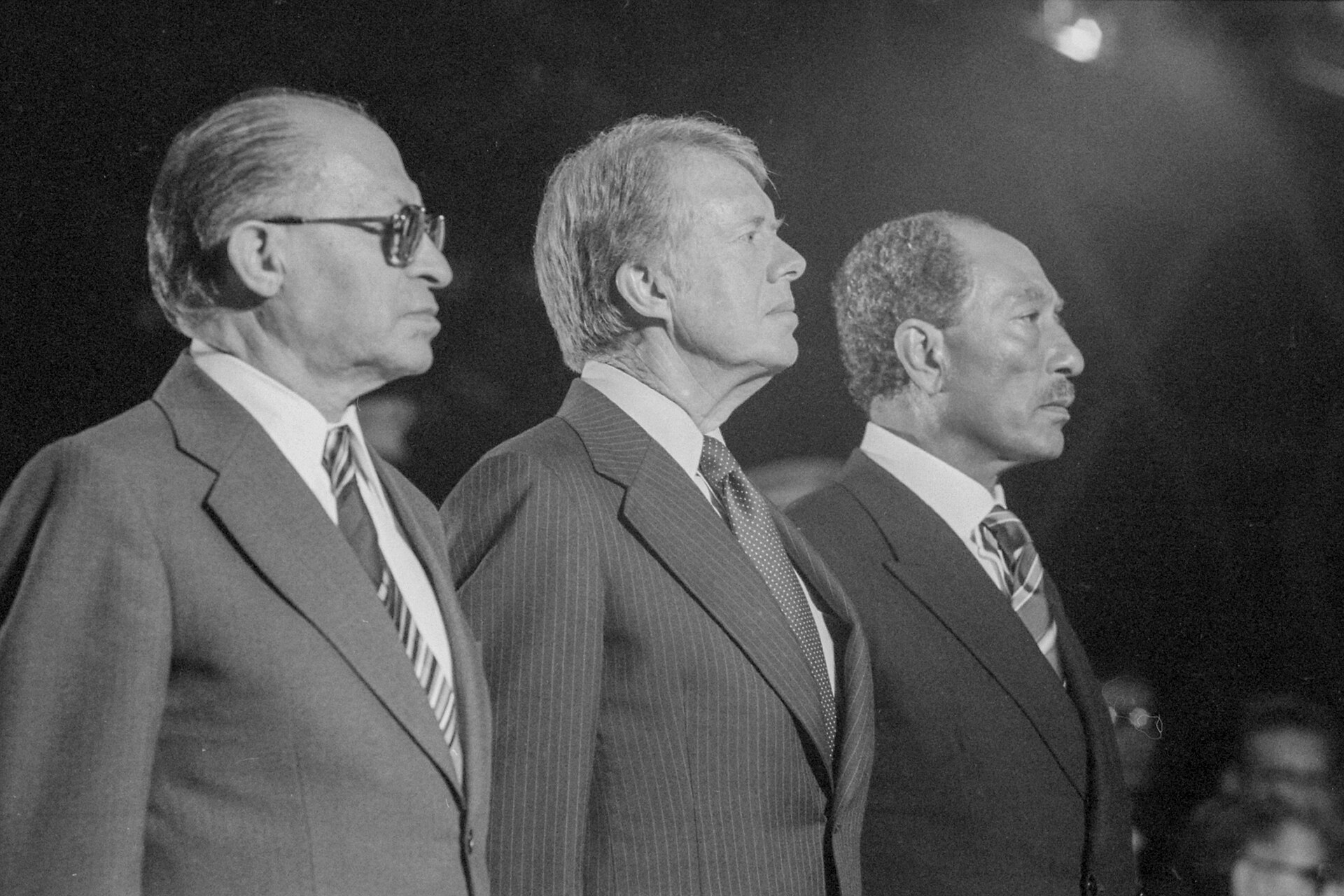
Featured image: Fitz-Patrick, Bill, photographer, Public domain, via Wikimedia Commons.



