Buying online definitely has a whole series of advantages, from getting the product you want without leaving home and having it delivered to your door to saving a good amount of money. Online shopping has become commonplace and is, as a rule, a safe way to buy. However, you need to take certain precautions, because fraud is also rife, and we take it for granted that if we make a bad purchase we’ll somehow be protected. But that’s not always the case. Here are some common mistakes people make when shopping online that aren’t hard to avoid.
The most common online shopping mistakes and how to avoid them
1. Not checking that a website is legitimate
If you’re looking for a product to buy online, you can search for it on Google. You’ll see different results and even different prices. We’ll often come across less popular online shops, or ones we don’t know. That doesn’t mean the site is untrustworthy: it could belong to an entrepreneur who is just starting to sell online with the best of intentions.
But in many cases, blinded by the low price we’ve found, we just look at reviews from other users praising the site’s good service and the company’s professionalism. What many people don’t quite grasp is that some fraudulent sites include fake reviews. Not even Amazon is free of this problem. The person buys the product, and the next thing they know, their credit card has been compromised, and the product they bought will never even arrive.
To avoid this, first of all, apply common sense. If a camera costs between €350 and €500 and you find it for €150, that in itself is a warning sign. Start being suspicious, because this kind of practice is among the most common online scams. We talked about it in our article “Ways to make dirty money online”.
Next, research the website before handing over any kind of bank details. With a simple Google search (company name + reviews), there will probably already be a forum thread where many users are using the word “scam”.
You need to understand that even legitimate companies pass your bank details and financial information to a private database on their server. As a legitimate company, they will never misuse them, but if the company has bad intentions, you could be in serious trouble, and not just because of stolen money but because of identity theft. And that can be quite serious, since with your personal information and bank details they could buy all kinds of products in your name.
2. Using public Wi-Fi
Imagine you’re having coffee with a friend, connected to the café’s Wi-Fi or any other public Wi-Fi, and you want to buy something. You enter your login details and then your card to buy the product. You’ve just made a serious and very common mistake that sometimes has serious consequences.
A public Wi-Fi network isn’t your network, and the data travels over it, potentially within reach of other users who know what they’re doing. When you’re not on your home network, avoid making purchases and even entering passwords while connected to someone else’s Wi-Fi. If it’s urgent, use your mobile data.
3. Clicking links in unknown messages or emails
You get an email from your favourite shop offering a juicy discount. Excitement takes over, you click “use discount”, it takes you to the shop and you make the purchase. The product never arrives and, once again, your bank details have been exposed, because the email wasn’t from that shop, and the page you bought through, even though it looked like the shop, wasn’t either.
This scam is also quite professionalised.
amazon-discounts.com is not the same domain as amazon.com. In other cases, the difference is more subtle: amazom.com. And sometimes an “i” is swapped for an “l”.
That’s why we always need to keep our guard up online. Not to mention that we should try to click as little as possible, on both links and images, because even an image can have hidden code in it that could install a virus or data collector.
…and other financial tips for shopping online
In the first part we looked at some easy-to-avoid mistakes when shopping online. Now let’s look at some financial-intelligence tips to avoid another kind of mistake that is also very easy to avoid.
Just because it’s cheap doesn’t mean we should buy it
There’s no sillier reason than buying something simply because it’s cheap instead of checking whether we really need it. And I’d venture to say that this has happened to all of us to a greater or lesser extent. That 60% discount in yellow letters on a red background has something magical about it that pushes us into compulsive buying. Think about whether you really need it.
Buying more to get free shipping
Sometimes we need a product that costs €15, but they charge €3 for shipping unless we reach the minimum order (€29) for free delivery. And we end up buying something we didn’t really need in order to get free shipping. In other words, to save €3 in shipping, we end up spending another €14.
Not looking for discount codes
Many online shops have discount codes you can take advantage of. Search online for discount codes for that site and you may well find a pleasant surprise.
Finally, many of the financial mistakes we make when shopping online come down to a fundamental financial education mistake: not having a budget. When we have a budget, it already tells us what we can spend and what we should spend. Remember that you can’t manage what you can’t measure, so having a budget is the best way to do it.
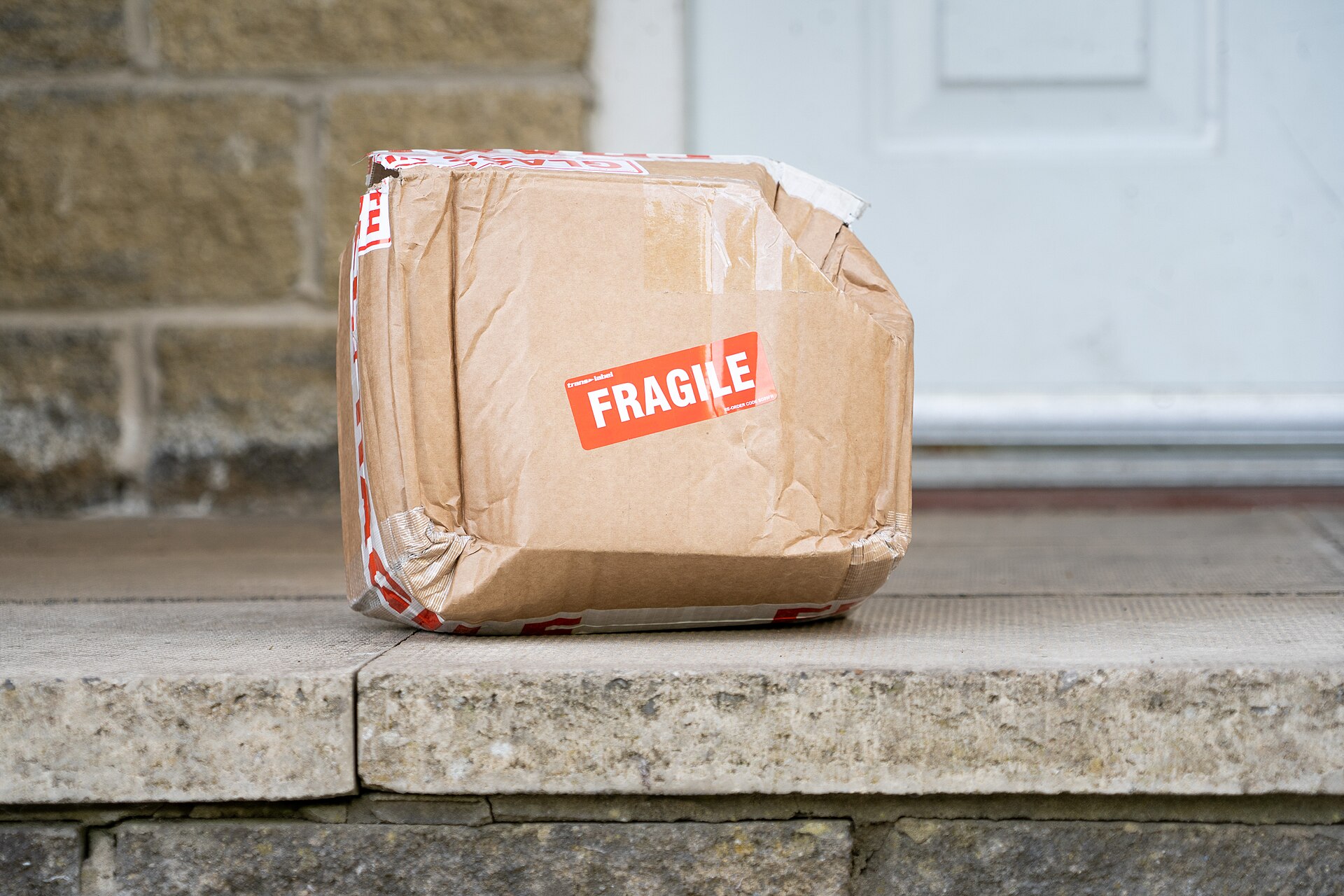
Featured image: Meanwell Packaging, CC BY 2.0, via Wikimedia Commons.