Editor’s note: This article was first published in December 2011. It describes Erin Brockovich as working as a consultant for Girardi & Keese, a law firm that collapsed in 2020–2021; John Nash died in 2015 and Stephen Hawking in 2018.
We often talk about how difficulties hold back our dreams, so today we are going to look at 4 people who refused to resign themselves to a life full of limitations.
They managed to show that their limitations or disabilities were no reason to stop them having successful careers.
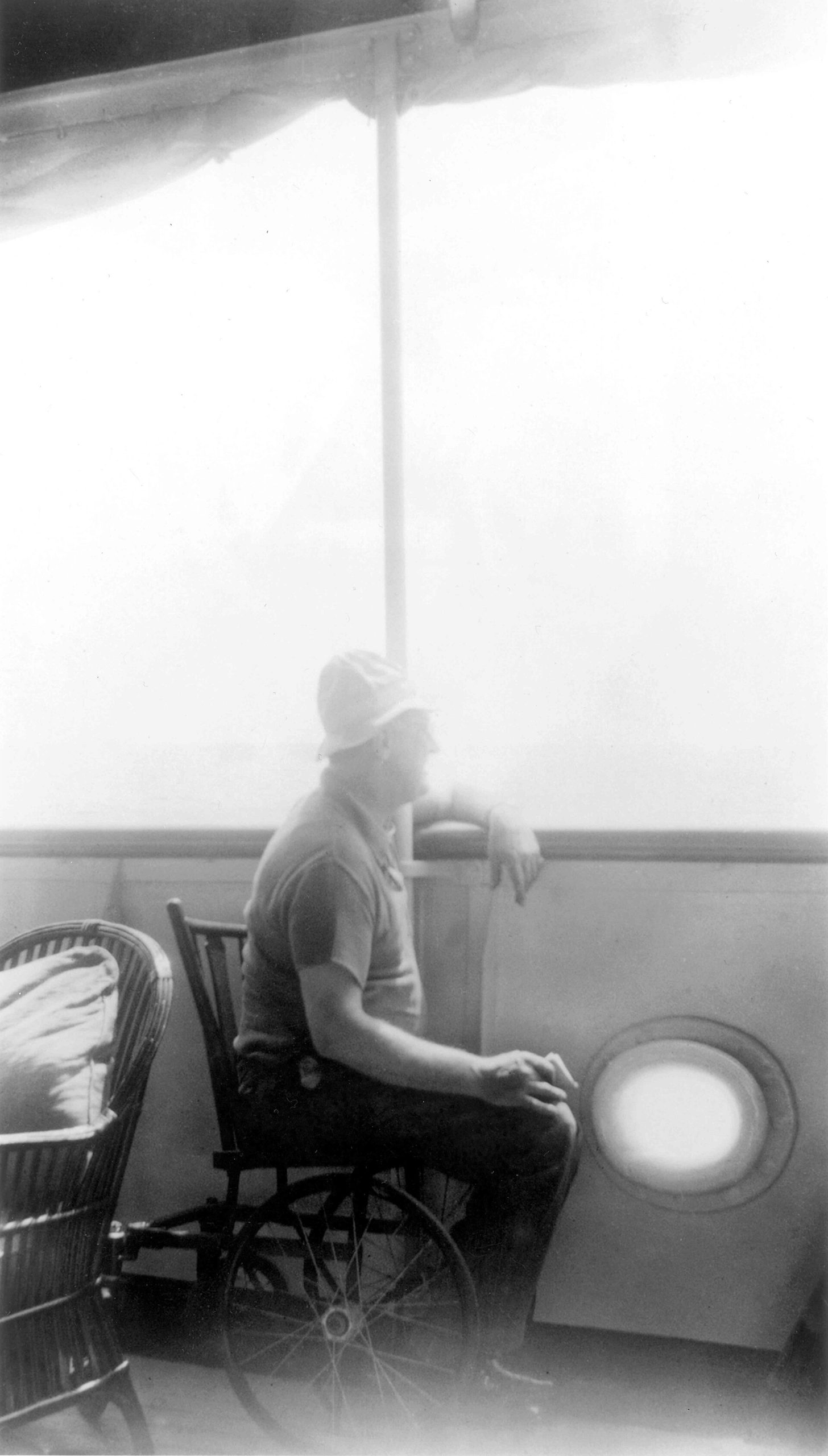
1. Franklin Delano Roosevelt.
President of the United States. In 1921, before he became president, life condemned him to a wheelchair. If today it is unlikely that a person in a wheelchair would become head of government in any country, back then, and in the United States of all places, it was all but impossible, since few people could trust someone who couldn’t fend for himself.
Everyone said that Roosevelt‘s political career was over at that moment, but in the end he became one of the best presidents the country has ever had: he managed to pull the country out of the recession of 1929 and came through the Second World War successfully. Without getting into the debate over whether he did better or worse, the fact is that he did it all from a wheelchair.
2. Erin Brockovich.
The name may ring a bell, because part of her life was brought to the big screen in a film starring Julia Roberts. Erin Brockovich had dyslexia, which meant she had serious difficulty reading and, as a result, a great many problems with learning. This kept her from graduating and going to university.
Later on, Erin Brockovich would become the woman who brought one of the most important companies in the United States, the Pacific Gas and Electric Company (PG&E), to its knees in one of the biggest public health cases in America. Even without a law degree, she is now part of the US legal system. She is president of Brockovich Research & Consulting, currently works as a consultant for Girardi & Keese, and is a well-known figure in environmental activism.
The secret of her success, in her own words, lies in a lot of hard work, courage and, let’s say, “a pair”.
3. John Nash.
Very few people with schizophrenia get far in life; they simply try not to forget their medication and wait for the next “attack”. For John Nash, schizophrenia did not stop him from winning the Nobel Prize in Economics in 1994.
Because of his solitary nature and his inability to understand the people around him, his life was devoted entirely to his two passions: mathematics and chemistry. At the university where he taught, he may not have been the friendliest professor, but many say he was one of the best teachers. Those closest to him say that Nash really did have… “a beautiful mind”.
4. Stephen Hawking
He was diagnosed with amyotrophic lateral sclerosis (ALS, also known as Lou Gehrig’s disease), an illness that only 10-20% of patients survive for at least 5-10 years after their first symptoms appear.
Stephen Hawking has now lived with this disease for 40 years. Confined to a wheelchair and unable to move practically a single joint in his body, he has devoted his whole life to science, with a doctorate in physics; we probably couldn’t even list all his achievements. Some experts say he has managed to survive because his brilliant mind has never yet stopped long enough to dwell on the illness he suffers from.
These are 4 of the many people who, despite a limitation or disability, have led lives full of success.
Featured image: FDR Presidential Library & Museum, CC BY 2.0, via Wikimedia Commons.