

When I was 16, I had an unpleasant experience one Saturday night. It’s not at all nice to have the police put you up against a wall and frisk you while hundreds of people watch the scene as if it were a film.
And the funny thing is that I hadn’t done anything, apart from being with a group of friends who in turn had made friends with another group. Since they put all of them up against the wall, why would my case be any different? I was with them, so I was one of them.
They weren’t bad people. They were loyal friends who were always there when you needed them. The problem was that they had made new friends, among them a guy who stole car cassette radios in his spare time, and another who had racked up more than 20 assault complaints before he turned 18.
With gangs like that, there are only two possible futures: either you change them (very unlikely), or they change you (the most likely).
The third possibility is that nobody changes, in which case, sooner or later, they’ll end up getting you into trouble you didn’t go looking for, although in reality you did go looking for it by staying close to trouble.
In my case, I quickly changed friends. And my teenage years got a lot better. Over time I heard news of those old friends from my adolescence, and the vast majority of them either had drug problems or ended up behind bars.
In adult life, exactly the same thing happens.
As the saying goes, “you are the average of the five people you spend the most time with”, so if you want to be an exceptional person, surround yourself with exceptional people.
If someone can improve your life and bring you values that help you grow as a person, spend as much time with them as you can. If someone can drag you down, never spend more than five minutes with that person. And this applies to your daily life, to business and to your career.
See also: The one thing successful people never do
Nobody achieves anything on their own
Although the idea of the “self-made man” is very fashionable, the truth is that nobody succeeds on their own. Behind every Steve Jobs there’s a Steve Wozniak, and behind every Bill Gates there’s a Paul Allen.
Great sales teams stand out because there are great salespeople in them, and sometimes it’s the team members themselves who keep a bad apple from getting in.
We constantly tend to surround ourselves with toxic people, and we don’t always realise they’re toxic, because they can be harmful to our personal and professional development without being bad people. In fact, some people will tell you: “I got into drugs or alcohol because of my partner.”
What’s more, even positive people can be worn down emotionally very quickly. How? Make them spend time with a few negative people.
We often say that success usually comes from planning, hard work and perseverance. Plenty of people are willing to work hard and persevere, yet they still don’t manage to succeed. The truth is that success isn’t so much about what you’re capable of doing as about your ability to surround yourself with people who can help you succeed.
Innate talent on its own could be useless for helping you succeed if you don’t know certain people with similar interests, or people who are in the right position to benefit from helping you. It’s called social skills, and this skill is a predictor of success.
If you surround yourself with 5 people who are smarter than you, you’ll be the sixth in the group, and if you surround yourself with 5 millionaires, you’ll be the sixth in the group. But if you surround yourself with 5 idiots, you’ll be the leader of the group. That is, the one at its head. And therefore the leader of the idiots, which, put another way, means you’d be the biggest idiot in the group.
And why would 5 entrepreneurs or millionaires want to spend time with someone like you?
A reader asked me this question by email, and I liked it. We always say that you should surround yourself with people smarter than you, people who have achieved what we want to achieve, and so on. So why would someone like that want to spend time with us, when on the face of it we have nothing to offer them? It would seem that we’re the only ones who benefit.
Every mentor was once an apprentice
Fortunately, most successful people tend to enjoy helping others, because they know that if you want to be truly great professionally, you need three kinds of people in your circle:
- Someone older or more successful than you to learn from.
- Someone at your own level of success (slightly more or less successful than you), but whose ideas and knowledge complement yours; in other words, the person you can argue with at times. But those will be constructive arguments.
- Someone below you whom you can teach and train.
That third person is the one who will keep your energy up. They are the person who will remind you of where you started and who, at times, will keep your feet on the ground. That person’s success will be your own success, because a mentor’s protégé is like a “professional son or daughter”.
And, more selfishly, wisdom and knowledge sink in much better when you teach them to someone else. And more selfishly still, the law of reciprocity comes into play, where it can even be seen as an investment one person makes in another.
So there’s no reason why one or more people with some experience behind them shouldn’t include you in their circle, as long as they see that you’re always eager to learn. You can also use some influence techniques.
Aristotle
Aristotle is considered one of the most brilliant minds in history, someone who challenged himself and worked to perfect his talent.
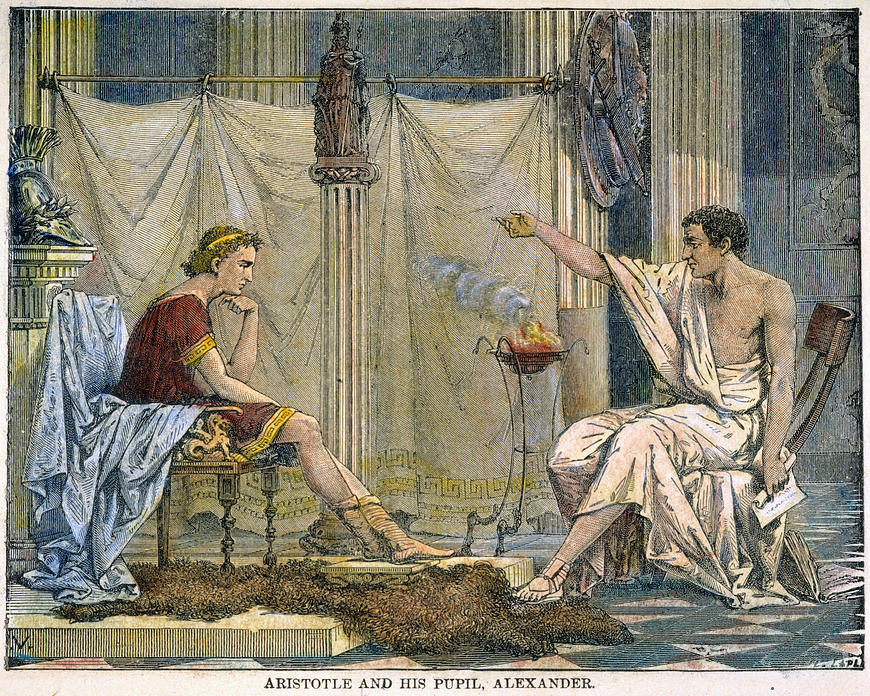
He exchanged many ideas with other Greek philosophers of his time. He learned from his mentor, Plato, and taught a young man named Alexander. That young man would later be known as Alexander the Great.
Some people inspire you; others push you to be more competitive and to challenge yourself.
If we look at Steve Jobs, we find a common pattern. Many Apple employees say he was a jerk and impossible to work with. On the other hand, the people who went on to found their own companies after their time at Apple, or to share in the success of other tech giants, say that working with Steve Jobs was the greatest blessing of their careers, because many of them managed to do things they didn’t believe were possible, thanks to Jobs telling them they were.
Finally, whether we’re talking about your personal or professional life, if you surround yourself with gossips, others will see you as a gossip, because nobody feels comfortable in a circle of gossips unless they’re a gossip themselves. The same happens when you surround yourself with idiots, or with people who have questionable habits or a strange view of life. Choose very carefully who you spend your time with, at work and in your free time.
In the end, one of the oldest sayings applies: “Tell me who your friends are, and I’ll tell you who you are.”
Further reading
Featured image: Charles Laplante, Public domain, via Wikimedia Commons.



