

In most companies, the power of a story to raise prices remains unknown territory, or very little used. Until now, companies have relied on four criteria or formulas to set the price of their products:
- Work out the cost of the product and add a fair profit margin.
- Look at competitors’ prices and set the price accordingly.
- Target the product at a demographic segment or socio-economic level within our market and adapt the price to that market.
- The most complex one: use real-time calculations to measure supply and demand. This is where certain algorithms come in.
Why not use a fifth criterion?
In the summer of 2006, Rob Walker, a columnist for the New York Times, was studying what makes one object or product much more expensive than another, even when both offer the same features and quality. Why did one pair of shoes cost twice as much as another, when both brands offered quality, comfort, durability and safety?
Why is one work of art worth 50 million while another isn’t worth even €100, even though it’s probably far more artistic than the first? Or, to take more everyday products, what makes one mobile phone worth €500 while another costs just €90?
Walker concluded that it isn’t the products themselves but their provenance that creates value. In other words, the value isn’t in the products but in the story and meaning they hold for their owner.
How could he show just how far a buyer’s perception can be manipulated?
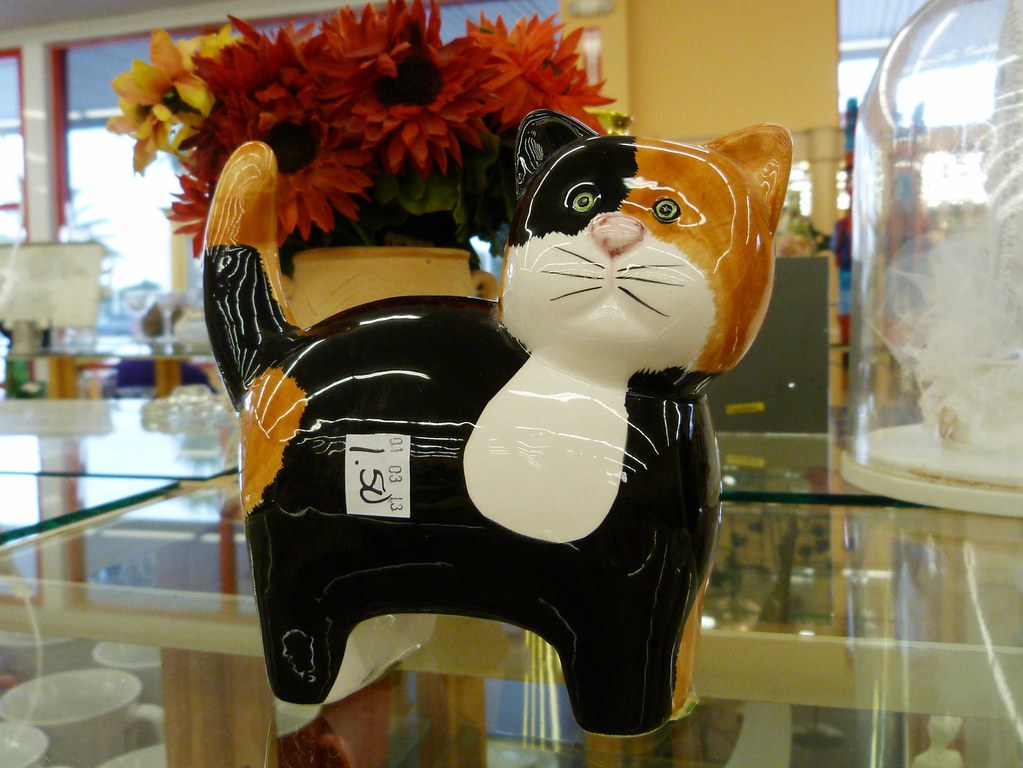
Walker had an idea. He started buying random objects, most of them useless and of little value, picked up in second-hand shops. They cost between 1 and 4 dollars each and included an old wooden mallet, a lost hotel key and a simple plastic banana. None of them had any intrinsic value.
Walker then asked a number of writers to write a story about each of those objects. The stories weren’t really about the objects themselves; rather, they placed them in a context that gave them a different meaning.
See also: 10 simple product ideas that turned their creators into millionaires
Walker put the objects up for sale on eBay, together with the stories, and the results were truly astonishing.
The value of the objects rose by more than 2,500% on average. A miniature mayonnaise jar bought for 1 dollar sold for 51 dollars. A rather battered ceramic horse head that had cost 1.29 dollars sold for 46 dollars.
The results were so striking that they published everything on their website, and Walker later wrote a book about it.
Objects that were worth nothing, that had been abandoned, suddenly soared in value once they came with a story. Walker’s experiment should remind us how the concept of value works in the human brain. A can opener is just a can opener until you’re told it was designed by a certain “Federico Fernández”, an up-and-coming artist of the modern age.
It’s said that there are more than 10 million brands in the world, 8 million more than just 10 years ago. With so much competition and so many similar brands on the market, it’s time to recognize that a good story counts too.
Further reading
Featured image: Rusty Clark ~ 100K Photos, CC BY 2.0, via Flickr.


