Editor’s note: This article was first published in January 2012, while the New York Times was reporting on conditions in Apple’s Chinese supplier factories. Working conditions, audits and Apple’s supplier policies have changed since then.
In November 2011, The New York Times ran a survey on Apple’s image. 56% of respondents said they couldn’t name anything negative about the company, since everything about it was perfect. 14% said the only drawback they saw in Apple’s products was that they were too expensive and that the company should do something to make them cheaper. Only 2% showed any interest in, or concern about, the conditions of the people who make the company’s products in Chinese factories.
When an Apple product is finished, every single unit is tested, including the video camera, so before the product is packed and shipped to the United States a few photos are usually taken to make sure everything is OK. As it happened, one iPhone left China without its test photos being deleted, and those 4 photos ended up in the hands of Mike Daisey, an Apple fan who was utterly horrified by the images of the factories where the product is made. He decided to go to China himself to see the working conditions in those factories.
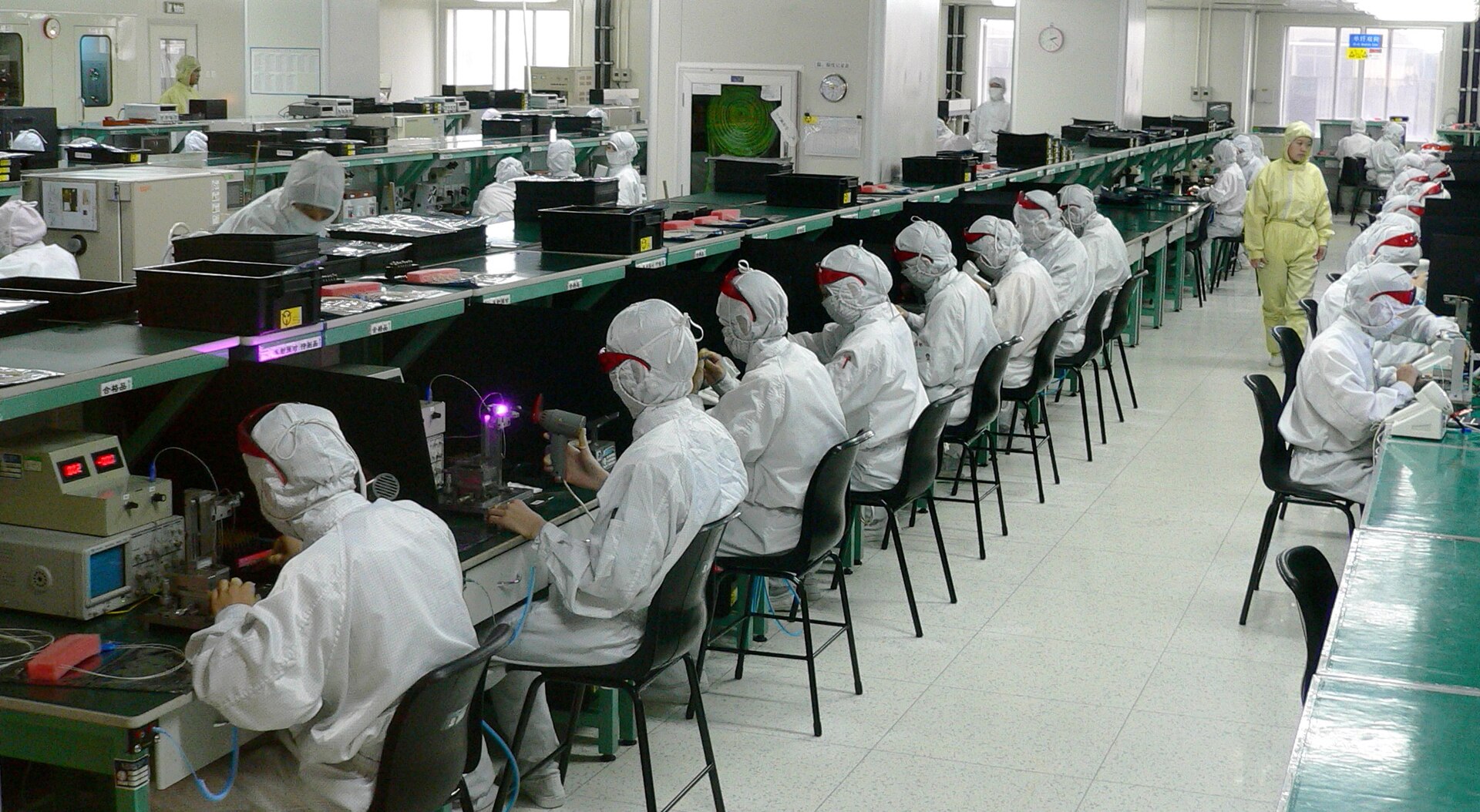
The Times focused in particular on working weeks of more than 60 hours, exposure to highly toxic chemicals and an environment where aluminium dust hangs in the air and is breathed in by factory workers, who have neither minimal safety measures nor even cheap masks to avoid inhaling the residue. That would explain the constant poisonings suffered by workers in these factories, some of which have ended in the worker’s death.
Mike Daisey also saw many workers suffering from what he calls a “disintegration of the joints”, caused by making the same movement hundreds of thousands of times, which has left some of them with “atrophied” fingers. This happens because everything is done by hand and workers are not rotated, either weekly or monthly. So once someone specializes in, to give an example, fitting the green button on the iPhone, that person will spend 12 hours a day, every day for the rest of their life, fitting that single button.
Forbes drew a brief comparison between Apple and the oil companies: just as oil companies leave out the true environmental costs, Apple leaves out the moral damage tied to its decision to outsource production to these factories. After all, part of Steve Jobs’s success rested on people admiring, desiring and loving his products. Many consumers would not feel comfortable with the moral price attached to the iPhone.
Apple’s profits have topped 13,000 million dollars, and company executives said they could have sold more if the overseas factories had been able to produce more. In fact, the success of a product like Apple’s would be unthinkable if it had to be made in the United States, because it couldn’t compete on price.
Quite literally, the cost of one worker in the United States for a 40-hour week is exactly the same as that of 68 Chinese workers on 60-hour weeks. And even then, that opens up another debate: if factories in China weren’t subcontracted, millions of Chinese people would have no income at all.
And the harshest reality, which in a way lets us come to Apple’s defence, is that if Apple didn’t do it, another company would find a way to overtake it in the market by making its products cheaper, that is, by subcontracting Chinese factories. Apple is no exception: a large share of the big, well-known brands we see advertised on television every day subcontract factories in the East with identical working conditions. It’s just that this time Apple is the one that has drawn attention.
Featured image: Steve Jurvetson from Menlo Park, USA, CC BY 2.0, via Wikimedia Commons.