Editor’s note: This article was first published in November 2013, and its Cristiano Ronaldo hairstyle example and remarks about gaining social media followers reflect 2013.
Most people (users, consumers…) are simple. No offence to anyone, but because a majority is intellectually simple, it can be highly manipulable. And that’s what marketing is all about. “You don’t buy; I sell to you, even if you think you’re the one deciding.” That’s why advertising is one of the best-paid professions: advertisers don’t just design campaigns to get you to drink Coca-Cola, but also to make you lose sight of a social or political reality.
Knowing that a large percentage of the population can be manipulated, it’s a matter of understanding how to use that mechanism to bring a revolutionary idea into our business, since that’s what the big brands do.
It isn’t Coca-Cola’s quality that makes you drink Coca-Cola. Believe me, today you could probably find 50 colas you would prefer in the first place. If marketing can manipulate people’s minds to that extent, imagine what we could achieve if we knew how to do it.
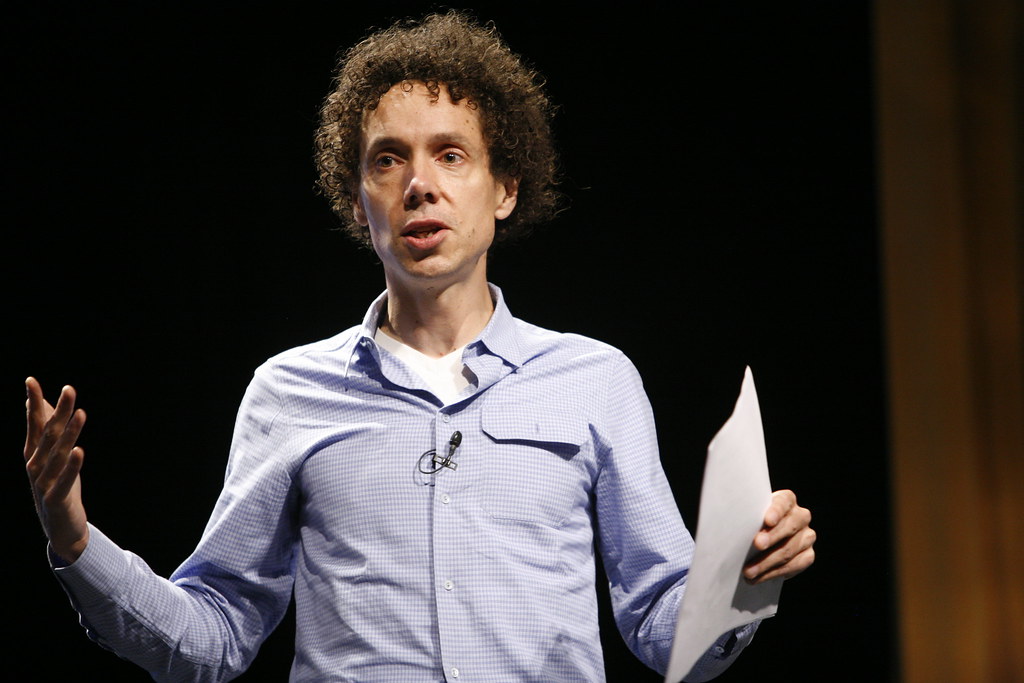
Malcolm Gladwell, in his book The Tipping Point, explained his view of how it’s possible to bring about a big change with just a few especially influential people.
Why should a company go to the trouble of trying to convince everyone, if it only needs to identify a few influential people who will in turn be followed by many others?
That’s why there are absurd products that succeed and incredibly good ideas that never take off.
It isn’t ideas that become revolutionary. It’s people who make an idea revolutionary, however absurd that idea may be.
Example: let’s say I want to make a mohawk-style haircut fashionable, complete with a slit in the left eyebrow. I don’t need to invest money in the press or on television to promote that kind of haircut. All I’d need is for the footballer Cristiano Ronaldo to get it, and millions of people would ask for that haircut. What some people call “expressing their freedom” by getting the same haircut as a footballer is what marketing calls “a clear and representative sign of the simplicity of the potentially manipulable human being.”
The problem is that, over time, it has become clear that getting one influential person to sell an idea is no longer enough for brands, even though the big brands still hire famous people for their ads. And for a small business, this strategy is clearly not financially viable.
So how do you create a revolutionary idea?
We need to stop focusing on general minorities (firing at will) and concentrate on local majorities.
Although we may think the internet now makes it easier to gain relevance, because gaining followers is supposedly easy, the truth is that it isn’t easy at all.
Do you want hundreds of thousands of followers on social media? Today you can do it; in fact, it’s simple. The problem is that the conversion from users to sales, or from users to growth, isn’t easy. In other words, you can have hundreds of thousands of followers and launch an idea that doesn’t really go anywhere.
The strength of a community isn’t measured by the number of followers, but by the relationships, links and bonds its members have with one another.
If you look closely, many of the great movements throughout history have come out of universities. Facebook is the result of a local minority at a prestigious university that made other people want to use it and be in the same place as the influential people at Harvard. Facebook was cool because there were cool people on it, and lots of people wanted to be cool. It’s probably the simplest thought there is, but it’s one of the basic pillars of marketing.
If we add this to previous articles that made it clear that you don’t need an innovative business idea to succeed, and that you don’t need to be better than everyone else either (it’s enough to be different), then what really turns a product or idea into a success? Tick, tock…
Further reading