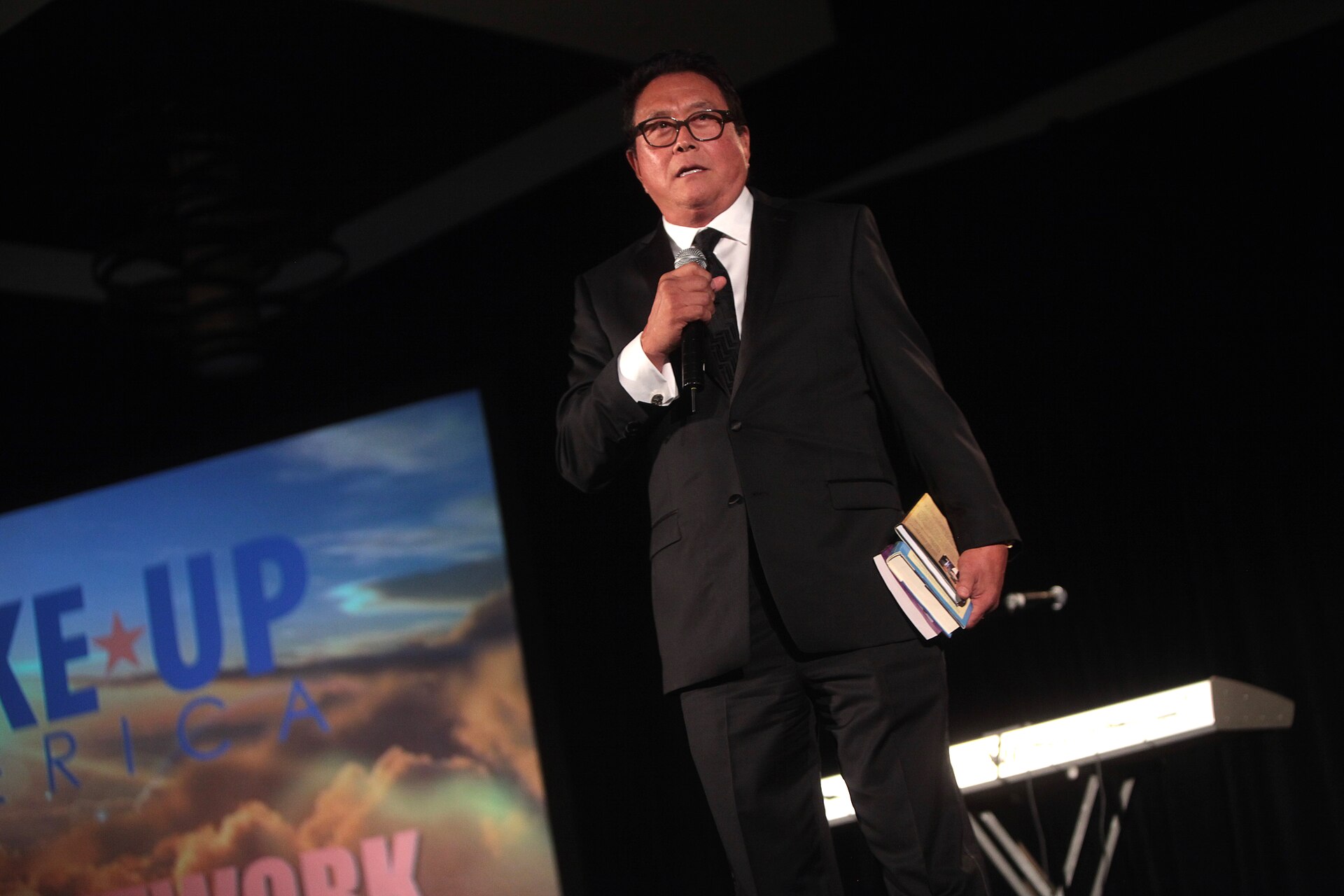
Editor’s note: This article was first published in August 2010, right after the housing crash. Its statements that the property market has fallen drastically, that millions cannot sell their homes, and that Kiyosaki continues to generate millions in real estate reflect that moment.
For some time now I’ve been hearing criticism of Robert Kiyosaki, author of Rich Dad, Poor Dad, among other books. Some say the method Kiyosaki explains in his books is no longer useful today. Useless, even. Others say his success was a matter of chance and luck. How much truth is there in what people say about Robert Kiyosaki?
First and foremost, congratulations to everyone who criticises Robert Kiyosaki, because they’ve taken the easy road: it’s easier to criticise than to achieve what Robert achieved. Total financial freedom at just 47.
It’s true that he made most of his fortune through real estate, and in his books he explains some tricks for buying a property in order to sell it and making tens of thousands of dollars in a single day. Today it would be hard to make a fortune in property, because the market has fallen sharply. Even so, Robert keeps generating millions in this market; he has simply changed the way he invests in it.
In Robert Kiyosaki’s methods for reaching financial freedom and getting rich, there’s a message you need to know how to read.
Spot business opportunities: Back then, he spotted the real estate business, which passed right in front of all of us, yet only a few made fortunes with it. We all had the same opportunity in the same market.
Before the housing bubble, Robert started a worldwide nylon wallet business. Robert himself says that to keep growing and making money in that business, he would have had to set up his factories in China or subcontract a Chinese company to cut costs. Once he saw the labour exploitation that existed in China, he decided not to go on. That is worthy of admiration.
Others say his method doesn’t work outside the United States, which isn’t true, since the financial system works the same way all over the world. The worker pays taxes, and the rich are advised on how to avoid paying them or pay less.
A method? What method, if he doesn’t explain anything?
True, Robert never gives you the magic formula for achieving financial freedom, but he tells you something far more useful: there is no secret, no magic formula that will lead you to wealth. Is there a more honest message than that? We have to read several of his messages between the lines.
Besides, there’s an old saying: if you’re hungry and I give you a plate of fish, you won’t be hungry anymore… at least until tomorrow. But if I teach you to fish and hunt, you’ll never go without food.
Robert Kiyosaki made one message clear in one of his books: the profit in a business or an investment is made when you get in, not when you get out.
Assets and liabilities
Part of his teaching is defining what an asset and a liability are. It earned him thousands of criticisms from financial advisers.
- Asset: something that puts money in your pocket.
- Liability: something that takes money out of your pocket.
While your house appears as an asset on your balance sheet, Robert said it was the biggest liability you could ever take on.
I don’t know whether economists around the world have come round to his view by now, but millions of people are desperate to sell their “asset” and can’t, because nobody wants to buy property. So it’s clear that a house is a liability, even if the accounts list it as an asset.
Robert was lucky
If by luck we mean acquiring knowledge of both business and investing and applying it in real life, then yes, Robert Kiyosaki was lucky.
Robert cares more about money than happiness. He’s a materialist
He was clear that he didn’t want to work for anyone. He wanted to own his own business and, above all, he wanted to earn his money passively (getting income from capital without having to work for it). He made it clear how important it is to build your own business and not work for anyone else. Why make your boss rich when you can make yourself rich?
He fought against conformity and a lack of entrepreneurial spirit. Today, people who have lost their jobs and have no way back into the labour market wish they had acquired the knowledge they’d need to have their own business now.
As for money and happiness, few people are happy when they can’t pay the mortgage at the end of the month. Money doesn’t buy happiness, but it opens up a huge range of opportunities to find it.
In short, anyone who searched his books for the magic keys to getting rich will have come away disappointed, but there’s no denying that he inspired thousands of people around the world to leave poverty behind and set out in search of financial freedom.
If Robert Kiyosaki read some of the criticism aimed at him, he’d probably say something like: “Before you criticise me, outdo me.“
Further reading
- Achieving financial freedom: the road to debt
- How to start a business with no money
- Steve Jobs and the early days of Apple
- Donald Trump and the mindset of an entrepreneur
Featured image: Gage Skidmore from Peoria, AZ, United States of America, CC BY-SA 2.0, via Wikimedia Commons.