

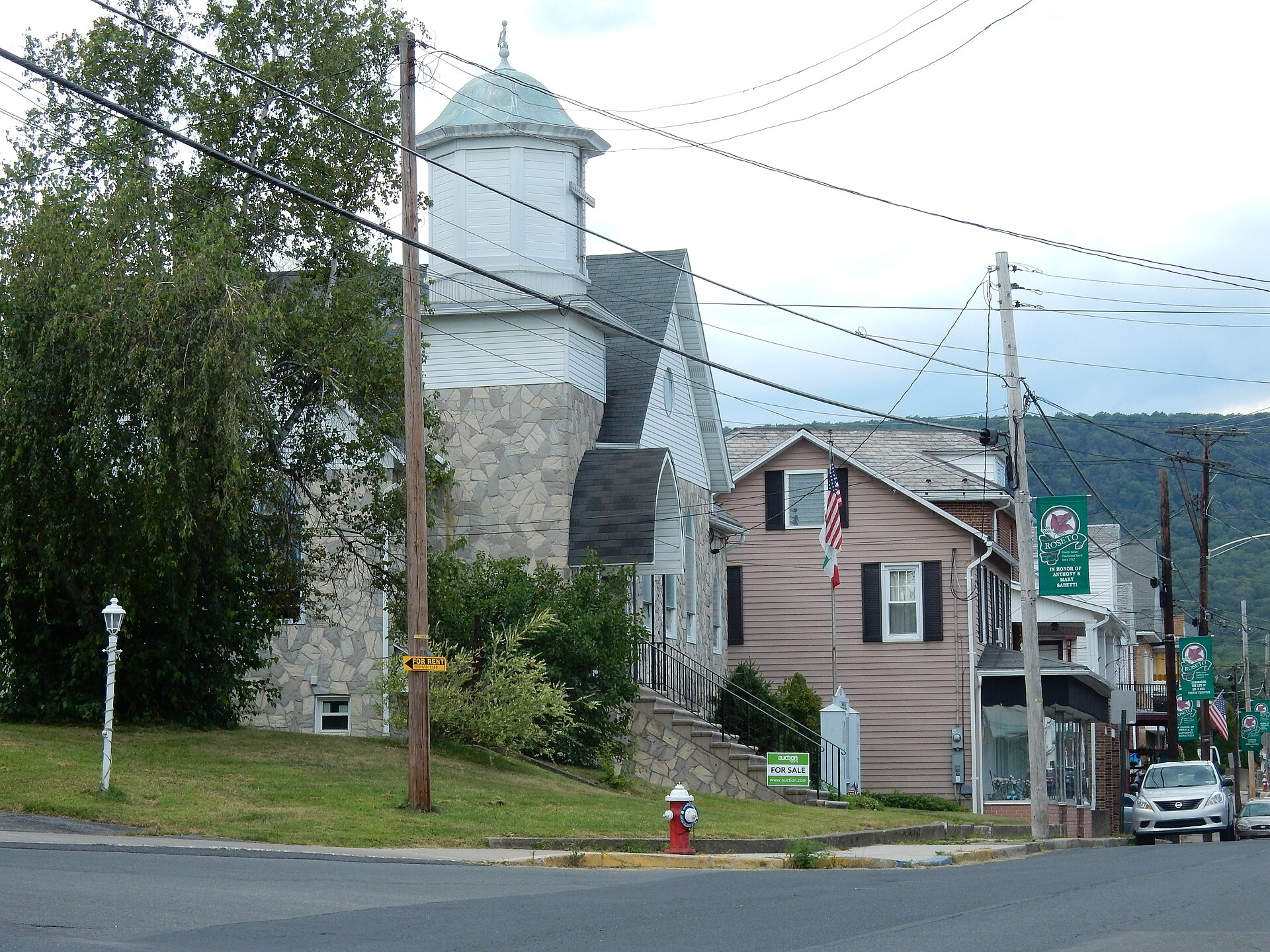
In 1882, the inhabitants of an Italian town called Roseto Valfortore began a mass emigration to the land of opportunity, the United States. Once there, they split up and settled in different areas, but we’ll focus on the largest community of Rosetans, which they initially named New Italy.
Later on, they changed the name of that Pennsylvania town to Roseto. This small town had medical researchers scratching their heads. It was a doctor called Stewart Wolf who noticed that the people there had an extremely low mortality rate, and that he never saw patients under 65 with heart problems from the town, at a time when cardiovascular disease was the leading cause of death in the United States.
Medical common sense said that it was impossible to be a doctor and not come across patients under 65 with heart problems.
Wolf’s research began in 1961. The team gathered the death certificates of Roseto’s residents, going back as many years as they could, and reconstructed the family trees of the town’s inhabitants.
The findings were crystal clear: no Rosetan under 55 had died of a heart attack or showed any symptoms of heart disease. And for residents over 65, the death rate from cardiovascular disease was half the US average.
To put it more plainly, in that town, people only died of old age.
That was when Wolf set out to find the reason. He thought the secret of their longevity might lie in their lifestyle, their nutrition or something they consumed, because from a medical point of view, this wasn’t normal at all.
What Wolf could see with the naked eye was that in that town nobody committed suicide, there was no drug addiction, no alcoholism and hardly any crime.
(See: Why watching too much TV can literally ruin your life)
In search of the mystery
First of all, Wolf wanted to know how the Rosetans ate, thinking they might have preserved some special diet from their ancestors and eaten a balanced diet.
But that wasn’t the case. The Rosetans cooked with lard instead of olive oil. They hadn’t even kept the original pizza recipe of their Italian ancestors. The Rosetans of Pennsylvania ate pepperoni pizzas with sausage, salami, ham…
So when the nutrition experts saw that 41% of their calories came from bad fats, the kind not recommended for heart health, they quickly ruled out diet as the reason for the town’s good health.
Nor did the Rosetans get up in the morning to do yoga or meditate, or go out for a 10-kilometre run. In fact, they hardly exercised at all. Smoking was among their habits too, and many of them were obese.
Baffled, Wolf had to look for an explanation other than diet and a healthy lifestyle, which simply didn’t exist in Roseto.
Could it be something in those hills that protected them from disease, the water they drank, the air they breathed…?
That theory didn’t hold up either, because they drank the same water as the other nearby towns in the same hills, with the same vegetation and (obviously) the same air.
Wolf thought it might be a genetic factor inherited from their ancestors, but he hit another dead end when he saw that other Rosetans settled in other towns had three times the death rate of “Roseto, Pennsylvania”.
It wasn’t diet, it wasn’t exercise, or genetics, or geography…
Medically and scientifically, Wolf had exhausted every avenue for solving the mystery of the Rosetans’ excellent health.
He found Roseto’s secret by watching the Rosetans
Wolf stopped studying the Rosetans and started walking the streets of Roseto. The people of that town were simply happy. They stopped to chat with one another in the street, laughed together and supported each other. They had a sense of closeness among themselves. There was no loneliness.
Rosetans who had done well didn’t flaunt their wealth, and those who had failed in their attempts weren’t criticised; they were supported. They were insulated from the pressures of the modern world. In other words, the Rosetans were healthy because of where they were from and because of the people they were surrounded by. They had created their own world, where the idea of happiness was different from the one that existed once you left Roseto. Family meals where you could see up to three generations of Rosetans at the table. They were happy.
In 1961, this theory was met with scepticism by the medical community, because medicine analyses the individual, with his or her own conditions and habits, but forgot that to tackle the Roseto mystery you had to analyse the community as a whole and how its members behaved with one another. Being happy and not cutting ourselves off from other human beings, talking about things that don’t stress us out and keeping family ties strong: in the end, that seems to be the theory that made sense to the medical community as an explanation for why these people lived longer.
Today the problem may be even worse
We live in an age when depression and stress seem to be an epidemic, and even in this age of the greatest technological advances, we’re using that technology to distance ourselves from one another. We talk more on Facebook and WhatsApp than face to face.
We even spoil family gatherings by bringing our devices to the table. Our friends are now counted on Facebook, and these days, even though we could relate to other people far better than before, we don’t.
That’s why, just as the people of Roseto held the secret of happiness, low crime and zero drug addiction, we understand that today we hold the secret of depression, stress and drug addiction, while alcoholism is part of our society. And it makes sense, because nowadays we’ve created a way of life that we constantly feel the need to escape from.
The source for this article was the book Outliers by Malcolm Gladwell.
See also: How to teach our children values, with some science-backed points
Featured image: Shuvaev, CC BY-SA 4.0, via Wikimedia Commons.



