Editor’s note: This article was first published in August 2013, and the events described were current news at that time. Tinkoff Credit Systems (TCS) has since been renamed, first Tinkoff Bank and later T-Bank.
A former Russian police officer, Dmitri Agarkov, has managed to trick his bank using the famous fine-print trick: the fine print that appears in every bank contract and that usually stands out for running to four whole pages that nobody reads.
Dmitri has become something of a hero after managing to slip his own clauses into a loan contract with the lender Tinkoff Credit Systems (TCS), which the bank signed without reading it carefully.
The former police officer, who according to 20minutos.es had already experienced the fine-print trick first-hand, took the trouble, when he received the bank’s credit offer, to scan the conditions printed in tiny characters at the bottom and on the back of the document, and he changed them. The bank signed the copy without realising it had fallen into a trap.
Under the new terms, Dmitri set the interest rate at 0%, scrapped the arrangement fee (about €432) and added a clause exempting him from paying any fees at all. The bank also undertook to pay the customer about €68,000 if it breached or changed the contract after signing.
A few months later, TCS noticed that the customer was not making his monthly payments, so the bank demanded a penalty from him and notified him of the sanctions for late payment. The bank was demanding that the customer comply with terms that were not in the contract. The customer decided to sue the bank for €546,000 for breach of contract, which unleashed the fury of the bank’s founder, a sort of Russian Emilio Botín (the chairman of Spain’s Banco Santander at the time), who threatened to report Dmitri for fraud.
The banker’s lawyers claimed that Dmitri could face four years in prison for fraud, while many legal experts said that would not happen, since what exists is a contract signed by both parties. (You should have read what you were signing, banker.)
What’s more, the law does not prohibit a customer from changing the terms of a contract, because once the change has been made, the other party is obliged to read the contract again and accept the terms. If the contract is signed in the end, it is because both parties agree.
All of Russia was eagerly awaiting the court’s ruling in this case, but in the end the banker and the customer announced an agreement under which they will both drop their lawsuits. Dmitri said the joke had gone too far and advised other people not to follow his example.
And basically… those are the dangers of the fine print 🙂
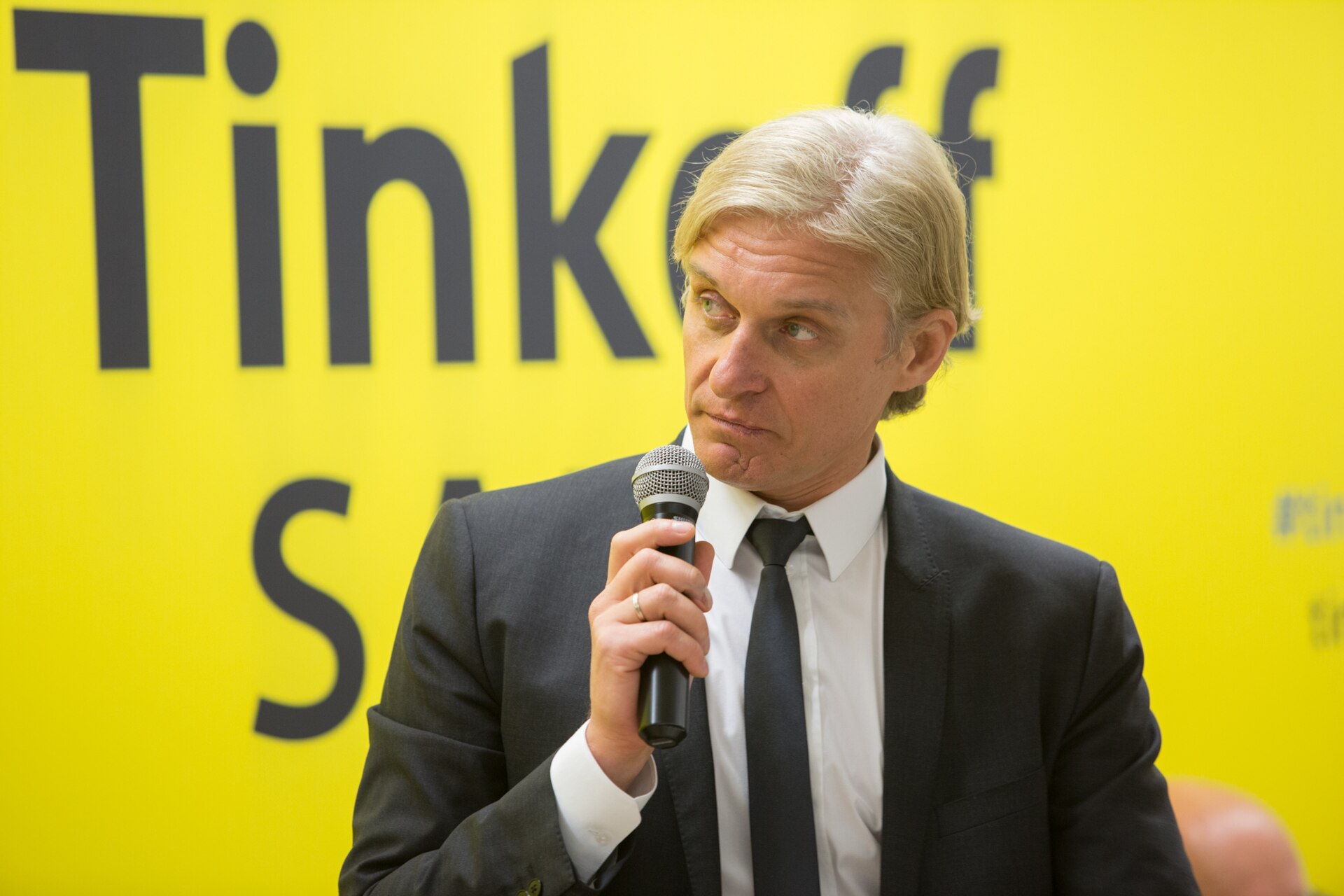
Featured image: Tinkoff Bank, CC BY-SA 4.0, via Wikimedia Commons.