

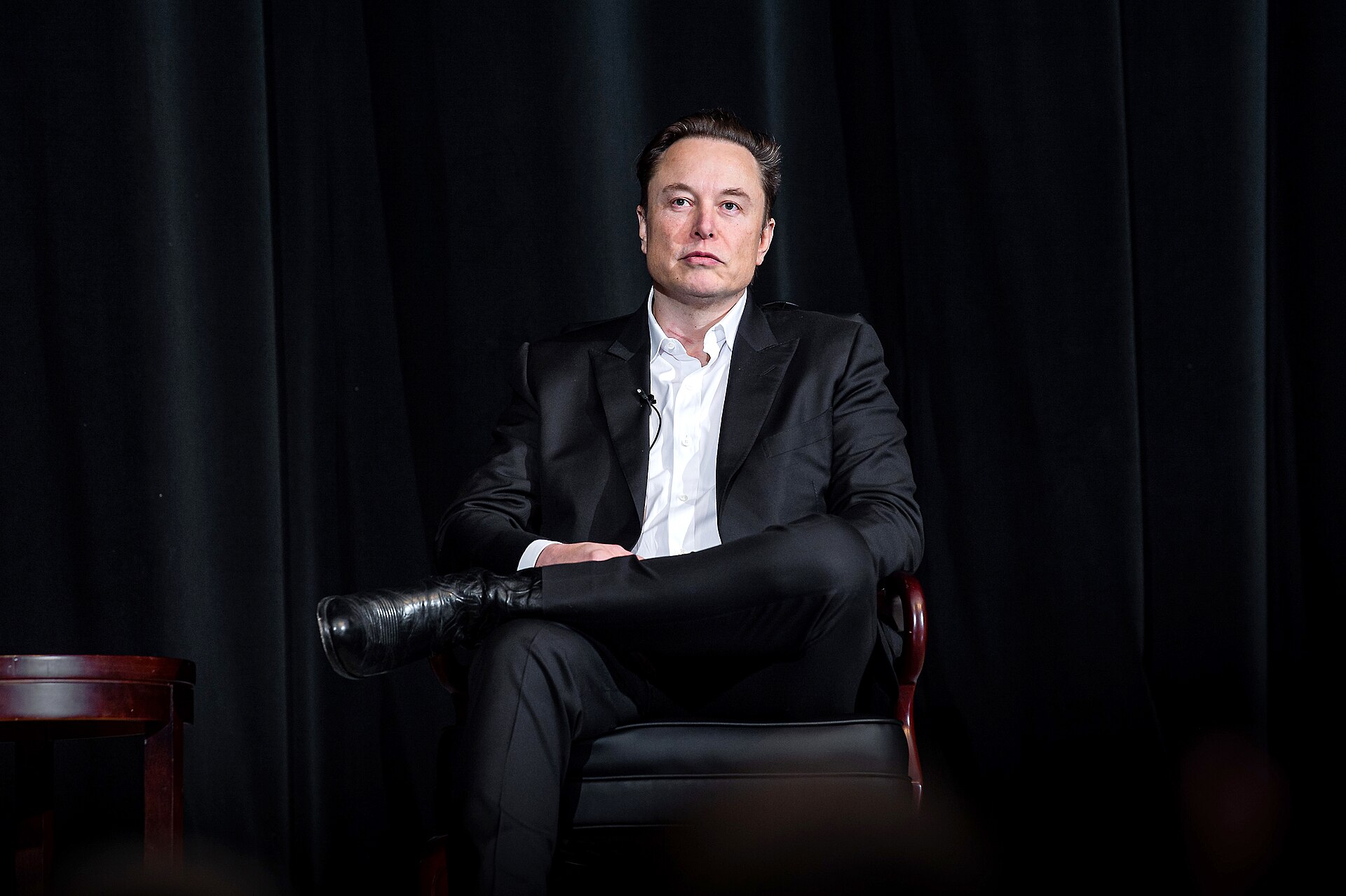
Editor’s note: This article was first published in June 2021. Musk “still works as hard and tweets about crypto” (Twitter is now X), and Buffett “still does what he did” at Berkshire Hathaway, though he announced in 2025 that he would step down as CEO.
Starting your own business isn’t easy. The statistics on the high failure rate aren’t very encouraging either. With that in mind, it’s more than understandable that when an entrepreneur has a good business idea, executes it well and ends up succeeding in building a stable business, they put all their effort into making sure that business doesn’t fail. It’s not just the fear of failure, but also the reluctance and emotional strain of facing the challenge of starting another business from scratch all over again.
But there’s another kind of entrepreneur. Another generation of “premium entrepreneurs” who are comfortable with the risk of shaping their business ideas and starting new projects from scratch. As soon as one business succeeds, they’re already working on a new one. Then another, and then another.
Not all of these new businesses will succeed. They know it, and it doesn’t worry them much. Their talent is starting businesses. These entrepreneurs are known as serial entrepreneurs.
Serial entrepreneurs
These entrepreneurs make building new businesses out of nothing look almost easy, as if risk and the fear of failure had nothing to do with them.
Serial entrepreneurs enjoy creating businesses that solve problems, and they enjoy watching their ideas come to life. Sometimes they focus on expanding the reach of those new ideas. Other times they leave a manager in charge while they concentrate on a new venture. And other times they simply end up selling the company and using the proceeds to invest in new business ideas.
Elon Musk fits the serial entrepreneur profile
We could say that Elon Musk is a clear present-day example of a serial entrepreneur. Musk got started in business when he founded Zip2 in 1995, which he sold four years later to Compaq for more than $300 million.
He used that money to found X.com in 1999, which, after merging with Confinity in 2000, would eventually become what we know today as PayPal. In 2002, Musk sold PayPal for $1.5 billion.
But before the sale went through, Musk was already working on other projects, so he used the money from the sale to invest in SpaceX, Tesla and SolarCity, three major companies. He also co-founded Neuralink, OpenAI and The Boring Company, among others.
It’s as if Elon Musk had turned the business world into child’s play. But Musk isn’t the only one. There are other serial entrepreneurs, perhaps with more modest companies, who follow exactly the same steps as Elon Musk.
What do serial entrepreneurs do to swim so easily in this ocean full of difficulties?
The secret of serial entrepreneurs
1. It all comes down to people and partners
Good entrepreneurs are very aware of their limitations. As the old saying goes: “If you want to go fast, go alone. If you want to go far, go together.”
Business people like Elon Musk or Richard Branson start businesses in a wide range of industries that are very different from one another.
There’s no way Richard Branson can have all the knowledge needed across the more than 400 companies he owns.
They know that businesses are made up of people, and they need them. Ideally, the most professional people.
Both Branson and Musk are obsessed with hiring the best, whereas a mistake some business owners make is hiring the cheapest. As another old saying goes: “If you pay peanuts, you get monkeys.”
The obsession goes so far that Elon Musk sent one of his executives to bring him the best frozen yogurt maker for his company.
Who makes the best shakes and frozen yogurt? The Pinkberry chain. “Then go to Pinkberry and bring me their employee of the month.” With that obsession for hiring the best, you end up building great companies.
Serial entrepreneurs take part in the early stages of a business, but with the idea of finding a qualified manager to run it. That way, the entrepreneur can keep doing what he does best: starting businesses.
In many other cases, what they need is a partner who makes up for their weaknesses. They have no problem co-founding a company with someone else, following the same approach they use when hiring: the partner has to be capable.
2. The importance of automating, delegating and outsourcing
Running a company takes a lot of time and effort, and the time and effort we can put in are limited. Fortunately, it’s easier than ever today to automate certain tasks, thanks to all the platforms available online.
Outsourcing certain processes or tasks is also the most cost-effective and practical choice for an entrepreneur. A good example is Tim Ferriss, who explained in his book The 4-Hour Workweek how he had delegated customer service to a company in India, hiring the services of external virtual assistants.
In the same way, if your business needs a social media strategy, depending on your needs it may be cheaper to hire an outside community manager for specific tasks than to keep one on the payroll.
Ultimately, the idea for a successful entrepreneur (a serial entrepreneur, in this case) is to spend 80% of their time on what they’re good at and what produces the most results (which is usually concentrated in 20% of the tasks), while they could outsource to experts the 80% of tasks that take up the most time and effort.
Knowing when to delegate, when to automate and when to outsource is something an entrepreneur needs to be very clear about. In Tim Ferriss’s own words: “Never automate something that can be eliminated, and never delegate something that can be automated or streamlined.”
See also: Tim Ferriss’s 12 business lessons
One thing is clear. You’ll never be able to do everything yourself, because you won’t have the time or the knowledge. Understanding that already brings you closer to success in business.
3. Serial entrepreneurs aren’t afraid of failure
There’s no guarantee that you’ll succeed in a business, however good your idea is. Starting a business carries risks, as with any kind of investment.
More than 90% of new companies and startups fail. More than 20% of them do so in their first year. This means anyone who wants to start a business has to treat failure as a very real possibility. And that’s what puts many would-be entrepreneurs off.
The serial entrepreneur amplifies this risk. He starts more businesses and therefore increases the odds that one of his companies will fail. But that doesn’t stop him. It’s part of the business game, and his life can carry on as before without losing the desire to try again.
Nobody died. It’s just a business idea that didn’t work. They have more ideas.
One thing we can say for sure today: there are hardly any billionaires on the Forbes list who haven’t flirted with failure. Some have even failed in business several times. There’s no need to give examples, because we could say that practically all of them know the taste of failure.
Nobody likes to fail. Anyone who says they do is lying to you, but the difference is that they’re comfortable with failure, while most people feel like failures. Sadly, many small entrepreneurs are hurt more by what others might think than by the failure itself.
4. Time management
We all have the same 24 hours a day. Nobody has a competitive advantage there. So whoever manages their time best has a better chance of succeeding in business.
Running several companies at once means the entrepreneur has to attend meetings, talk to customers and investors, work out strategies, and so on.
It’s impossible to do all this well without excellent time management that also leaves room for a personal life outside the business.
While a few productivity tricks never hurt, with serial entrepreneurs it goes much further. In some cases, planning can become an obsession for them.
See also: How to get what you really want in less time
From buying all their clothes the same so as not to waste a second deciding what to wear tomorrow, to keeping strict schedules they stick to. Some divide their day into time slots as if it were a relay race.
See also: 5 bedtime routines that will make you more productive the next day
5. Serial entrepreneurs know how to adapt
It’s not the strongest or fastest species that survives, but the one best able to adapt to changes in its environment. There’s a military saying: “No battle plan survives contact with the enemy.”
However much you plan something, things will never turn out exactly as you expect. There will always be some factors you didn’t take into account, or a new player or problem will come to the table. This frustrates most people and entrepreneurs. For serial entrepreneurs, it’s their daily bread, something they’ve already come to terms with.
They’re always ready to adapt to new circumstances. More importantly, they know how important it is to act quickly when a new problem or change in the environment appears.
Even an actor in a play has some room for improvisation, because there can be mistakes on their part or on the part of the rest of the cast. And when that happens, as Freddie Mercury would say, “the show must go on.”
6. Money isn’t their goal
We still tend to think that these serial entrepreneurs and great business people are driven by money, but money isn’t their main goal. If it were, they would never have achieved the success they have. And this is very easy to understand.
What would you do right now if you had a billion euros in your bank account? I can imagine many answers, but none of them would be: “work 16 hours a day, be the first to arrive at work and the last to leave.”
What would a successful business person do? Warren Buffett is still doing the same thing he did when he started with Berkshire Hathaway, Elon Musk keeps working as hard as ever and spends what little time he has left tweeting something to liven up the crypto world. And Richard Branson, well… he’s been one of the best at delegating, but he’s still in the thick of it with his companies.
Jokes aside, most of them started their companies as a way to solve a problem or improve an existing service. They’re looking to create the next “big thing”. And, obviously, money ends up following good ideas.
And those, basically, are the points that set serial entrepreneurs apart from other kinds of entrepreneurs.
See also: What the richest men were doing at age 25
Featured image: Trevor Cokley, Public domain, via Wikimedia Commons.



