Most of us know that to succeed in any area of life, we need to believe in ourselves. But how can we be sure of anything when we lack confidence in ourselves? How can we feel confident in a new job when we’ve never done that job before? How can we feel confident starting our own business if we’ve never been entrepreneurs?
The questions could go on if we carry them over to our social or love lives. How can we feel confident in a relationship if none of our relationships has ever worked out? And finally, a high percentage of people ask themselves: how can I believe in myself when I haven’t done anything worth mentioning in my whole life?
On the surface, self-confidence is a habit or a trait found in most rich and successful people: “Do your work properly, take risks and trust that things will turn out well.” Meanwhile, the poor lack that confidence and don’t take the risks needed to get out of poverty, in many cases out of the very fear of ending up even poorer.
(Read: 25 habits of successful people)
If you’ve always lost in life, why would you be a winner this time? And if we never expect to be a winner, we’ll always act like a loser.
In other words, to be happy or successful we first need to believe in ourselves, but to believe in ourselves we first need to be happy and successful. So we’re back to the dog chasing its tail, and we need to break out of this vicious circle of low confidence.
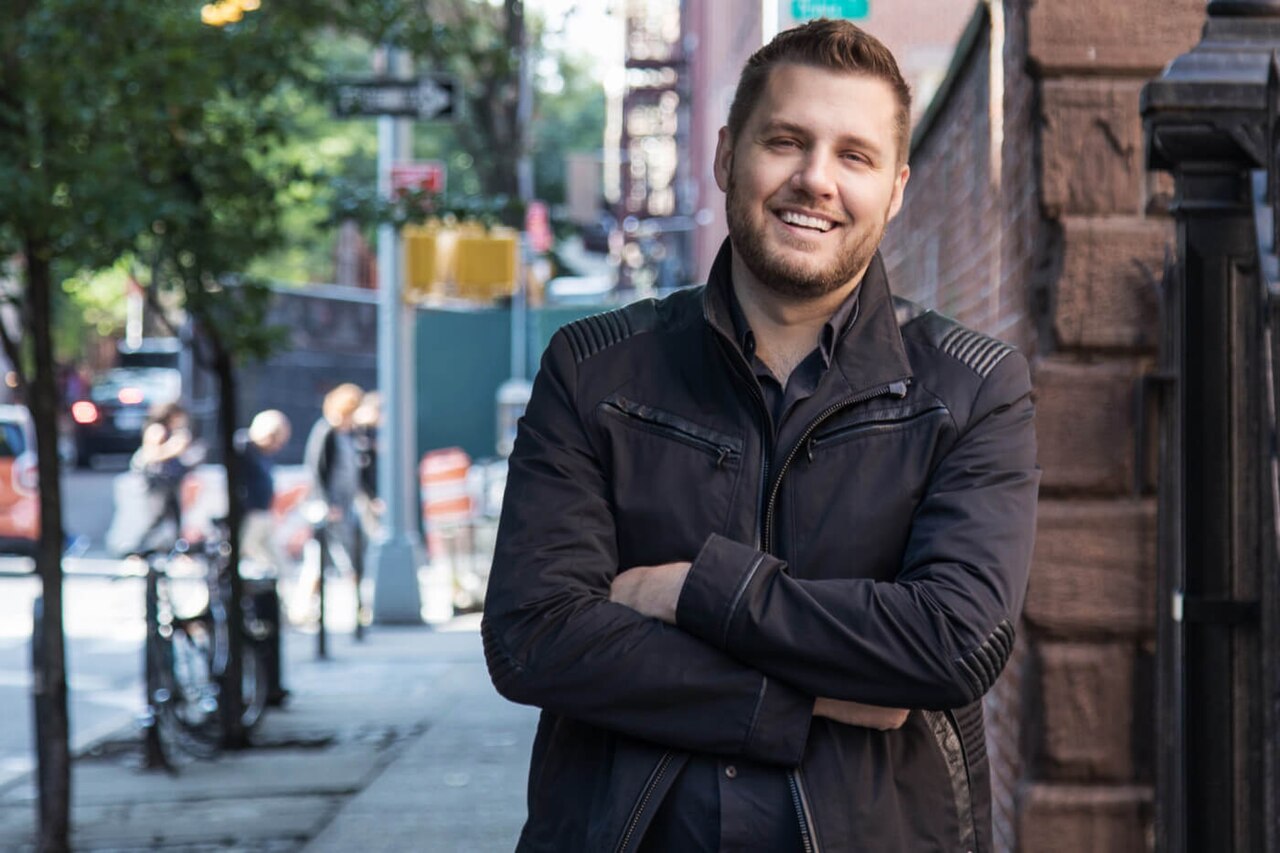
Mark Manson solves this self-confidence riddle perfectly, with some remarkable reasoning.
Just because someone has something (lots of friends, a million euros, a supermodel’s body) doesn’t necessarily mean that person is self-confident. There are great businesspeople who lack confidence in their own wealth, and models who lack confidence in their own looks.
For Manson, self-confidence is not necessarily tied to any external marker. Confidence is rooted instead in how we perceive ourselves, regardless of any tangible external reality, because confidence isn’t something you can touch.
That’s why, once we work out that confidence isn’t necessarily linked to any tangible external measure, we could conclude that improving the external, tangible aspects of our lives won’t necessarily build confidence.
If you’re over 25, you’ve probably already experienced some of this in one way or another (exams, relationships, dealing with people…).
Getting a promotion at work doesn’t necessarily mean you’ll feel more confident in your professional abilities. The exact opposite could even happen: with that promotion, you might feel more insecure.
In the same way, marrying your partner doesn’t mean you’ll have more confidence in the future of your relationship either, especially given how many divorces there are these days.
What real confidence is
Self-confidence is a feeling. It’s a state of mind. It isn’t really the perception that you lack nothing. Nor is it the feeling of picturing yourself equipped with everything you need, both now and in the future.
In other words, a person who is self-confident in their social life could feel as if nothing were missing from their social life.
Of course, there’s a very fine line between confidence and arrogance: for example, thinking you’re a sex symbol even though you’re a scruffy slob, or believing you’re a successful entrepreneur even though your only profitable business was a fruit stall that made you 500 euros a month.
No: according to Manson, the solution to the confidence riddle isn’t to feel that you lack nothing, or to fool yourself into believing you already have everything you could dream of.
(Read: How a string of failures can lead you to success)
The solution to being self-confident is simply to feel comfortable with what you might lack.
It has nothing to do with being comfortable with what we achieve, and everything to do with being comfortable with everything we don’t achieve.
People who are confident in business have that confidence because they’re comfortable with failure.
People who are confident in their social lives are sure of themselves because they’re comfortable with rejection.
People who are confident in their love lives are at ease because they accept that the relationship may work out, or it may end in failure.
Manson is clear that the road to the positive first runs through the negative.
Those who are comfortable with negative experiences are the ones who reap the greatest rewards in life.
It may sound counterintuitive, but it’s true. Turning our problems and failures into a comfort zone allows us to act with fewer fears, to take risks and even to love someone unconditionally.
Self-confidence is realising that we may succeed or fail, but that whatever happens and whatever the outcome, it will be part of our path and our life, and it certainly won’t stop us from going on being happy and pursuing our dreams and goals. That’s what self-confidence is: knowing you could fail in business, knowing you could be rejected by someone, and still taking the risk and feeling comfortable with the result.
Further reading
- Resilience: the keys to success when things get really ugly
- 4 things you need to give up to keep moving forward in life
- 10 toxic behaviours that are ruining your life
- 17 steps to survive the worst moments of your life
Featured image: Maria Midoes, CC BY 4.0, via Wikimedia Commons.