The first time anyone talked to me about teamwork was at a talk by Javier Aguirre, the football coach, in which he compared the way you train a football team, where 22 players can win or lose a match, with a team of people running a business or an office, where common effort can generate profits or end in bankruptcy.
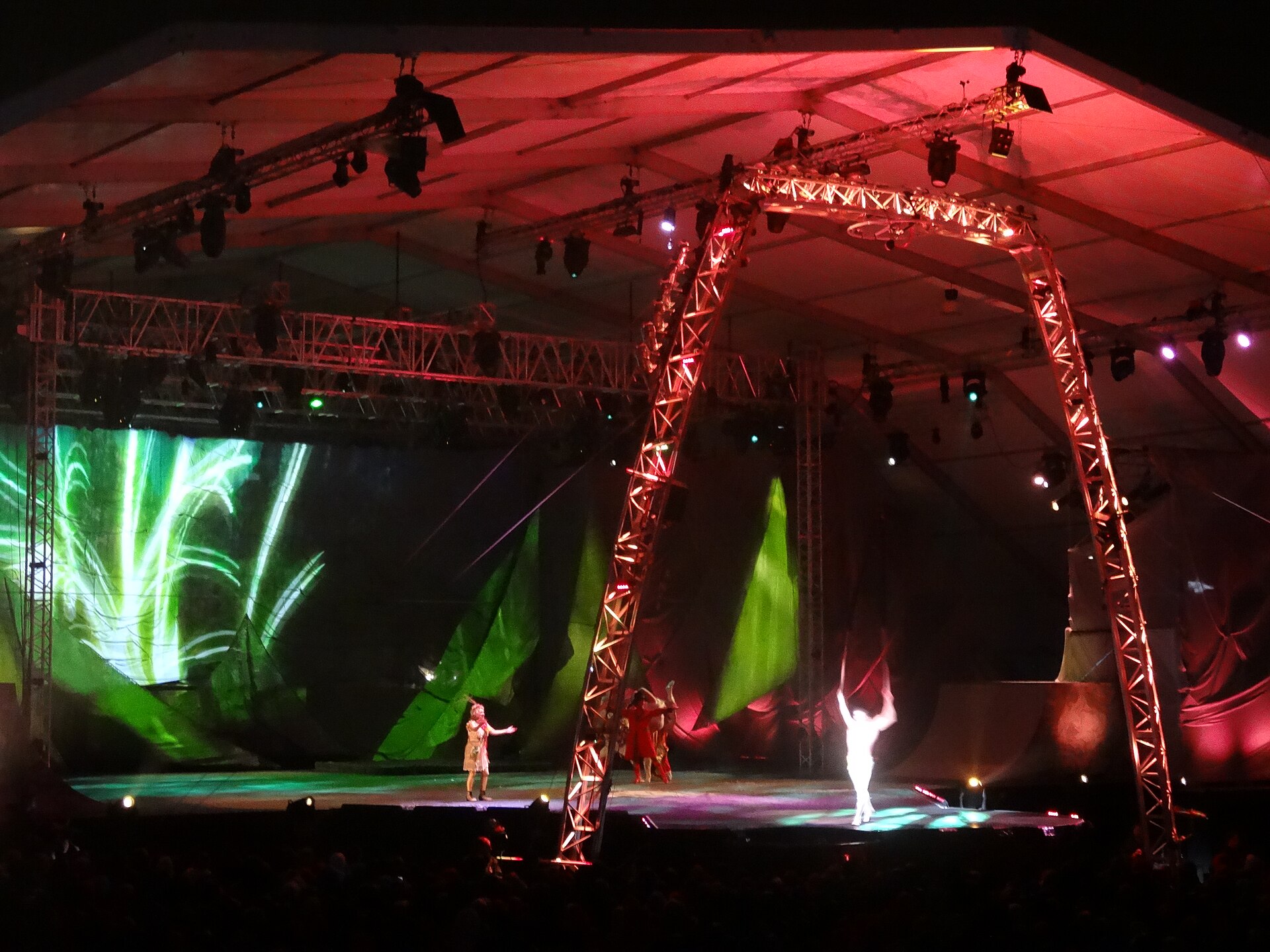
Today, allow me to look at teamwork through a practical exercise of outstanding quality and spectacle: a show created by Cirque du Soleil for the ceremony of the Academy of Motion Picture Arts and Sciences, the popular Oscars, in its 2011 edition.
I encourage you to watch the video first; then we will analyse each of its parts.
The professional definition of the competency: teamwork
It is the employee’s ability to build relationships with colleagues so that each of them can carry out the duties of their role, aligning the goals they are responsible for with the goals of their co-workers and the ultimate goal of the organization.
It involves building relationships of cooperation and concern not only for one’s own responsibilities but also for those of the rest of the team.
It is the ability to work with others to achieve common goals.
Practical examples from the video
“The employee’s ability to build relationships with colleagues so that each of them can carry out the duties…” (minute 1:25 of the video)
The performers parody the experience of watching a film. The team relationship between colleagues grows out of each one’s individual and collective interpretation of different film genres. For some it is a comedy, for others a drama, for some it is science fiction, and a few are left frightened by the horror scenes.
See also: Google raises its employees’ pay and lifts its ban on Facebook
Each member of the show interacts with their colleagues to show a different side of filmmaking.
“…aligning them with the goals of their co-workers and the ultimate goal of the organization” (minute 2:40)
The ultimate goal of the choreography is to surprise and entertain with a set of astonishing routines. In this part of the show, a group of trapeze artists moves across the theatre ceiling with tremendous agility and synchronization. That is teamwork: everyone doing it in unison so that all of them act as one. Everyone’s effort to reach a goal. But there are other members of the team, those who lower and move the trapezes. Although hidden from everyone’s view, together they achieve the spectacle that is the organization’s goal, and all together, as a team, they make that sequence a success.
“Relationships of cooperation and concern not only for one’s own responsibilities but also for those of the rest of the team” (minute 1:00 of the show)
Look at the pair of acrobats at the back left of the formation of four pairs (at about five to the hour on an analogue clock). On the third jump they slip up and get into position late, and the rest of the team, despite the rhythm of the music, waits for them. They don’t carry on. The others have done it correctly, but they wait for the whole team to be properly in position so they can continue at the level of quality they are used to.
What would have happened if they had carried on? The sequence would have been ruined. Being a team means cooperating for yourself and for the rest of your colleagues.
“The ability to work with others to achieve common goals” (back to minute 2:40)
For the audience to enjoy the show, sight, hearing and feelings all come into play. If you look closely, there is a show up at the theatre ceiling, with the trapeze artists and the colleagues moving the trapezes. On stage, the rest of the company performs different acrobatics. The sound crew make sure the music sets the pace of the artistic part, and the backdrop, the screen, moves in time with the whole team.
How many professionals are involved in the sequence? Trapeze artists, acrobats, musicians, lighting, props, the people in charge of the film footage and the backdrop, not forgetting the television camera operators and the director who have to broadcast the choreography.
An undetermined number of people, able to work as a team to achieve common goals: getting the theatre and television audience to stand up and applaud the show, amazed by the work not of a single person but of a team of professionals.
I hope these notes help show that one person does not move mountains, but a group of people, a team, can achieve every objective.
By the way, my sincere congratulations to the members of Cirque du Soleil on their performance.
Featured image: Jordiferrer, CC BY-SA 3.0, via Wikimedia Commons.