

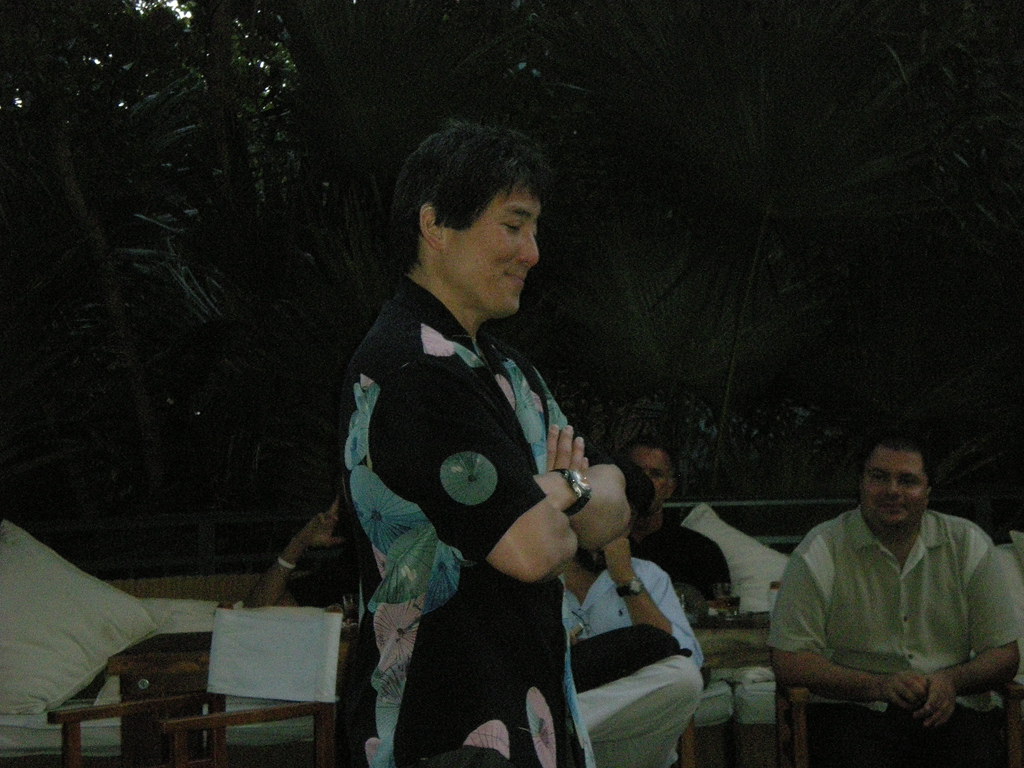
Giving a great presentation is not just about oratory, whether you are launching a product or need to influence other people to buy into an idea or a product. A while ago we shared some techniques TED speakers use to make their talks more engaging, entertaining and productive.
We have also covered how to improve your presentation skills and lose your fear of public speaking. This time, we will look at how to give a good oral presentation following the advice Guy Kawasaki shares in his book Enchantment. The aim of these techniques is to influence audiences and listeners. So how do you give a good presentation?
As Ralph Waldo Emerson put it:
“Speech is power: speech is to persuade, to convert, to compel. It is to bring another out of his bad sense into your good sense.”
The art of enchantment through a good presentation
Kawasaki says that if you think presentations cannot enchant people, you have probably never seen a good one.
Techniques for a good presentation
1. Prepare your audience
Arrive early at the auditorium or venue where you will be speaking so you can mingle with the audience. This has two benefits. First, you will gain confidence, because you will make friends and build rapport with people who will want to see you succeed. Second, that closeness and interaction, however brief, will increase the support the audience gives you.
2. Customise your introduction
The secret of great speakers is that they give the same presentation over and over again. It is the only way to perfect it. And it has to be done so that it does not sound mechanical. Quite the opposite: it should seem natural, as if it were the first time you had ever given that introduction.
See also: 9 common public speaking mistakes
3. Sell your dream
Enchanting speakers do not sell products, services or companies. They sell dreams. When Steve Jobs prepared his presentations, he was not thinking, “How do I get someone to spend $180 on parts with a two-year contract with AT&T?”
Enchanters and people who know how to influence others sell their dream of a better future: more rewarding social relationships, a cleaner environment, a driving experience that will thrill you or the future of publishing.
A good enchanter makes you think about what could be, not about what is.
See also: How to be more persuasive and get people to do what we want
4. Think “screenplay”, not “speech”
Nancy Duarte recommends thinking of a presentation as a three-act film script:
- The first act sets up the story and what is.
- The second act presents the conflict of what could be.
- The third act resolves the plot and explains how to make it happen.
There are more boring speeches than boring films. Perhaps that is because speakers do not use a screenplay structure.
5. Put on a show
Steve Jobs hated PowerPoint presentations. He used to say that people who use PowerPoint in a presentation do so because they have nothing important to say. He did, however, use powerful images. Simple but powerful. Striking videos. The goal is to provide information that inspires people and moves them to act.
Text slides rarely enchant anyone, so the fewer words you put on the screen during a presentation, the better.
6. Keep it short
As a rule, the more text you need to get a message across, the less idea you have of how to do it and the more mediocre the cause.
Kawasaki talks about the 10-20-30 rule, which basically means giving a presentation with ten slides, in twenty minutes, using a font size of no less than 30 points.
7. Practise
Practise your presentation until you loathe it. Then practise it some more. Do not imagine that Steve Jobs walked on stage and won the audience over in the blink of an eye. He spent hours preparing his talks and presentations. If Steve Jobs had to do that, imagine what the rest of us need to do.
8. Give the presentation as many times as you can
Repetition improves rhetoric. Once you have given your presentation 100 times, you may think everyone who needed to see it has already seen it. You would be wrong. There are always plenty of people seeing it for the first time.
Al Gore reckons he gave the same An Inconvenient Truth presentation more than 1,000 times.
Finally, remember that it will be hard to hold your audience’s full attention for more than 20 minutes. That is why TED talks are usually no longer than that.
Make your audience feel good. Humour helps with this, as long as a touch of humour is appropriate.
Featured image: ShashiBellamkonda, CC BY 2.0, via Flickr.


