Editor’s note: This article was first published in April 2012. Its projections for 2020, including 7.5 million people with vocational training, have expired. Its description of the Spanish education routes reflects the 2012 system, which has since been reformed.
Remember that in Spain, once students finish Compulsory Secondary Education (ESO), they can either go on to intermediate-level vocational training (Formación Profesional de Grado Medio) or take the bachillerato (the two-year upper-secondary course). After the bachillerato, students can choose between university studies and higher-level vocational training (Formación Profesional de Grado Superior).
The range of vocational training courses is broad, varied and tailored to the needs of the job market: new professional modules were introduced as society demanded them, until a wide range of courses had been built up. The main differences from university studies come down to three things: how many academic years the studies take, the academic requirements of each of the three levels of study that lead into the job market, and the jobs, and possible salaries, that each level gives access to.
When we’re about to decide on our professional future and are leaning towards this kind of training, it’s worth bearing some of the following information in mind.
Trends in vocational training
The Sectoral Conference on Education (Conferencia Sectorial de Educación), which reports to the Ministry of Education, has carried out studies by autonomous community (Spain’s regions) and draws the following conclusions.
By around 2020, Spain’s private sector will require 50% of vocational training graduates, in any of its modules, to hold an intermediate-level qualification, while 35% will hold a higher-level one.
In figures, this means that in 2020 the job market will need seven and a half million people with vocational training, up from the current four and a half million. The remaining three million will have to be trained over the next eight years.
The trend, then, is growth of three million vocational training graduates.
Trends in training cycles
Four major trends emerge from the Ministry of Education’s study, and we set them out below:
- Logistics. It will grow in the coming years and will be a field worth exploiting. The difficulty with this substantial growth is the shortage of qualifications in this area.
- Construction. Currently the most troubled sector, it looks set to be one of those with the most potential in the medium and long term. The sector is going to be restructured from top to bottom, and unskilled workers will disappear in favour of those who complete intermediate or higher-level modules in the various fields of specialized construction.
- Elderly and dependent care. The population is clearly ageing, and more and more qualified people will be needed to care for residents of nursing homes and people with dependency needs, since these are businesses and activities in full, steady growth.
- Food and agriculture. Another sector whose prospects will improve in the coming years, driven by the quality requirements needed to stay up to date in these areas and by the climate changes affecting these sectors.
The least in-demand studies
On the other hand, there are training modules whose graduates will find it increasingly complex and difficult to enter the job market because of a shortage of vacancies in jobs related to: image and sound, communication, computing and telecommunications.
Further reading
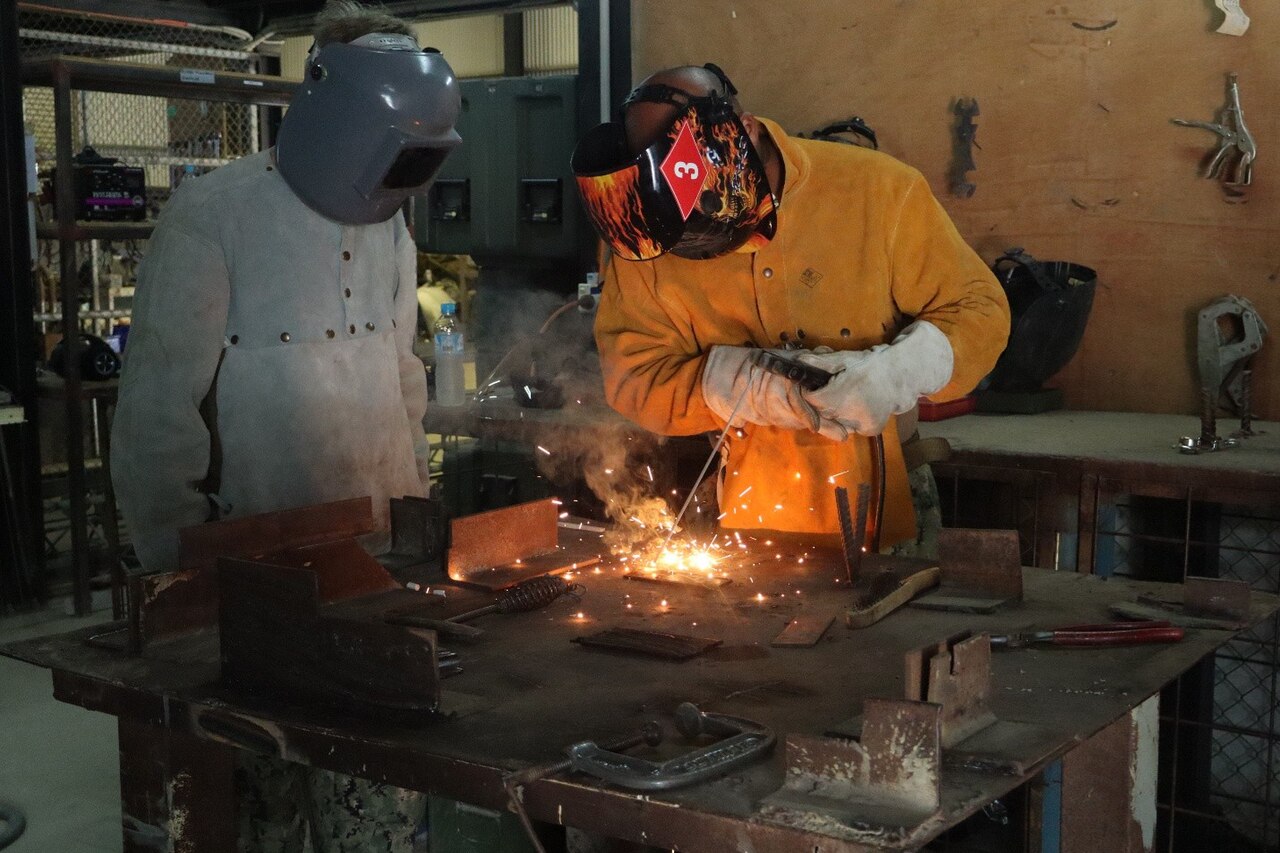
Featured image: U.S. Navy photo by Petty Officer 3rd Class Matthew Noles, Public domain, via Wikimedia Commons.