

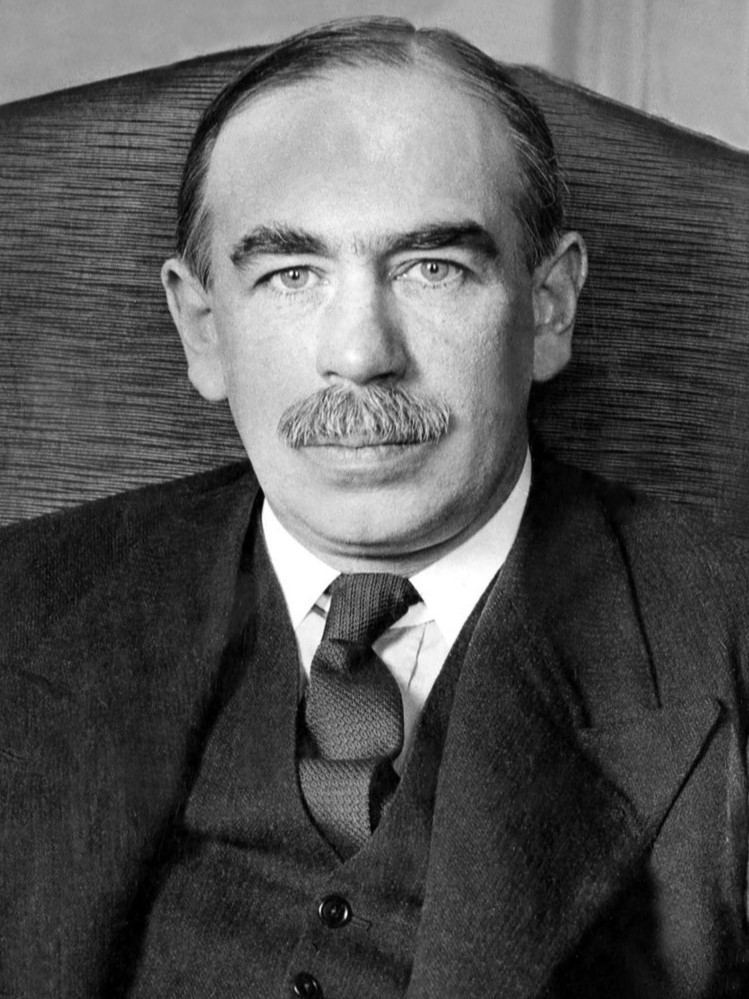
Today, John Maynard Keynes is a benchmark in the investing world, alongside many of the great investing masters, Benjamin Graham among others.
Keynes began investing in 1924, considering himself an expert in economics, and made numerous investments based on macroeconomic data. During that period, up to 1930, Keynes’s returns were dreadful. In fact, he lost money for several years. That was when Keynes realised that his economic knowledge would be no use at all for making money on the stock market, and he signed up for various courses to learn about the microeconomics of individual companies. In other words, what happens in the markets doesn’t matter, but what happens inside the company whose shares we are going to buy does. So we need to know the company we invest in inside out: who runs it and what their ideas are for keeping it going through difficult times.
The records show that once Keynes focused on simpler, more understandable systems, such as individual companies and their respective markets, he found success as an investor, and his returns began to dazzle the market.
1. Keynes on diversification
Like Warren Buffett, Charlie Munger, Bill Ackman and other giants of investing, Keynes believed that it is much better to invest a lot of money in a few companies we know perfectly than to put a little money into many companies we know something about. That kind of diversification is a protection against ignorance, and it is what makes the stock market so unprofitable. You have to concentrate your “bets” as much as possible.
2. Knowledge and experience are limited
It doesn’t matter how much you know or how much investing experience you have. You will rarely find more than 2 or 3 companies a year that are worth a look on their fundamentals. Keynes is talking about what Warren Buffett calls the circle of competence: investing is hard work, and there are only so many hours in a day, so we cannot follow many companies in any meaningful way. (See: Warren Buffett documentary: inside the mind of a genius)
3. Safety and success belong to the few, not the many
Graham used to say that when your shoeshine boy starts buying shares, it’s time to sell yours. Keynes came to understand that only a few investors achieve excellent returns in the markets, and they are precisely the ones who stay away from the herd and from popular stocks. When everyone is recommending a stock because of how incredible it is going to be, if you don’t already own it, you’re too late, so buying is probably not a good idea. And when everyone agrees that company X’s shares should be sold, it is probably time to buy. “Everyone” does not make money on the stock market, so simple logic tells us that doing the opposite increases your chances of winning.
4. Be an investor, not a speculator
Speculators only harm companies, creating price bubbles and senseless sharp falls. If you join the game, you will probably lose, because in the long run, unless you belong to a big firm that is driving the “speculative move”, you will lose money as an individual speculator. Keynes found success as an investor, not as a speculator.
For those who really make money on the stock market, investing is not simply fun: it is extremely hard work in which we have to read, analyse, think, study and so on. Those who treat the stock market as a game have one thing in common: they all lose money, because in casinos the house always wins. Many investors forget that on the stock market, the house is constantly taking a cut every time you buy and sell shares.
5. Skill and luck
Following on from the previous point, those who treat the stock market as a game tend to use words like skill and luck:
- Skill when they have made money.
- Bad luck when they have lost it.
6. The professional investor thinks long term
There is no need to feel afraid or ashamed if our portfolio is losing money at times, because investing skill is measured over the long term. We may make losses for 2 years during a bear market, which we use to buy at lower prices, but if we hold solid stocks in our portfolio, they always come out of the crisis, and since we have bought more shares much more cheaply, we will be even richer on the next rise.
Anyone who boasts about making so much money every day or every week will always talk to you in days and weeks, because over a year they have almost certainly lost money, or their return is far below what is considered attractive.
7. Investing is very simple
For Keynes, once you are on the right path, investing is extremely simple, because we really need to focus on what truly matters: the company, its results, its management, the direction of its market, its competitiveness, how it adapts to change, its past and its vision for the future, the price of its shares…
Keynes said that people with formulas that supposedly predict the direction of markets, stocks or bonds tend to impress only the uninformed with fancy mathematics (mostly based on Greek letters) built on false assumptions, while for Keynes, garbage in a formula just means garbage.
As we can see, Keynes thinks exactly like the rest of the great investors.
Further reading
- 5 very common mistakes made by beginner investors (and not-so-beginners)
- James Montier: the 7 immutable principles of investing
Featured image: Unknown author, Public domain, via Wikimedia Commons.



