

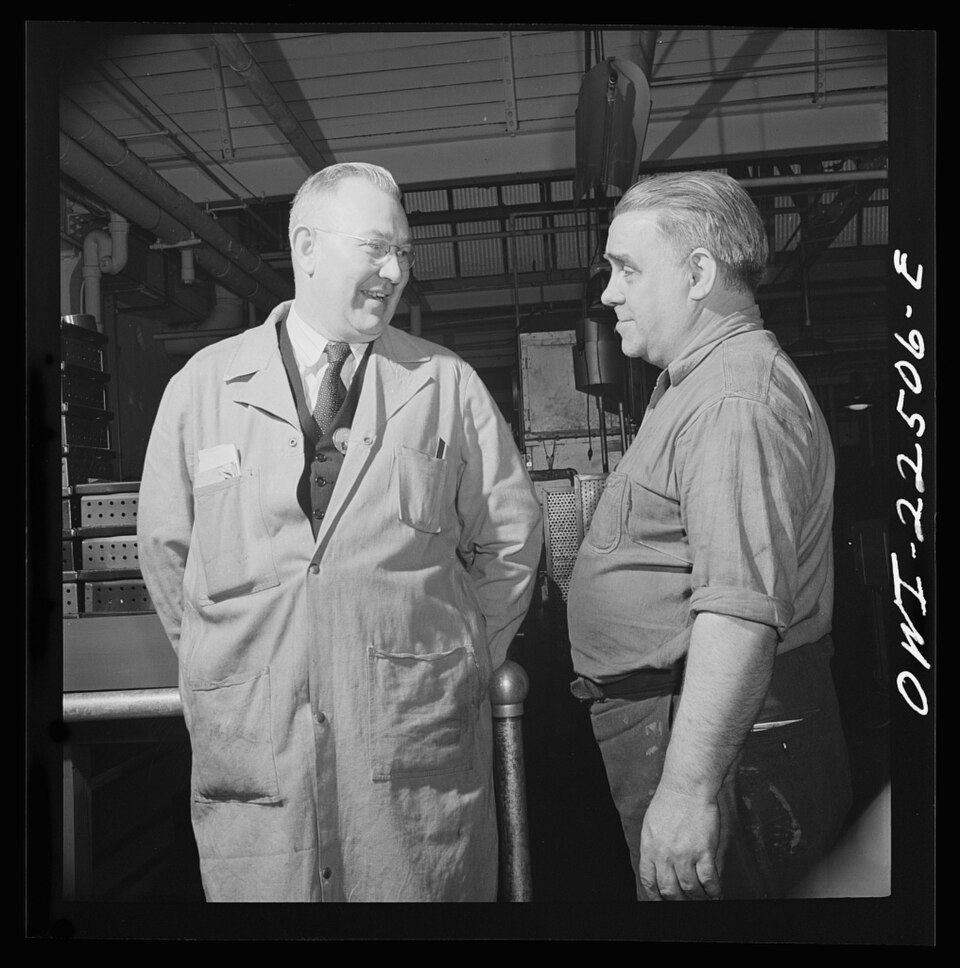
A leader needs certain personal qualities to do the job with real talent. We have written about this here on a few occasions before. Even so, differences of opinion, badly worded or badly thought-out orders and other circumstances can make the relationship between an employee and their manager difficult and, in some cases, impossible.
So what do I do?
On a short trip this morning, a colleague and I were talking about the same person. He had been my boss more than 20 years ago, at the start of my working life. I am grateful to him, to Don Jesús, because he was the first person who believed in me and supported my professional growth. Yet my colleague and I judged him in very different ways.
The fact is that, to some people, a boss can be a role model, while to others the same boss can be a disaster.
Let’s look at the causes of the problem and how to solve it, keeping a transfer as a last resort where possible, and leaving the company for truly extreme situations.
When the employee is the source of the friction
It’s hard to admit that we are to blame for the situation. But if we stop to reflect and consider that our attitude or our skills may be what triggers our leader’s constant professional corrections, the solution is easy: correct our own mistakes.
Let’s start from the premise that the leader has the company’s trust and experience in the role. Let’s be sincere and honest, and look for balance to make our day-to-day at work easier. Let’s learn to fit into the team as a professional competency; once the situation improves, our ability and performance at work will improve too.
When the team leader is the source of the friction
If it’s the boss’s temperament, way of working or conflicting orders that cause our anxiety and discomfort in the job, only reason, expressed politely, can be the formula for success.
The boss has the company’s trust, and the situation is like that of an unruly friend: someone we have known since childhood, with whom the relationship becomes difficult but not impossible. Anything is possible with patience and by focusing on the good things they have in common.
Once we get to know an awkward leader, we’ll be able to anticipate how they will act and adapt to their way of working, even if it’s different from what comes naturally to us.
Disagreements between boss and team member
These are the most rewarding and useful of all the problems with a boss: the ones where the two sides see things differently, even if their positions are sometimes very far apart.
They lead to learning, discipline and talent. If you’re the one who’s right, you’ll look for professional arguments to demonstrate your abilities; the leader will recognise them and, in the long run, this will win you recognition from your immediate superiors.
If he’s the one with the right arguments, he’ll be training you with all his professional experience, shaping you into the best professional on the team. You need to be modest and acknowledge when he gets it right.
Featured image: Marjory Collins, Public domain, via Wikimedia Commons.



