

Editor’s note: This article was first published in August 2016; the figure of more than 400 companies in the Virgin Group is the 2016 figure.
Behind a logo there is almost always a story. Other times, a logo is just a logo. Even so, a logo, like a company’s name, always tells us something about that company, even if only subliminally.
Richard Branson started a small record company in the 1970s. Today the Virgin Group is made up of more than 400 companies covering all kinds of sectors, from banking, technology and telephony to airlines and commercial space travel.
Where does the name Virgin come from?
As Richard Branson himself tells it in his autobiography Losing My Virginity, the young Branson and his friends and colleagues had no experience in business, so they were “virgins” in the business sense (in the other sense, they had not long lost their virginity). Naming the company was as simple as that.
Since their first company was the record label, in the middle of the hippy and punk revolution, they needed a logo that would identify them with the artists they represented. So they hired an English artist, who created the first logo of the Virgin brand: two twins in front of a psychedelic tree with a dragon.
Later on, Branson grew more ambitious and had the idea of expanding into other industries, so that hippy logo started to look dated and no longer reflected the direction the Virgin Group was heading in.
Branson now wanted an elegantly simple logo that would work for any other company in the group, whether a gym or a bank.
A young designer came to Branson’s house and started doodling on a paper napkin, just writing the name “Virgin”.
Branson says he loved it immediately. It looked like a signature. It had attitude and energy, and it was simple, and simplicity was, and always has been, the Virgin Group’s way of doing business.
After that, only the typeface and the weight of the logo changed as it evolved into the form it has today.
That simple logo now represents one of the largest business groups in the world.
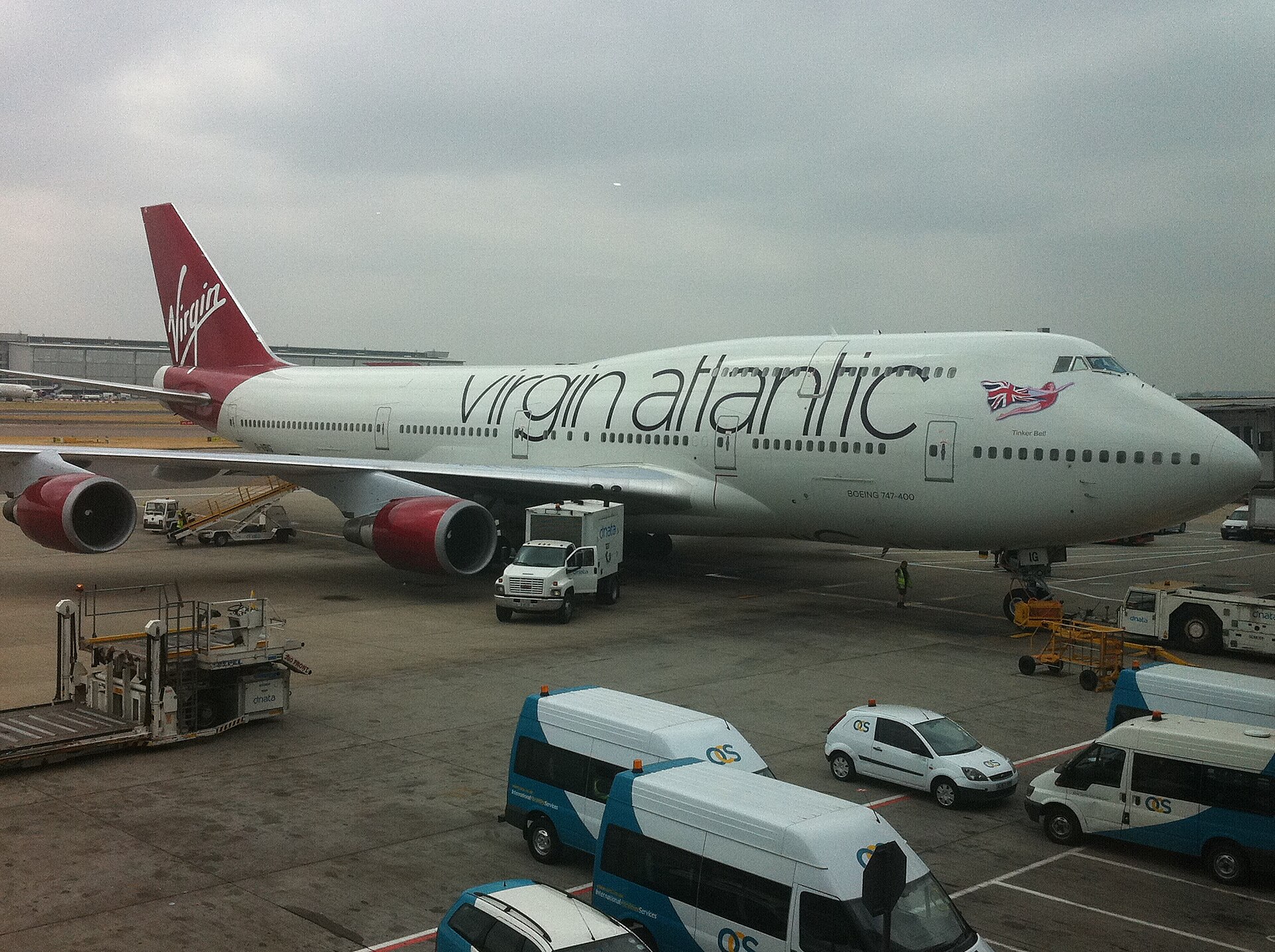
Featured image: aeroprints.com, CC BY-SA 3.0, via Wikimedia Commons.



