

Editor’s note: This article was first published in March 2014. All prices and forecasts are as of that month, including Gamesa below €2, Ezentis near €1, Lenovo’s entry zone, Amazon’s P/E of 647 and the view of Telefónica as a risky blue chip. The rumours about Apple and Tesla and Google’s work on a smart car also reflect that time. These March 2014 picks are kept as a historical record and are not investment advice. Several of the companies later changed drastically: Gowex admitted accounting fraud and collapsed in July 2014, Banco Popular was resolved and sold to Santander for €1 in 2017, Abengoa went through insolvency proceedings and Gamesa merged into Siemens Gamesa in 2017.
Sometimes we decide to invest in companies because of their past returns or the upward run a stock has been showing. It’s true that, in terms of probability, if we decide to buy into a rising stock, the odds of the uptrend continuing are usually in our favour, just as investing in a downtrend is what Buffett called “catching a falling knife”.
While there are many stock analysis techniques for the short and medium term, when we decide to use value investing, we shouldn’t just invest in a solid company at a good price. Even the investors who make the most money on the stock market tend to be something of visionaries. (Read: Which markets to invest in in 2014)
The icing on the cake is investing in a company that is still considered a penny stock and that over time becomes a great company. Let’s say the visionaries who invested in Microsoft and Apple when they were risky companies are the ones who have really earned powerful returns.
We won’t choose a company, but a sector and an industry
First we choose a promising sector, a growing industry, and we analyse the probability that this industry will be profitable in the coming years and reach its peak within the next 20 years. After all, we are thinking of investing for the long term. Choosing that industry will lead us to analyse the possible trends.
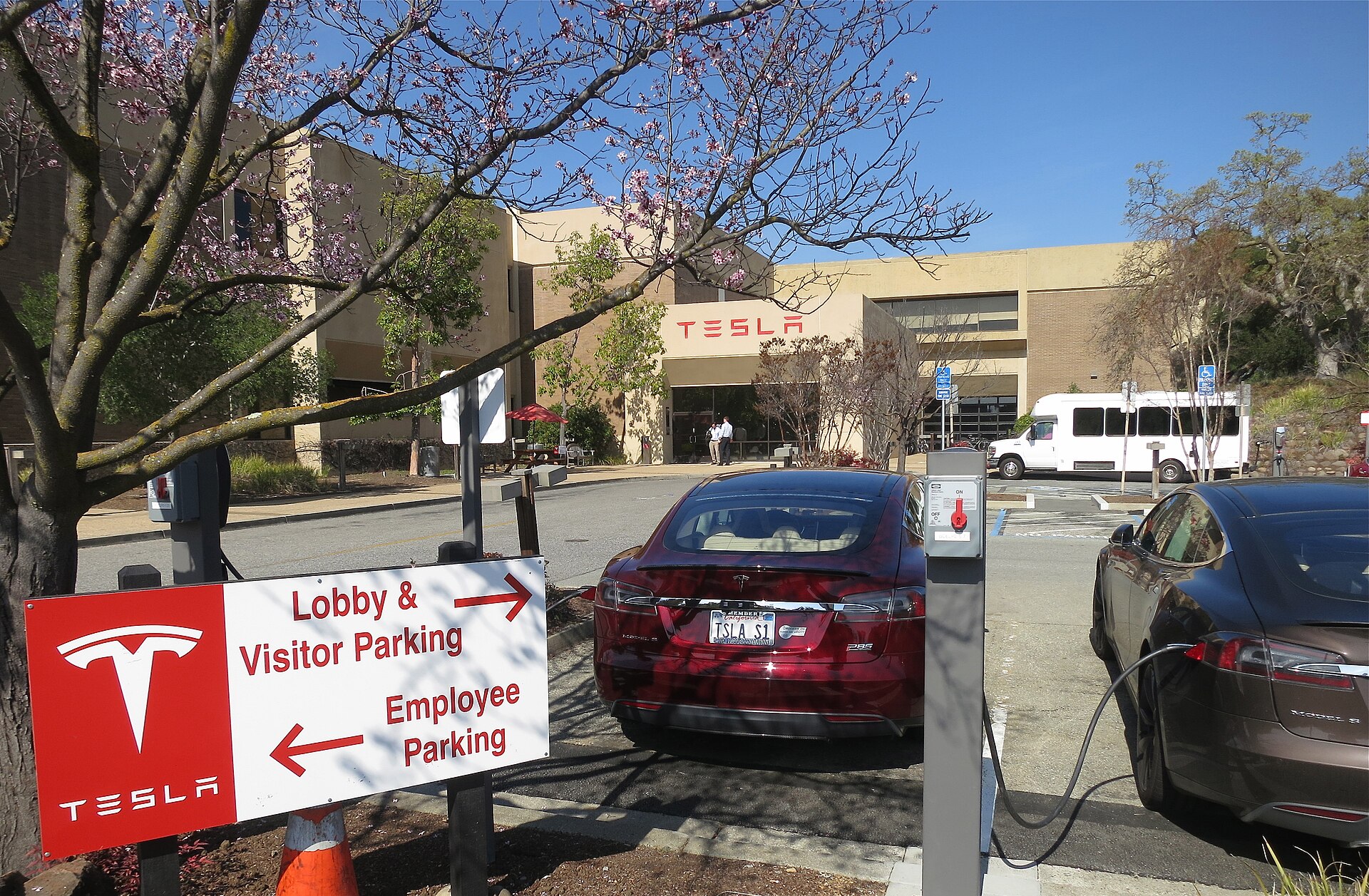
In other words, if we bet on the vehicles of the future, the odds that the car of the future will be electric and smart are very high. And so, among the companies putting themselves forward as winners in this market, we would have Tesla Motors. However, if we look much further ahead, there’s a good chance that Tesla will be acquired by other giants. In fact, Google is working on a smart car, and it wouldn’t be crazy to think that sooner or later either Google could buy Tesla or they could combine their technologies to develop the car of the future.
But there is another player in the market, Apple, a company that is rumoured to be trying to buy Tesla, and Apple certainly does have the cash to buy it.
The vehicle of the future will probably come from these three companies. (Read: In 10 years, Google shares could top $3,500)
The solar and wind power sector
Solar and wind power will be the future. When I recommended Gamesa, I didn’t arrive at Gamesa as a company at first, but as a sector.
Looking for the energy of the future, I first thought of solar power, but several reports said that wind power would be much more profitable in the medium term. I looked for a company well positioned in the wind sector, and the reports led me to Vestas as the best-positioned wind turbine manufacturer on the market (if we set aside some Chinese companies). The thing is, I saw that Vestas shares weren’t as cheap as they could be.
I looked for its biggest competitor and found Gamesa, which was so beaten down that its price below €2 was striking, considering that Gamesa has technology every bit as good as Vestas’s.
In fact, I came to think that Gamesa wasn’t just a suitable company for betting on renewables. Gamesa is simply the company we’re looking for if we bet on wind power, because even at the price it trades at today, it is still cheap. I would venture to say that we’ll see Gamesa above €30 a share again. Of course, we’re probably talking about the long term.
If we try to find companies to invest in with solar power in mind, things get complicated, because there are hundreds of companies developing technologies to boost solar energy.
But there is still one company that will be part of the future of renewables, and that company is Abengoa, in my opinion, of course.
On the other hand, when I decided to invest in Ezentis, I only weighed up a sector with a big pie to share out. It’s not that Ezentis has a competitive advantage over other companies in this sector, but given where it’s coming from and where it’s heading, and trusting García Durán’s management, I think it’s a company that will grow again in the short and medium term. Of course, García Durán should get rid of some dead weight such as Vértice 360 and anything that isn’t a strategic business.
Ezentis’s technical picture has become quite complicated, although what worried me most was the break in its trend of rising profits, as its losses doubled. Even so, we have to wait for all the investment the company has made abroad to bear fruit. It is also currently reducing its exposure to the Spanish market, and as soon as the Spanish economy improves (which I would think it will one day), Ezentis will win back market share in Spain. I would take advantage of Ezentis’s recent falls to buy (especially anyone who arrived late and missed the rise).
Still, be very careful, because Ezentis has been left with practically no support levels. Today it held at the bottom of the downward channel it is tracing, but if it breaks out of that channel and the psychological level of €1 doesn’t stop the fall, we could see it drop much further, since there is no significant support until €0.47. Unlikely, but…
I’m still betting on Lenovo, a company that promises to keep putting up a fight and could surprise in the medium and long term. Since five research firms cut their price targets for it, it has left us an ideal entry price in the HK$7.82–8 range (about €1 per share).
Choosing moderate-risk stocks and long-term companies would lead us to avoid tech companies like Twitter, Facebook, LinkedIn, Groupon and even Amazon. The latter has a P/E ratio of 647, and that’s not good business, however high its growth expectations. Could they rise a lot further? Of course. Nobody knows, just as they could fall tomorrow.
Analysing a sector from the outside in is what makes me see Telefónica as a risky company: it’s a big company with enormous debt and a slice of the pie that keeps getting smaller, as competition grows and new forms of communication threaten it. Telefónica is that big blue chip that I believe is in serious danger and that will end up costing money to investors who bet on its future.
See also: Investing in ETFs: what they are and how they perform
If we choose the Spanish banking sector, I would bet on CaixaBank and Banco Popular, which are mid-sized banks, although CaixaBank in particular is one I do think has a competitive advantage. Let’s say it’s one of the banks positioning itself best to make much bigger profits with fewer staff. Bad for workers, good for shareholders. It also pays good dividends.
In terms of upside potential, I would bet on Banco Sabadell with a modest percentage of my investment capital.
One of our new speculative long-term bets would be Deoleo, a company I believe is undervalued and will probably surprise on the upside, regardless of the takeover rumours.
I haven’t changed my view much on the companies I’ve been betting on since 2012, so right now these are clearly almost the same recommendations, just at higher share prices.
My latest changes were selling Gowex and buying Lenovo, as well as buying, and later averaging down on, the pharmaceutical company Navidea. We have also added a little more to the small block of Deoleo shares I already held.
Once we are clear about which industry we want to invest in, and we know which companies are positioned to take advantage of and lead those industries, that’s when we should analyse the company’s fundamentals to find out whether it is expensive or cheap. That’s also when we could use technical analysis to choose an optimal entry point.
Further reading
Featured image: Steve Jurvetson, CC BY 2.0, via Wikimedia Commons.



