

Editor’s note: This article was first published in July 2012, at the height of the euro debt crisis, with the IBEX hammered by short positions and Spanish 10-year yields around 7%. A week later, on 23 July 2012, Spain’s CNMV banned short selling of Spanish stocks for several months.
Most people hear about the markets without knowing exactly who they are or what kind of people are behind them. Are they men in suits and ties? Are they the hidden hand pulling the strings of the economy from the shadows? And the big question is why the markets are so keen to bet against the European Union, and against Spain in particular.
Well, the simple explanation is that the markets are made up of three groups of people.
Group 1. Retirees
The market is mostly made up of retirees who invested their money to secure a good pension and keep their purchasing power and standard of living in retirement. The typical retiree here is a company executive or former executive who is well advised or knows about finance, so they use equities as well as investment funds from fund managers with a strong reputation for high returns in private banking.
This investor doesn’t want to take risks at their age, so if they hold shares in a country that is having problems, they don’t hesitate to sell. This type of investor won’t show up in Spain until the situation changes, unless they turn to group 3, which we explain below.
Group 2. People preparing for retirement by growing their investment portfolio
These are the same people as in group 1, but 10 or 20 years earlier, so they usually split their money between fixed income and equities. They use fixed income for the long term, but in equities they want to make money every week and every day, so they invest in both directions of the market. In other words, they will bet on prices rising and won’t hesitate to bet on them falling. This type of investor is currently “hammering” the IBEX with short positions.
As for fixed income, they look for government debt from countries that pay good interest, which makes Spain ideal for them. The worse Spain does, the more this investor earns from buying its debt. It suits them for the Spanish risk premium to soar and for the Spanish government to have to pay more than 7% interest on 10-year bonds.
Group 3. Investment funds
Investment funds have to answer to their clients, who are mostly the people in groups 1 and 2. When these funds concentrate all their capital and put it into various investment vehicles, they can move any index in the world up or down, because they are not just investors: they are also the ones telling people all over the world where to invest, through what they publish in the financial media.
In other words, these funds talk up doubts about a country’s recovery and reinforce the negative messages that feed the chaos. That way they make sure the risk premium will rise and the stock market will fall, and they take advantage by adding to their basket high-yield fixed income, futures that bet against an index and any investment product that can be used to profit from a fall in the market or in the euro.
The strategy investment funds follow in the short term is to go long on the S&P 500 and short on the IBEX 35, so if our IBEX shot up on some macroeconomic news, it would cost them money.
That’s why every time I hear about austerity measures to reduce the deficit and bring down the risk premium, I can’t stop thinking about that retired former executive of a big American company. When he reads an article headlined “Government measures fail to please the markets”, he must be laughing his head off, because he is delighted that government debt is getting more expensive and with the money he will make from the fall of the Spanish economy after the measures announced.
Our leaders should know that the market always wins, because it has two directions in which to make money, and yet we seem determined to hand it easy profits on the way down.
If we want to keep the market happy, the Government only has to ban short positions. Then the markets would have only one way to make money by investing in Spain: on the way up. And if they don’t like that trend, they don’t have to invest, but at least they won’t be screwing up the IBEX.
The fact that nobody is even studying a ban on short positions, even though it’s obvious they are wrecking the market, makes me think of a few theories that we’ll leave for another day…
A note: In the old days, you only made money on the stock market when it went up, which is why people said that nobody made money in a falling market. Some people’s ambition got the better of them: they developed a system to make money both when the market falls and when it rises, and they invented all kinds of investment products, such as the famous credit default swaps (CDS). I have always considered this product one of the direct culprits of the crisis, once it fell into the hands of unscrupulous speculators, because with it, if you sink a company, you make a fortune.
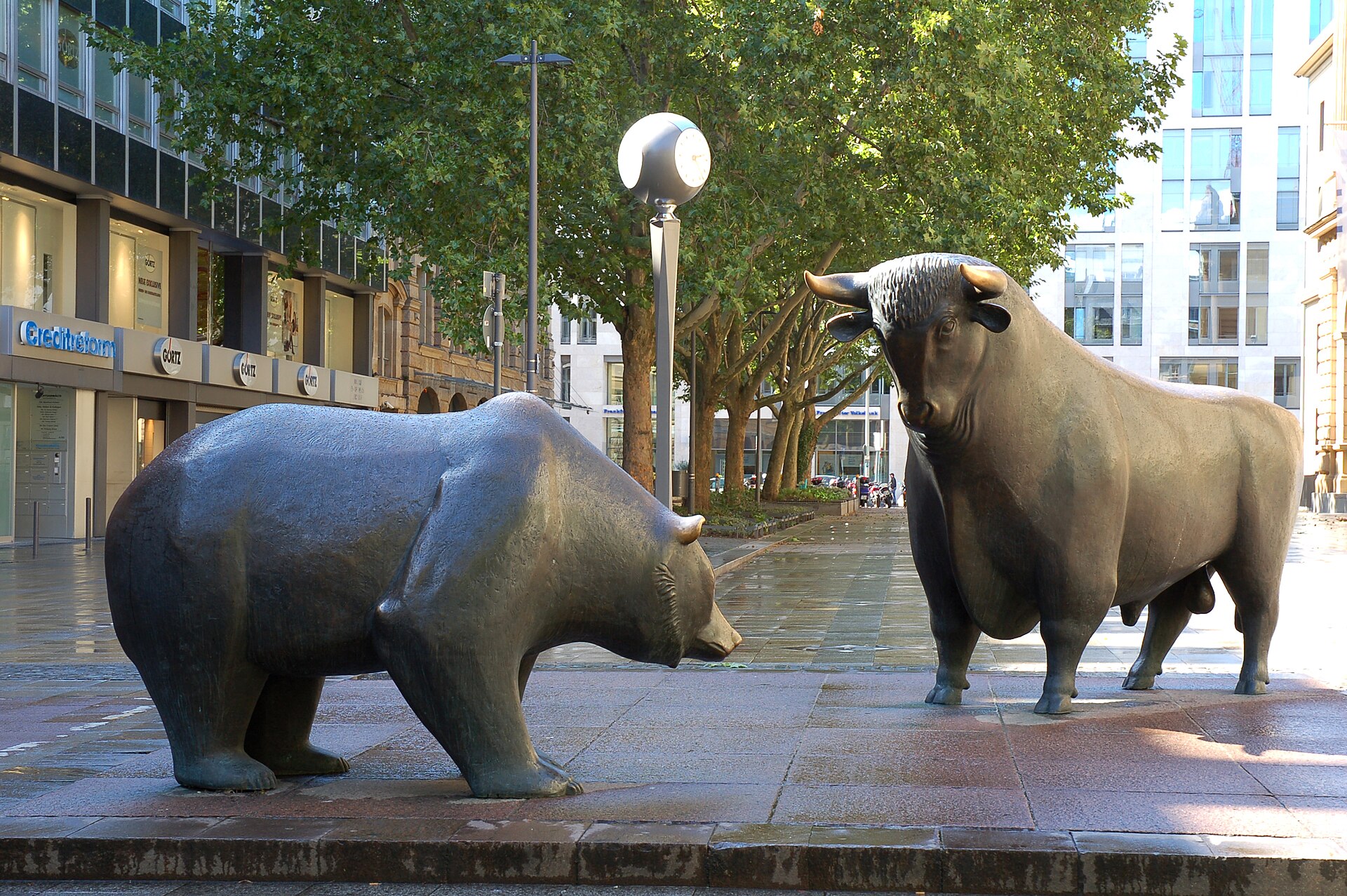
Featured image: Eva K., CC BY-SA 2.5, via Wikimedia Commons.



