

Our brain is our greatest ally. But it is also our worst enemy if we haven’t trained it properly. Sweaty hands, a heart beating faster than usual, an upset stomach, a headache, anxiety… our brain has already sent signals to the rest of the body to warn us that something isn’t right.
Perhaps that’s why therapy for executives, where they learn to manage their emotions properly, is so fashionable: a businessperson or a professional can afford a certain amount of stress, but not anxiety, and much less choking when things get complicated.
Since our brain comes wired for survival as standard, in the business world that struggle for survival can affect us in two ways: high adrenaline or unwanted passivity.
Either way, in business and in our own lives, both effects can lead to burnout and stress, as well as unnecessary and avoidable anxiety.
Our brain
We are built to survive, but when it comes to thriving and going further in life, we’ll have to be better prepared to withstand the pressure that comes with it.
We should take it for granted that successful people have endured far more problems, pressure and stress than people who only want to get by.
That’s why you’ll have heard someone say more than once: “I don’t want to start a business. It’s too much responsibility and insecurity for me. I’d rather work for someone else and get paid at the end of the month.”
Here we have a person who runs away from stress and pressure and, therefore, embraces comfort.
For many people this way of thinking brings a short-term win, because in the long run, if they’re laid off, they would probably face more anxiety than the businessperson.
In other words, avoiding stress and pressure often makes people miss great opportunities to prosper in life, and they end up finding exactly what they tried to avoid.
So, whether we are trying to avoid failure in general or we’re caught up in a series of apparent problems that are causing us anxiety, let’s look at the causes that could lead us to sabotage ourselves.
1. We’re not seeing the big picture
To explain this, a person is often shown a piece of card held right up against their face and asked what colour it is. They’ll say the card is black. Then we move the card away, and the person clearly sees a green card, though with a small black spot, which is what they saw when we pressed it against their face, forcing them to focus on the black part.
That sometimes happens to us. Put more simply, “sometimes we look so hard at the trees that we can’t see the forest.”
At other times we’re so fixated on short-term problems that we forget our long-term mission. Our memory tends to hold on to immediate worries far more than to future rewards.
A loss also hurts us more than a gain pleases us, so the fear of failure in the short term is greater than the possibility of succeeding in the long term.
That’s how our brain works, so in the end we’re such “masochists” that we focus more on the bad than on the good; on the few problems rather than on all the good things.
So our first step to avoid choking in a stressful situation, or holding back our own success, is to recognise that we are victims of our own thinking, a kind of thinking that most efficient, emotionally strong and successful people pulled out of their minds a long time ago.
2. Poor problem management
It may sound like cheap motivational theory, but the truth is that there are two kinds of problems: those that have a solution and those that don’t. In both cases, we already know what we have to do: solve the ones that can be solved and let go of the ones that can’t. I know it isn’t easy, but we have no other choice.
Among the problems that can be solved, we have often allowed some of them to arise because we didn’t deal with them in time. As Tony Robbins put it in his book Awaken the Giant Within, you have to kill a monster while it’s small, because if you let it grow, it will take more work and more emotional resources to fight it. That brings us to the next point: stop procrastinating.
3. Procrastination
Tackle a problem before it becomes an emergency. Suppose you make a list right now and find 10 problems (2 of them with no solution). That leaves just 8. Which are the easiest to solve? Start tomorrow by taking the necessary steps to solve that problem.
Back to the card example, though: our problems are often small spots on a large green card, but we choose to suffocate by looking only at those spots, and we see the whole card as black. That is focusing on the spot (the problem). Focus instead on the solution to that problem, and you’ll see how the anxiety fades as you solve it.
See also: 16 things you should know about life, success and happiness
4. We switch off “autopilot”
Most of us go through life on autopilot. Usually we’re all good at something. As I write these lines, I don’t feel anxious about not knowing how to write; it comes automatically. The same is true for the factory worker, the IT specialist, or the businessperson who starts to take off by doing what they know.
The problem is that when we spot the “iceberg”, we switch off the autopilot and take manual control, because we’re not used to that kind of “mishap”, and in that moment it overrides our intelligence and experience. From then on, if we’re not made for adversity, our brain stops being as efficient.
By switching off the autopilot, we’ve stopped doing what we do well in order to focus on that huge iceberg, which makes us drop everything to avoid it. But this is a poor metaphor for life in general, because we are not captains of the Titanic and there is no iceberg ahead of us.
In fact, in our professional field and in our lives, if there is an iceberg standing between us and our goal, what we should do is speed up the ship and smash through it, full steam ahead. Because you have to face your problems.
5. We overstimulate ourselves, and that’s not entirely good
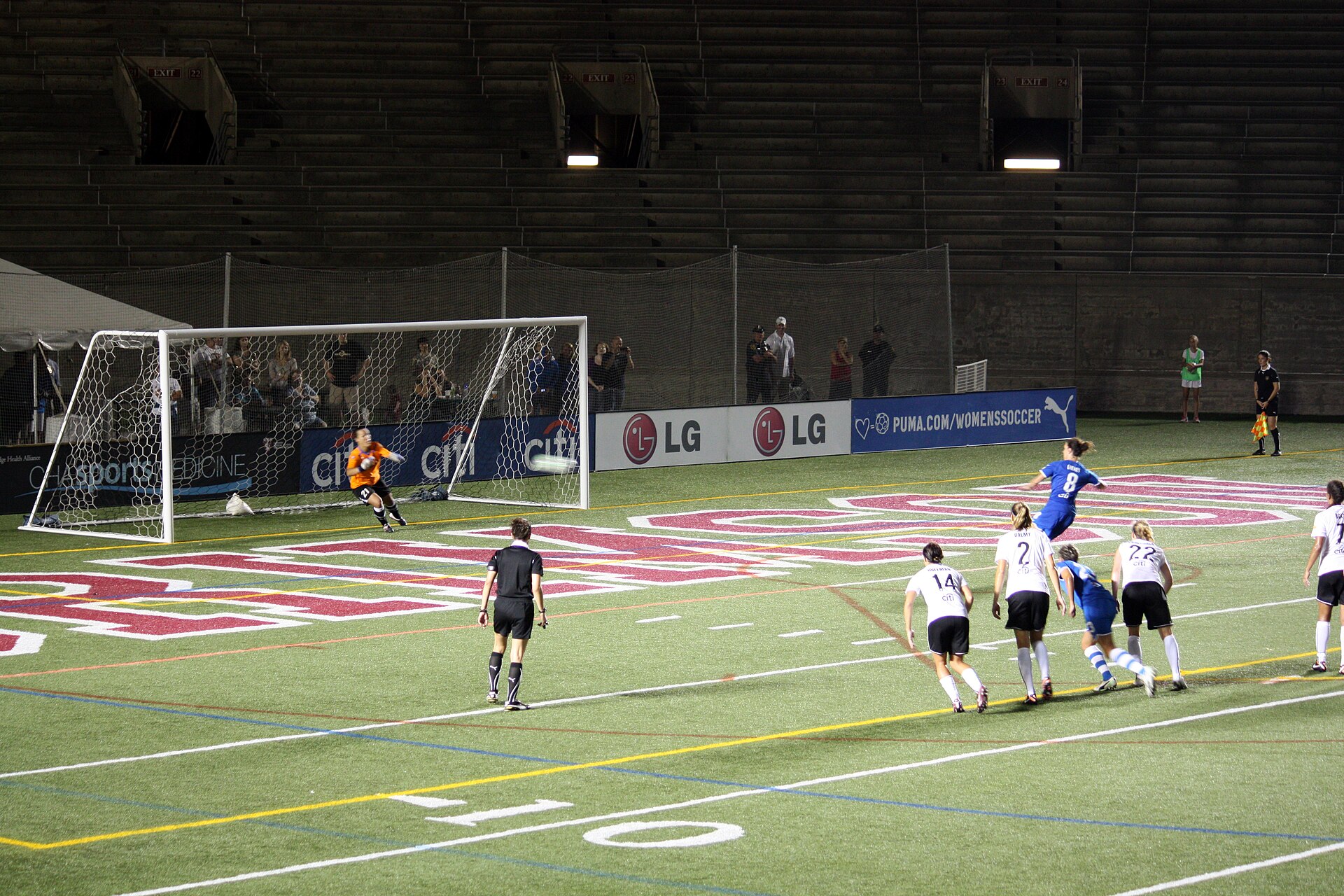
The bigger the reward we’re chasing, the more anxiety we’ll suffer. Football fans will understand this perfectly. Any professional footballer would score a penalty on any ordinary day. In fact, the penalty is the maximum punishment precisely because it will most likely end in a goal.
But in an important match, players sometimes not only miss the penalty but send the ball nowhere near the goal. That is down to high-reward anxiety, and also to the fear of failure: we focus on it, and since we tend to achieve whatever we focus on most, we end up bringing it about.
This phenomenon affects all of us. The more desperate you are to get a job, the worse you’ll do in a job interview.
What’s the solution?
On top of everything we’ve said, step zero is recognising what is happening to us, and I really think anyone knows when they’re suffering from anxiety and severe stress.
Find the main problem: I don’t buy that a person’s life is nothing but problems. We often see the whole “card” as black because a single problem is spreading to our entire existence. And because our thinking is influenced by negative emotions, everything looks negative. Often the problem is you and the way you think.
For example, if you catch your partner cheating on you and go to the cinema two hours later, whatever film they show, it’ll most likely be crap. The same thing happens in our lives.
Remember the long term: Keep firmly in mind that life is not linear. Success isn’t linear either. And I really don’t think it’s about getting from point A to point B. I’d rather say that any long-term goal means getting from point A to point Z, so you’ll have to go through many letters of the alphabet to get there. Not all the letters will be bad, but take it for granted that not all of them will be good either.
Accepting that you’ll run into problems, and learning in advance to respond to adversity by managing negative emotions properly, will help you avoid anxiety in the future.
Remember: you’ll lose matches, but what you’re playing is a league. And even if you lose this league, another one will come along.
Trust your autopilot: Sometimes I think this comes down to low self-esteem; as a rule, we’re better than we think at what we do. Sometimes, in the face of adversity, it’s a matter of staying on autopilot, because we only need to do what we know how to do, simply because we do it well.
That’s why athletes fail under pressure: they switch off their autopilot, forgetting that they’re only going to do what they’ve done a million times, the thing they do best.
Read next: 17 steps to survive the worst moments of your life



