

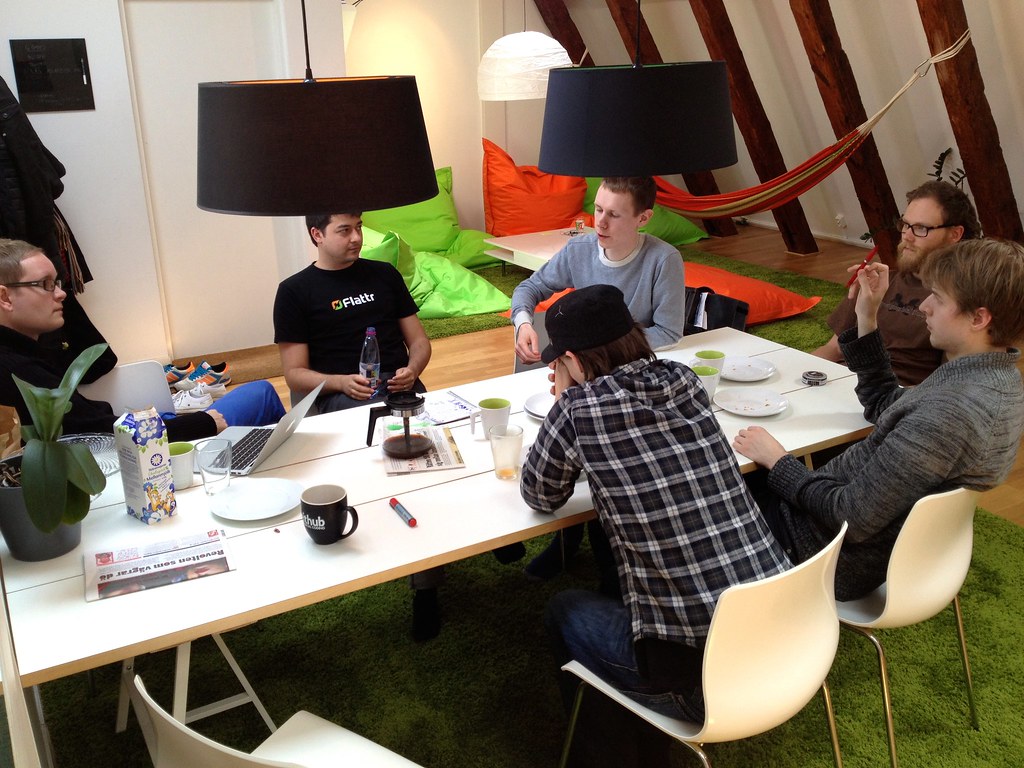
At a certain point in a selection process, we find ourselves with countless CVs that could be of interest for the position we are offering.
There are so many that, for reasons of cost and time, it isn’t possible to interview each candidate in person. There is, however, a preliminary step, the group dynamic or role-play, which considerably reduces the group of candidates who move on to the next stage of the selection process.
The theory of group dynamics
A group dynamic can be defined as the attitudes and feelings shown by the members of a group when they are given a problem or activity they must solve.
With this as a pretext, recruiters run a tactical exercise to uncover the personal qualities of their candidates, in a trial whose staging reveals the traits they are looking for in the professional profile.
A practical example of how to approach a group dynamic
Let’s start from the premise that this selection activity is run by a recruitment company assessing the professional abilities of a group of candidates. The group ranges from 8 to 15 participants.
The recruiter will choose a game that the members of the group have to tackle. This discussion game will test the values they are looking for in a candidate: teamwork, decision-making, problem-solving, customer service and even working under pressure. A group of people, who in most cases don’t know each other, will face this for a set period of time, and among them we’ll find different types of characters, such as:
- Candidate A: Needs to have everything under control and in order, and gets flustered by day-to-day improvisation.
- Candidate B: Joins in with a smile and comments on all their colleagues’ contributions, but their remarks are empty and lack substance. Makes a good impression on all the participants.
- Candidate C: Very introverted and fails to get involved in any of the proposals; someone soon talks over them and doesn’t let them take part. Tends to nod along but contributes nothing.
- Candidate D: Pays attention to detail, speaks up politely, and their contributions are correct and appropriate.
- Candidate E: Tries to build consensus for their contributions within the group and defends their arguments coherently. Even when the others rebut their arguments, they defend their position energetically and in the right manner. Knows how to bring colleagues round to their point of view.
- Candidate F: Arrogant; their contributions always come with criticism of their colleagues.
- Candidate G: Offers plenty of solutions to the issues the group raises. Even when they aren’t accepted, they stay involved in the search for solutions and aren’t discouraged when their ideas are rejected.
- Candidate H: A leader; whatever is put forward, they are the one who has the last word and makes the decision.
- Candidate I: Their solutions aren’t valid, but they persist in arguing for them, standing up to the others’ criticism.
The answer
The group dynamic had two goals:
- To rule out candidates who meet the initial requirements.
- To find those who match our professional profile: teamwork, decision-making, problem-solving, customer service and even working under pressure.
We see that the candidates who may fit our profile are D, E, G, H and I. Candidate B is doubtful, and we rule out candidates A, C and F.
Six of the nine candidates would go through to interview. They match the profile we are looking for, which we’ll need to explore in depth in the personal interview.
Seeing yourself in the example
We started by asking: why don’t I get through group dynamics? Let’s look honestly at how we take part in them: are we arrogant, do we stay out of the conversation, do we criticize everyone else’s contributions, do we fail to defend our ideas coherently?
These could be some of the reasons.
Featured image: Flattr, CC BY-SA 2.0, via Flickr.


