

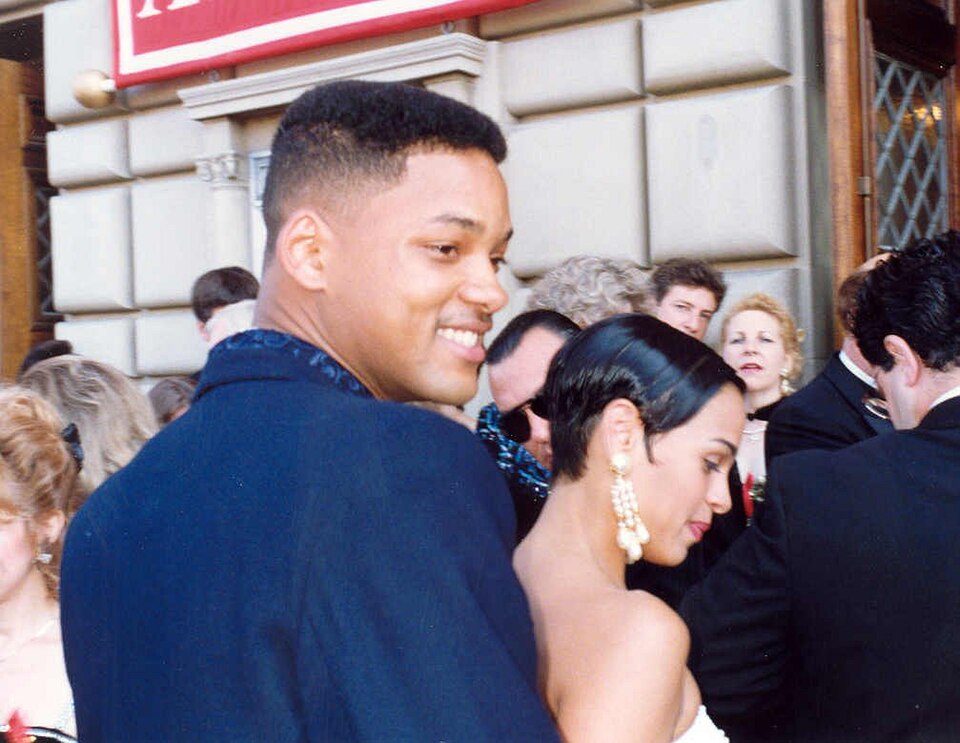
Editor’s note: This article was first published in February 2022, a month before Will Smith slapped Chris Rock at the March 2022 Academy Awards. The piece presents him purely as a role model and was written before that event.
It had been a long time since I enjoyed a book as much as I enjoyed Will, Will Smith’s memoir. Written with the help of Mark Manson, author of The Subtle Art of Not Giving a F*ck, it really is a brilliant book, full of hundreds of useful life lessons.
We’ll go through the lesser-known chapters of Will Smith’s childhood, live through his first big success and the financial ruin that followed it. Each chapter leaves us with a great life lesson from Will Smith that can help us avoid making exactly the same mistakes, whatever your social background or profession. Will’s philosophy goes further than that.
Life lessons from Will Smith’s memoir
The foundations that gave Will his power
Will Smith had three very different teachers in life, three kinds of philosophy which, when combined, give you a great deal of power.
His father’s tough philosophy of life
Will Smith’s father was the closest thing to a military officer. Everything was about hard work, and his philosophy was: “Better to die than to quit.”
His father helped him understand that with consistency, determination, hard work and patience you can achieve what seems far too difficult today.
Perhaps the example that sums it up best is the wall he made Will and his brother build. As they laid bricks for that giant wall, both brothers got depressed looking at all the work still ahead of them.
That’s when Will’s father told them to stop thinking about the whole wall and focus only on laying each brick properly. After a long time, brick by brick, the wall was finished.
And that’s basically how things work in life: small actions done the right way end up building something big. If you apply this way of looking at life properly, in the end you’ll see what Warren Buffett meant when he said, more or less, that it’s easy to succeed by doing a few things right as long as you don’t do too many things wrong.
Will Smith’s mother’s philosophy
Will’s mother played a very important part in the life the actor would go on to lead. For her, the secret lay in intelligence and knowledge.
In this life they can take everything from you; you can lose any material thing, but no one can take away the knowledge you’ve acquired. And a person with a lot of knowledge, and some intelligence in applying it, will get back on their feet again and again.
See also: Atomic Habits: what I learned from James Clear’s book
Will Smith’s mother also taught him to make the most of one of his greatest talents: his sense of humour. Will’s sense of humour would open many doors for him, both personally and professionally. In fact, it’s his trademark in film.
But even to be a good comic actor, his mother reminded him, you have to be smart and knowledgeable.
Gigi, Will Smith’s grandmother
Will’s grandmother taught him the value of kindness and love. Will admits he never met a kinder person than his grandmother Gigi, a woman who put other people’s happiness before her own, and found happiness that way.
The lesson Gigi left us is that the secret to being happy isn’t how many people love you, but how many people you love. Other people’s love for you doesn’t depend on you, but your love for others does.
Later on, in the hazier moments of Will’s life, these teachings would make sense.
The problem is you
When you don’t have money or fame, you can justify your unhappiness. You think that the moment you have a lot of money, your problems will be over. But one day you find success, money and fame, and you’re still miserable. The day you discover that the problem is you is a hard one.
Will Smith found out in the worst possible way that nothing you can get from the material world can make you happy if you don’t already have happiness inside you.
When you get a chance, make the most of it
Will Smith achieved every musician’s dream: recognition, awards and millions. In his memoir he tells how, when it came time to prepare his second album, they decided to rent a studio in the Bahamas. Whether they used the studio or not, they had to pay for it.
Will got complacent and saw first-hand how an artist crashes. Three expensive cars, parties and alcohol, while the studio’s recording light didn’t come on for months. In the end, after a wake-up call, they had to record the album in a rush. The result was that his second album flopped commercially. An artist had died. All the effort he had put into reaching the top, he had flushed down the toilet.
At that point Will Smith found himself broke because of his excesses. It’s very common in the world of artists. Fortunately, Will Smith learned his lesson and promised himself it would never happen again.
Here again we see the consequences of the previous point: the problem is you, so the solution is also you.
Magic can happen
Extraordinary things happen to ordinary people. We could call this “magic”. Magic exists, but it demands:
- Awareness and faith. You have to believe in magic; you have to believe it’s possible. There’s an example that shows what faith is: “A group of farmers suffering from drought on their land gathered to pray and ask God for rain. Only one child turned up with an umbrella. Only that child had real faith and firmly believed in the prayer.” In real life, though, you have to be more pragmatic, and however much faith you have, nothing will happen unless you also take the following points into account.
- It demands preparation. When an incompetent person succeeds, it can only be down to luck, although only rarely does luck favour an unprepared incompetent over someone better prepared. Life rewards whoever prepares best, whoever has spent hours and hours getting ready for what they’re about to do. There’s no success without hard work and preparation.
- Unbreakable commitment. It isn’t enough to give 100% or to prepare better than other people. Unbreakable commitment shows up when the big obstacles and the big falls appear halfway along the road. Thriving in the middle of chaos, moving forward in the middle of adversity. That is true unbreakable commitment.
The most beautiful things sit right next to the most terrifying
Will leaves us this lesson at the end of the book. During his famous helicopter jump over the Grand Canyon, which was broadcast live on YouTube, Will admits he was terribly scared. In fact, if it hadn’t been live, he probably wouldn’t have jumped.
Once he faced his fears, in the middle of the jump, he was able to take in the view of the Grand Canyon from above. Will Smith understood that for some reason (Will’s own words) God had placed the most beautiful things right next to the most terrifying ones.
In other words, until you’re able to face your fears, you won’t be able to enjoy many things. Today it’s called “stepping out of your comfort zone”. I’ve always called it having the guts to take life on.
Analysis paralysis
Analysis paralysis affects a large share of the population. Basically, it means thinking about doing something, knowing you should do it, but spending too long thinking or drawing up strategies. The problem is that it’s always better to take a first step than to think for 10,000 hours.
The first time Will saw how things should be done was when he signed his contract for The Fresh Prince of Bel-Air. He describes how analysis paralysis doesn’t exist among Hollywood decision-makers.
When someone told the show’s director there was a rapper out there who might be right for the lead role, they had Will come to a party. Once he was there, they gave him a short audition, and once they were satisfied they asked the lawyer to bring the papers to sign the contract. Everything suggests that’s how Hollywood works, and we certainly know that’s how great successful business people work.
If you’re going to do something, just do it. And do it now.
Will Smith’s philosophy
Finally, over the course of his life Will has developed a rather unusual philosophy, a mix of his father’s military-style teachings and his own experiences:
“If you set out to do something, do it or die trying.”
This philosophy is what has made Will Smith successful. Will himself admits he isn’t smarter than lots of other rappers and actors. In fact, he considers himself to have average talent, just one of the pack. But he has something most others don’t: this philosophy.
A famous Will Smith line makes it easier to understand. Roughly translated, it goes like this:
“If you and I get on a treadmill and whoever quits first loses, I can only promise you one of two things will happen: either I’ll win, or I’ll die on that treadmill.”
Will says, in his own words, that the only way to beat people more talented than you is to work while they’re resting, to work harder while they’re on holiday or enjoying the weekend, and if that’s not enough, to work while they’re asleep. Only then can you beat someone who is better than you.
And those, basically, are some of the lessons we can draw from Will Smith’s memoir. There are many more.
See also: The 5 best books for changing bad habits
See also: The business lessons these entrepreneurs would give their younger selves
Featured image: photo by Alan Light, CC BY 2.0, via Wikimedia Commons.



