

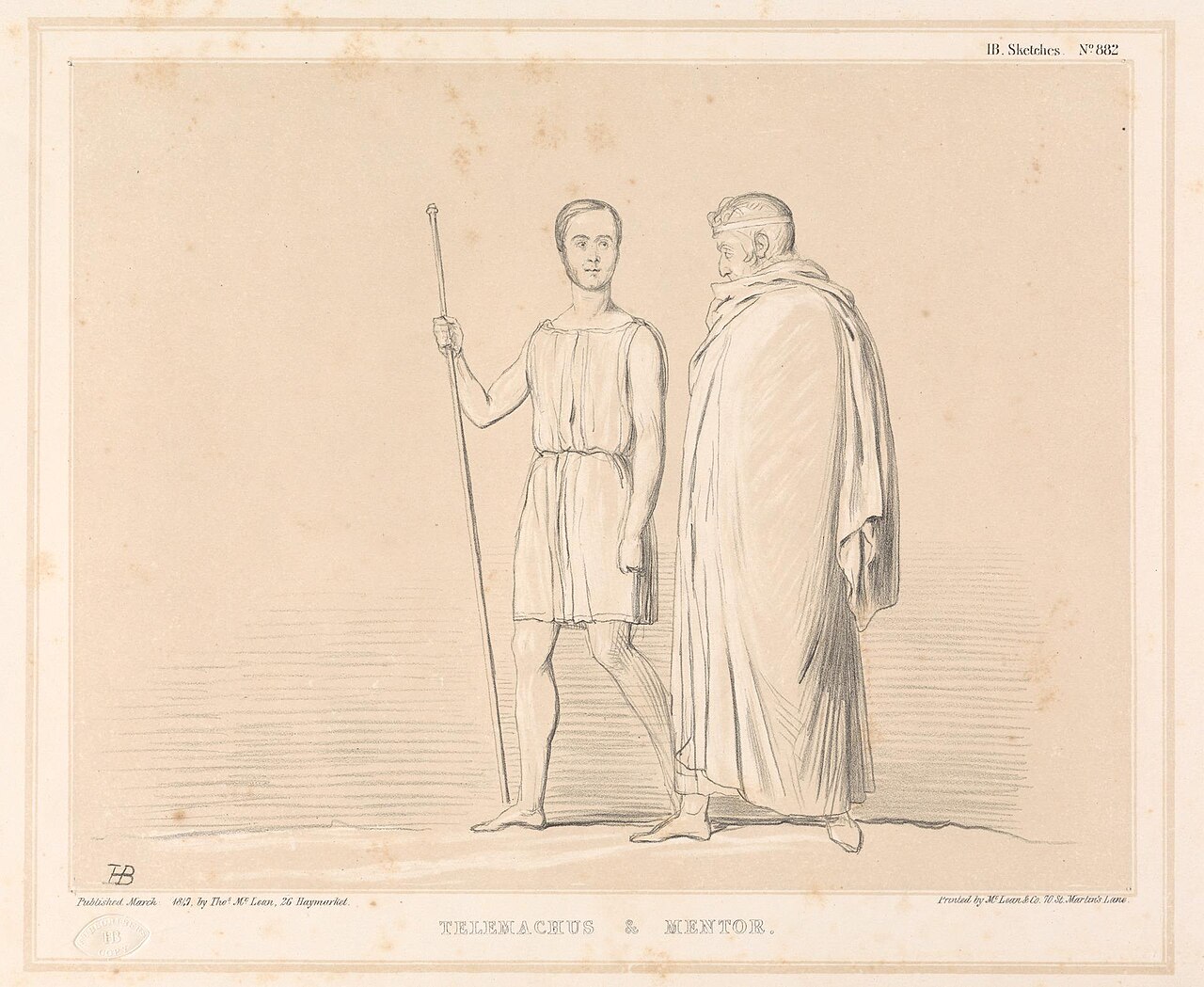
Mentors and books are two of the biggest learning accelerators for reaching our goals, but failing to choose carefully who we learn from or which books we read can harm our success or personal development more than we think.
On Wall Street it has always been said that Jordan Belfort (the Wolf of Wall Street) became a fraudster partly because of the first teacher he had when he landed at his first firm. His first contact with the stock market world was someone similar to the character Matthew McConaughey plays in the film: a man without values who unwinds with cocaine and whose business philosophy is to transfer clients’ money into his own pocket. “It’s not the client that matters, it’s the client’s money.”
If Belfort had landed at Berkshire Hathaway, under the wing of Warren Buffett and Charlie Munger, that talented young wolf would probably be a great investment fund manager today, with an investment philosophy based on value investing instead of penny stocks, and he would bend over backwards to help his clients grow their wealth.
When I was a young sales executive, I met one of those people we all admire so much: a self-made businessman.
The day I met him, as I walked through the door of his office, the man was making a supplier cry (literally), snapping his fingers a few centimetres from his face while shouting at him: “Hey! I’m talking to you, do you understand what I’m telling you?” He wasn’t very friendly and was always in a rush. He also had no manners. But in our industry, if we measured this person by how much he could buy from our company, he was the ideal type, because he was a good potential customer.
If you want to succeed, learn from someone who has achieved what you want to achieve
I’ve always kept this advice firmly in mind, so for as long as I can remember I’ve tried to be like a sponge and learn from anyone who could teach me.
With this businessman, to whom I devoted a great deal of my time, countless lunches and dinners, and hours of car journeys to manage our dealings, I learned that workers are just numbers. “Never treat them as people and never trust them, because when they get the chance, they’ll let you down or steal from you.”
Never take on more than you can manage personally, because nobody is going to manage it better than you. “If you ever think of delegating anything to others, you’re done for.”
He gave me all these lessons, and many more (better left unsaid), proudly, seeing that I was a young man eager to learn. The thing is, it clashed with everything I had read, and my head was in a terrible muddle, because in front of me was a man who came from a poor family and who by 40 already owned two large construction companies with turnover in the millions.
See also: 12 apparent contradictions that are true: understanding people
In hindsight, I could see that this man did not have a genuine friendship with me. To him, I simply meant an extra discount, a gain for his company.
Little by little I noticed that in our dealings there was no mutual win-win, but rather win-lose, where I always lost and he always won.
It became clear the day my company made a mistake with materials worth more than €80,000. We could have fixed the error at almost no cost to either side, but he took advantage of that mistake to offer us only two alternatives:
- Give him a €25,000 discount (lose €25,000).
- Otherwise, take it all back (lose €80,000).
In other words, our company had only two options: lose €25,000, which was already more than the profit margin, or lose everything.
He wouldn’t accept any other option, not even a smaller discount. He was an expert at seizing business opportunities, even if, for him, an opportunity meant putting a company on the ropes. He knew we had to accept his terms, or else our loss would be even bigger.
He told me it would be better if I didn’t deal with him on this matter, because we might spoil our friendship, and that I’d better stay out of it.
I didn’t like at all what he did to us, and if I had ever wondered whether this man was a business genius, after that it was clear to me that he was just a social climber who for some reason had done well in life. And that success didn’t last long.
His company ran into problems on some building projects, the banks started making it harder for him to finance new ones, and we, as suppliers, were no longer willing to renew his credit lines as we did with other customers. Neither were we, nor anyone else in the industry, because in business it’s important to build friendships and be liked by people.
This businessman forgot about the law of reciprocity and healthy business relationships. His success vanished, along with that of many other construction businessmen, after the 2008 crisis.
If I had adopted this man’s philosophy of leadership and business management, I would probably be a ruthless, rude person today.
The same goes for books
Some books carry a message that is dangerous in itself when it comes to personal development, while others can be twisted by the reader. Either way, we should remember that we can fall victim to our confirmation bias, which means reading only what confirms our beliefs or philosophy, even if it is completely wrong or even dangerous. At other times, we choose to buy into a message because it appeals to us, even though it isn’t good for us.
Some books say: “Think positive and want something badly enough. That way, the universe will send it to you.” And if it doesn’t? “Then it’s because you don’t want it badly enough.”
Others say: “Think positive, but work your backside off chasing what you want, because nobody is going to hand it to you.”
Clearly, many people you know will like the first group’s message better than the second’s, because we all want to achieve something. But if it means thinking about goals and objectives and fighting for what we want, then we’d rather move on to another kind of book, the kind that says:
“Happiness isn’t found in what you have or what you own. You can be happy with nothing.”…
And in this case the message isn’t wrong, because it’s true that happiness isn’t something outside you, but something inside; it has nothing to do with what you have, but with who you are. The problem comes when that message appears in a book as a story in which someone with a successful career, stressed out by that career, gives away all their possessions and leaves their family and children to look for happiness somewhere in the East, where they find their spirituality with a group of people living in a kind of tribe.
The message that “all you need to be happy is a backpack” usually sells quite well among people who, at some point, feel their life has lost its meaning. They buy into the message that it’s bad to live in a capitalist society where money is necessary. And it’s true. Many values may have been lost in this society, but money has always existed.
Even if we go back to the age of barter, there were rich and poor, because barter wasn’t a swap of things, but paying for one thing with another (the money of the time).
So the first step to finding meaning in life is to know what world we live in. Could the world be different? Of course. But it isn’t. So we have to accept that we live in a real world, not in the world as we’d like it to be. I’d like to live in a world where there was no need to put locks on doors because everyone is good, but in my world we need keys, bolts, padlocks, police and prisons, and even so, you’re still unprotected.
I recently came across the book The Antidote: Happiness for People Who Can’t Stand Positive Thinking by Oliver Burkeman. The truth is that the book has some incredibly good ideas, but in certain hands it’s easy for the reader to twist it, because it criticises great works and great authors whose message is: “set yourself a goal and plan how to reach it.”
According to Burkeman’s book, setting goals isn’t advisable, because if you don’t meet them you get frustrated. Likewise, not only should you not think positive, you should love negative thinking. The book suggests that if you go to bed every night thinking your child might die tomorrow, you’ll learn to love your child much more. I understand what he means, but put that way, it may be the perfect recipe for becoming a regular user of anti-anxiety pills.
Others will tell you to love your chaos, but personally, I find it more satisfying in the long run to solve your chaos if it can be solved. And if it can’t, then of course, love it.
A mentor has a great deal of power and influence over you. A book can be just as instructive, or just as destructive.
The same book can be wonderful for one person and terrible for another. Some books have inspired people to build billion-dollar empires.
So some give us the tools we need, while others send us down a path that may be the one we think we want, but not the one we really need.
In short: never buy a message of conformity; buy self-improvement. Never buy a message that anyone can achieve something easily and effortlessly; rewards only exist once you’ve overcome barriers. And sometimes our own mind is the first barrier we have to get through.
Featured image: John Doyle, CC0 1.0, via Wikimedia Commons.



