Editor’s note: This article was first published in September 2011, ahead of Spain’s general election of 20 November 2011, won by Rajoy’s Partido Popular. The campaign, the “almost 5 million unemployed” figure and the candidates’ positions all refer to that date.
The preparations for the election campaigns have already begun, and the leader of the opposition, Mariano Rajoy, starts with a clear advantage given the result of the last elections and current polls. Now is the time to present an election programme: Rubalcaba starts out with a set of proposals, and Rajoy with an electoral strategy probably never seen before in any election.
Proposals in Rubalcaba’s programme
Economy
- Restructuring of the financial system. If the state has to clean up the accounts of a savings bank, it must have a say in its management so that it doesn’t cost citizens money.
- A commitment to ending tax havens.
- Promoting employment in sectors such as renewable energy, the environment and elderly care.
- Closing nuclear power plants, followed by a review of the Spanish energy system.
Education and healthcare
- No healthcare co-payments. Rubalcaba has promised a new funding model for public healthcare and education so that these two “citizens’ rights” remain universal and free. “There will be money to fund it,” he argued.
Right to a dignified death
Rubalcaba has promised to study in depth the right to a dignified death (euthanasia). It will be one of the first laws to go before parliament.
Employment
- Applying the labour reform in full.
- Breaking down the barriers between universities and businesses.
These are some of the proposals Rubalcaba has included in his election programme, along with a few other points. Now let’s move on to Mariano Rajoy’s election programme.
Spain needs a change
“We know how to do it, and we will do it.”
It’s more than obvious that Rajoy won’t win the election because of the programme he presents.
Mariano Rajoy has been advised not to present a specific programme with the measures he will take to get us out of this crisis, but instead to convey a single message to voters: Spain needs a change, because the PSOE (the governing Socialist party) has shown that it doesn’t know how to deliver it. “We did it once, and we’ll do it again.” Many of the Partido Popular’s rallies close with these words.
For the first time in the history of any election, a political party can afford to base its strategy 100% on attacking the opposition and 0% on presenting proposals.
It’s a very clever strategy, because given how desperate Spaniards are, and with almost 5 million unemployed, not much more is probably needed to win the election.
The problem I see with this strategy
Let’s start from common sense and reality: we should know that Spain will have to dance to “the tune of the markets” and adopt certain measures they impose on us. What you want to do is one thing; what you’re allowed to do is quite another.
On the other hand, citizens should be clear about what they’re voting for. Healthcare co-payments, privatizations… what’s coming? Is it really possible to cut taxes in a country in times of crisis? If taxes are cut, how will revenue be raised? These are small details that, as a Spaniard, I’d like to know. I’m aware that Spain may need a change to generate confidence, but… if I get rid of my car, what are they going to swap it for? A boat, a train or a skateboard? I might end up having to walk, with no way to complain because I didn’t even know what I’d signed.
And I’ll finish by saying this: I’m completely non-partisan, so you’ll hear me criticize Zapatero, Rubalcaba, Rajoy and anyone else who makes mistakes while in office. However, one thing is very clear to me: whenever a politician hints at “healthcare co-payments”, what comes to mind is the US healthcare system, where the rich live and the poor die, and I will never approve of that, either as a Spaniard or as a human being.
Further reading
- Crisis in 2012: six of the seven largest economies at zero growth
- Bubble 2.0? Internet valuations compared
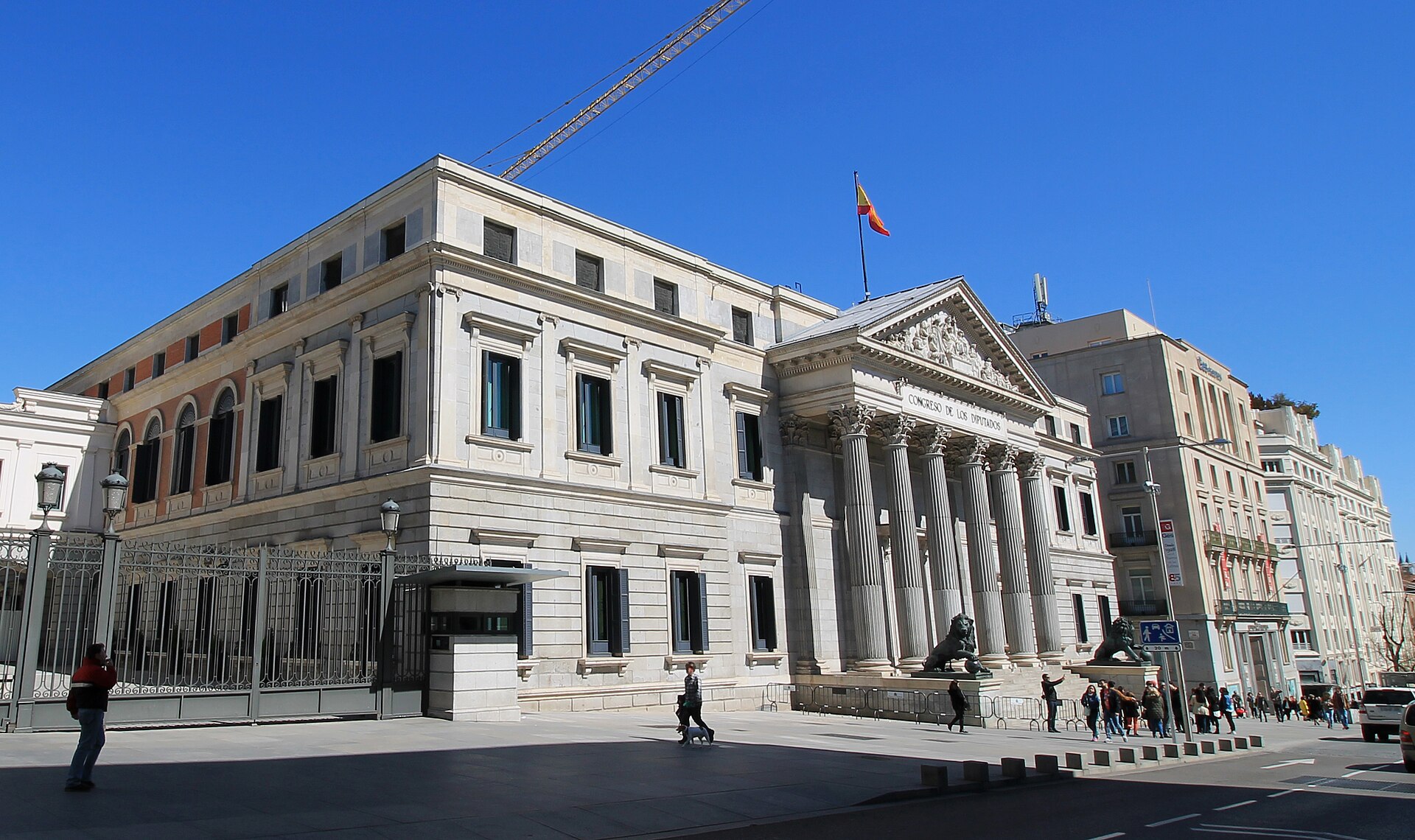
Featured image: Luis García, CC BY-SA 3.0, via Wikimedia Commons.