Editor’s note: This article was first published in July 2012, reporting on the draft memorandum of understanding before it was signed on 20 July 2012. The final terms, the amounts actually used (about €41 billion in 2012–2013), the bad bank (Sareb) and the deficit targets later changed.
The draft memorandum of understanding, the contract Spain will sign on 20 July to gain access to a rescue of up to 100 billion euros to support its banks, sets out 32 conditions that the government must meet by the dates indicated in order to receive the money it requests.
The process begins by identifying the exact capital needs of each financial institution. It sets conditions both for the financial sector and for the country as a whole, and it is subject to exhaustive oversight by the European authorities. These are the key points of the contract:
How much money is the EU putting in, and how must Spain repay it?
The document states that Spain has up to 100 billion euros available from the European Financial Stability Facility (EFSF), that is, the rescue fund that has helped Greece, Ireland and Portugal, not the permanent fund that is about to come into force.
Spain can request whatever amount it needs (independent audits put the maximum at 62 billion) over 18 months, the length of the programme, although for now it will receive 30 billion euros this month for the most immediate needs. Any use of this money will require the approval of the European Commission and the ECB.
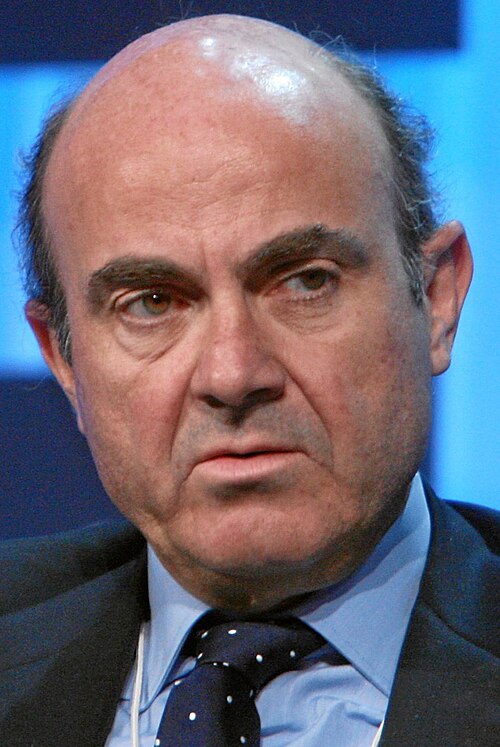
The draft memorandum does not specify repayment terms or interest rates, although the Minister of Economy, Luis de Guindos, has said there will be up to 15 years to repay the loans and that the interest rate will be below 4%.
How will we know exactly how much money the banks need?
The memorandum establishes, first of all, that the capital needs of each and every Spanish bank must be known. This will be done by reviewing all bank assets through an individual stress test. So, when the results of the stress tests that four auditing firms (PwC, Deloitte, Ernst & Young and KPMG) are carrying out on the country’s 14 largest banking groups, which make up 90% of the system, are released in September, the Spanish financial sector will be divided into four groups:
- Group 0: institutions that need no additional capital (probably only Grupo Santander, BBVA and CaixaBank) and will face no additional requirements.
- Group 1: institutions controlled by the FROB, Spain’s bank restructuring fund (BFA-Bankia, Catalunya Caixa, NCG Banco and Banco de Valencia).
- Group 2: institutions that need additional capital, cannot raise it on their own and need state aid.
- Group 3: institutions that need additional capital but do not need public aid to obtain it.
See also: The real economic situation: it is mathematically impossible to pay off the debt
Once the capital needs are known, a decision will be made on the future of each bank: recapitalise it, restructure it or wind it down. Ultimately, the European Commission will decide what to do with each institution before the end of the year, since it must approve the respective recapitalisation or restructuring plans.
What conditions will be imposed on banks that ask for aid?
Banks that need public funds will have to prove, through a restructuring plan, that they are viable without further state aid in the future. The plans must focus on the bank’s ability to create value for shareholders and must also include the costs of the restructuring.
They will also have to be based on a significant reduction of unprofitable business areas, with asset sales, better governance, branch closures and staff cuts. In addition, paying dividends is prohibited.
Shareholders, holders of hybrid capital (such as preference shares) and holders of subordinated debt will have to absorb part of the losses, so that the whole weight of the restructuring does not fall on the public purse. The government must take the legislative measures needed to force shareholders and hybrid holders to accept that haircut if no voluntary agreement on burden-sharing can be reached.
Banks that are not listed on the stock exchange must present a credible timetable for an eventual stock market flotation. The Spanish authorities also commit to limiting the pay of executives and board members at all institutions that receive aid.
When banks are not viable, Spain must present plans for their orderly wind-down. Whether or not an institution is viable will be determined by the government and the European Commission.
These plans must be compatible with the goals of maintaining financial stability and minimising the burden of these wind-downs on taxpayers, and they must allow healthy institutions to acquire the assets and liabilities competitively.
Banks will also have to transfer their toxic assets to what the document calls an external asset management company, that is, a bad bank (or several), as the government had already established and the European Commission has stressed.
These bad banks must be fully operational by November 2012, so the government must pass the legislation before then. Assets will be transferred from the banks to the bad banks at their real value, so the banks will have to book losses on their balance sheets when they hand those assets over.
What about banks that don’t ask for aid but need capital?
Group 3 banks must present credible recapitalisation plans before October, showing that they can cover their shortfalls without a public injection.
However, to avoid any doubt, institutions that need to increase their capital by more than 2% will be recapitalised with public money as a precaution. The banks will have to issue contingent convertible bonds (“CoCos”, in financial jargon), to be subscribed by the FROB before December.
The institutions will have until June 2013 to repay that money. If they don’t, they will be (partly) nationalised and will have to present a restructuring plan.
Group 3 banks that need less than that 2% of capital will not be recapitalised in this way and will have until 30 June 2013 to raise the money they need. If they fail, they will also have to present restructuring plans.
What conditions will apply to the banking sector as a whole?
By the end of the year, all banks must have core capital of at least 9%, and until 2014 they may not reduce their core capital without authorisation from the Bank of Spain. The government must also review the rules on provisions, the money banks must set aside to cover possible losses.
On supervision, the Ministry of Economy must transfer to the Bank of Spain the power to impose sanctions and to grant banking licences before the end of the year.
The supervisor itself must also carry out a full review of its inspection and decision-making procedures before the end of October. “Specifically, the authorities will analyse the need for any improvements in communicating the vulnerabilities and risks of the financial system to decision-makers, to ensure that corrective action is taken,” the document says.
It also requires the government to draw up legislation before November reforming the savings banks (cajas) so that they cannot control banks as shareholders, which dismantles the current system of savings bank mergers.
Finally, it asks the government to prepare specific consumer protection rules, for example to “limit the sale of subordinated debt instruments” and of any other financial products not covered by the Deposit Guarantee Fund, such as preference shares.
What macroeconomic conditions will be imposed on the government?
Although the conditions are limited to the financial sector, the document notes that there is “a close relationship between macroeconomic balances, public finances and the soundness of the financial sector, and therefore progress in implementing the commitments under the excessive deficit procedure and in structural reforms (…) will be monitored closely and regularly.”
In other words, the Eurogroup makes it clear that the loan to the banks is tied to meeting not only the conditions imposed on the financial sector, but also the macroeconomic conditions required of the government, which, as Brussels stresses, are obligations. So, first of all, Spain is required to meet its deficit targets. These are not specified in the draft, although on Tuesday Ecofin agreed that they should be 6.3% this year, 4.5% in 2013 and 2.8% in 2014.
A series of structural reforms is also required, namely:
- introducing a tax system consistent with the fiscal consolidation effort and more supportive of economic growth, a reference to a possible VAT increase;
- eliminating tax relief for home purchases;
- implementing the labour market reforms and adopting additional measures to make active employment policies more effective;
- further measures to liberalise professional services, shorten the time needed to obtain licences for economic activities and remove barriers to doing business;
- completing gas and electricity interconnections with neighbouring countries and tackling the electricity tariff deficit comprehensively.
How will compliance with the agreement be monitored?
The troika formed by the European Commission, the European Central Bank and the European Banking Authority (EBA) “will verify at regular intervals the conditions” attached to the plan and compliance with them, through “missions” and quarterly reports from Spain.
The Spanish authorities must provide the troika and the International Monetary Fund with weekly data on banks’ deposits and liquidity, as well as quarterly data on bank balance sheets, loans and the capital available to the institutions. Institutions controlled by the FROB must submit their data with one-, three- and six-month horizons.
These reporting requirements do not rule out requests for further data, and in parallel, technical staff from Brussels will monitor compliance with the reforms to address the excessive deficit and macroeconomic imbalances.
Source: RTVE
Featured image: 15237218@N00 (flickr), CC BY-SA 2.0, via Wikimedia Commons.