Editor’s note: This article was first published in January 2012; it is an opinion piece from the height of the euro debt crisis. Its US debt figure of 16 trillion was a round number then, and its figures of 20 billion for Spanish banks and 500,000 families losing their homes before 2015 are from that period.
Somewhere in the world, at this very moment, there must be several great minds trying to work out how to pull the planet out of the mud it’s stuck in. That’s the good news. The bad news is simpler: whatever they come up with, there’s no solution in sight in the short or medium term, and unless the necessary, real measures are taken NOW, the long term looks very grey indeed. We’re simply acting as if the music were slowing down, when the truth is that the music has already stopped.
Everyone is talking about debt, and we even end up believing the news that the deficit is shrinking at times, when in reality debt has one serious problem: it can never be repaid. I said so back in 2010, and Santiago Niño Becerra said it just yesterday. Of course, who am I to say anything that contradicts the great economic experts? Better still, who is Santiago Niño Becerra to say such a thing? As for him, Santiago is the only one talking sense.
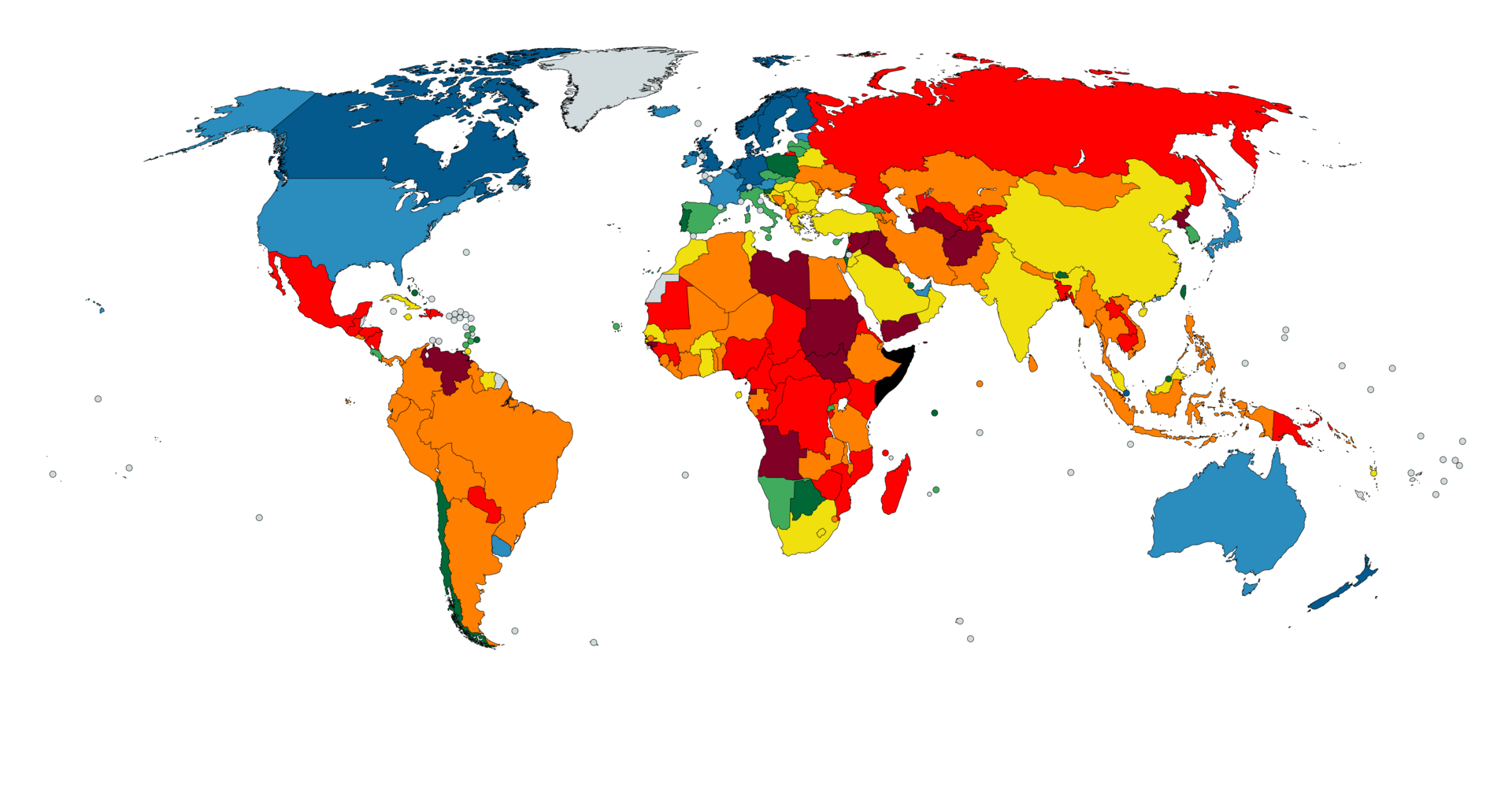
Some people joke about Niño Becerra’s explanation. He maintains that the debt is unpayable and that, whatever is done with it, it will bring dire consequences for the vast majority. We could explain in detail how one reaches the conclusion that the world will never be able to repay its existing debt, but I’m sure it would bore you. Countries with high debt include the United States, Italy, France, Spain, Greece, China and so on.
We only need to focus on the debt of the United States (16 trillion). How do you repay 16 trillion, and how many decades would it take? Hopes are pinned on the emerging economies, which are currently the “economic messiah”: a potential saviour that, as we already know, won’t prevent what is happening.
Is this the apocalypse?
Some people joke that Niño Becerra is announcing an apocalypse, and that’s why many don’t take him seriously. However, an apocalypse is understood to be a situation that ends up affecting the whole population, and in this case 1% of the population won’t be affected at all.
Honestly, I don’t see what’s funny, where the joke is or what there is to doubt: if what some families are already going through isn’t an “apocalypse”, I don’t know what we’re waiting to see. The other day I saw a forecast that 500,000 families would lose their homes before 2015. Not a negligible figure, with the irony that these families lose their homes to the very people who caused them to lose them in the first place (that’s how twisted we’ve become).
Then again, I don’t agree with some of Niño Becerra’s ideas, because he starts from the premise of a society that will remain blind to reality and do nothing to prevent a personal and global economic massacre.
There are solutions
There are always solutions, and of course every measure taken will hurt someone. Continuing to restructure the debt gets us nowhere, and the reasoning is very simple. Take the case of Spain.
In Spain, according to our leaders, to solve certain problems the banks currently have, we must hand them another 20 billion in public money. To give them that 20 billion, many Spaniards will lose their jobs, because the government will have to raise taxes, first to channel that capital to the banks and then to plug the new hole it has created (as if there weren’t enough holes already).
The problem is that even if we give the banks that 20 billion, it only serves to plug holes and won’t bring any real return on capital. Now multiply this problem by every country that needs to bail out its banks.
The solution to this problem
The solution is very simple: if a bank isn’t doing well, like any other business, it has to be allowed to fail, no matter who gets hurt. A town of 3,000 people can’t support 15 shoe shops, and nobody comes to rescue the 10 that are going to close; quite simply, neither keeping them open nor bailing them out is viable. Given the money currently circulating in consumption and business transactions, some banks have to close. Why? Either they close or you do. In other words, we do. If they don’t like the idea, they should have gone into crafts or gardening.
What if we forgot the debt?
Three million Spaniards already have their future mortgaged, and at some point they won’t be able to pay, because they’re paying for a home that is no longer worth the price they paid for it. Obviously, a bank isn’t going to tell you to pay half and forget about the rest.
Let’s move on to nations. Spain owes France, Italy, the United States… Greece owes Italy, China, France… The United States owes China, France, Italy… We all owe each other money we don’t have, and, as Leopoldo Abadía once put it (nobody knows how much junk there is in the market), in this case probably nobody knows the real level of debt on the planet. The point is that this money owed has to be refinanced with new interest added on top, which is paid for through a loss of purchasing power for the people of the country in question. So consumption doesn’t increase, and later on it all starts again, because that money plugs one hole by creating another, probably bigger one.
A solution to the problem
Austerity measures will get us nowhere: even though the planet’s wealth is in the hands of 1% of the population, that 1% is wealthy thanks to the other 99% (the consumer). Punish the consumer and you punish the economy.
I still say that the longer it takes to reach the real solution to the problem, the more serious and painful the consequences will be for the planet. The solution is debt forgiveness: a reformatting of the financial system, a chance for the world to start again.
Clearly this solution will bring serious problems, but if it isn’t carried out, the consequences would be much worse.
This is the reality of the current economic situation: you can believe it now, or you can see it later. What I can guarantee is that if we keep allowing public money to go towards plugging the holes of terminally ill economic patients, the situation will keep getting worse.
So I agree 100% with Niño Becerra: debt is the problem, and the debt can’t be repaid. It’s mathematically impossible, and worst of all, our leaders know it perfectly well.
P.S. If a single person has to lose their home to rescue a bank, let the bank sink. After all, a bank that doesn’t lend is like a knife that doesn’t cut: if you lose it, who cares?
Featured image: Amadalvarez, CC BY-SA 4.0, via Wikimedia Commons.