

Editor’s note: This article was first published in June 2014; its startup cost examples (a programmer at 1,200 euros per working day, weeks or months to incorporate a company) are from 2014, and the free beta-site service it mentions may no longer exist.
Everyone is afraid of failing, of rejection and of failure. But the statistics say that most new things and revolutionary ideas fail. Eight out of ten newly opened businesses will fail, although some end up as zombie businesses that refuse to accept they are dead because they are not profitable.
More than 70% of new startups funded with venture capital will not return their investors’ money. That’s why the secret of venture capital firms is heavy diversification across these companies, so that a single company that works ends up making up for the losses on the rest.
It was Alberto Savoia, a Google executive, who was one of the first to name the “Law of Failure” in Silicon Valley, saying that nobody sets out to fail and that many failures are nobody’s fault. That is probably where the expression “fail fast” came from: failing quickly so you can reach success as quickly as possible.
In line with one of the best pieces of advice I’ve received from a businessman and investor (aim only for one of these outcomes: success or absolute failure, never stay in the middle), there is a very effective way to fail as quickly as possible so you don’t keep putting in money and time.
What we must avoid above all
Failing in business will cost us money and time, but it can also cost us our vitality and energy if we get caught in the spiral of gradual, continuous failure.
I compare it to the days when you were a child or a teenager and you started to like a girl. You were afraid she would say no, so you kept putting off the moment of telling her directly. After six months or a year of courting, you finally took the plunge. And she said “NO” (for whatever reason). You had spent a year chasing a girl to get an answer you could have had in a week. And I think most of us, deep down, knew the answer would be no, which is why we took so long to ask. How many girls could have said yes to you over those 12 months if you hadn’t been blinded by the one who wasn’t right for you?
In business we never stop being that child, and for some reason we cling to the idea that something might work out even though we can see it isn’t going well at all, or at least that’s what the business’s numbers say.
Rule number 1 of business and life:
“You can lose money, but you can get it back. You can lose a girl’s love, but you can find love in another girl. But the time you’ve lost, you can never get back.”
Most of the excessive debt an entrepreneur is left with on closing a business usually comes from the final days of “desperate thrashing” to keep afloat a ship that was inevitably sinking.
Part of the blame lies in misreading some motivational quotes such as “Never give up” or “Never stop fighting”. The truth is that smart people also know when they have had enough and it is better to accept the loss than to make it bigger.
How to fail fast and not waste time
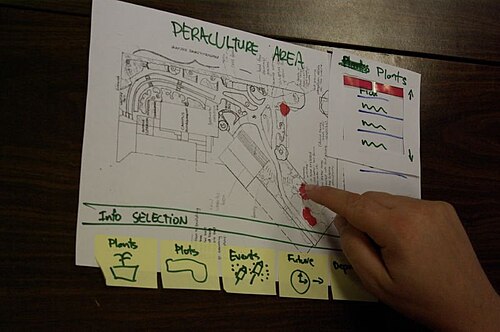
Alberto Savoia recommends building a prototype before you start mass-producing anything. That prototype can be tested by friends, family and a small representative sample of people, who will tell us whether it is worth putting money, resources and time into that business idea.
At the same time, the prototype can be used to gather investors’ views on whether, when the time comes, they would finance mass production. Clearly, a prototype is probably our future product, just in need of a lot of improvements.
If we are talking about a startup, before rushing to hire a super-server and a software engineer at 1,200 euros per working day, and losing weeks setting up the company legally (months in Spain), we are going to launch a beta phase that won’t take us more than two days, and within a week we can have the first data. For that there are services like POP.com, where you can have your beta website up in minutes, free of charge, for your first days of testing.
Building a prototype or a beta phase for your business means that in seven days you will have enough data to know whether it is worth carrying on or dropping your business idea (especially if it is an online one). That is what’s called a fast failure, one that costs very little time and very little money.
For other kinds of business
Now let’s learn from the mindset of Chinese entrepreneurs, who are very clear about this. They open shops. If the business doesn’t grow as they expected, they don’t hesitate to shut it down quickly and change premises or business. (How much a business needs to grow)
Really, if you open a shop, advertise it and it hasn’t been profitable for six months, what makes you think the next six months will be any better? Close it, and you have a fast failure that lets you start again with fresh energy.
Keep insisting on that business, and in five years you will be a failed entrepreneur: in debt, broke, emotionally drained and with your spirit crushed. And worst of all, with five years of lost opportunities for new businesses that could actually have worked.
Always remember not to fall into the commitment bias. We covered it in our article When biases get into business.
But always fail with dignity.
Don’t fear failure; embrace it and pray that it is quick and painless. Don’t be afraid of what others say, because the only people who can criticise you for failing are those who have never done anything of value in their lives. What happens when you fail and other people’s money is involved?
Never hide. Failing takes courage, but not facing up to a failure is cowardly. Remember the case of Chris Poole, creator of 4chan, an example of how to fail without losing your dignity.
See also: Entrepreneurs chasing a dream: 10 traits of the entrepreneur
Depending on how you handle that failure in front of others, you will keep or lose your credibility as a businessperson, and with many of the people involved you will probably have the chance to do business again later on.
Further reading
Featured image: Samuel Mann, CC BY 2.0, via Wikimedia Commons.



