

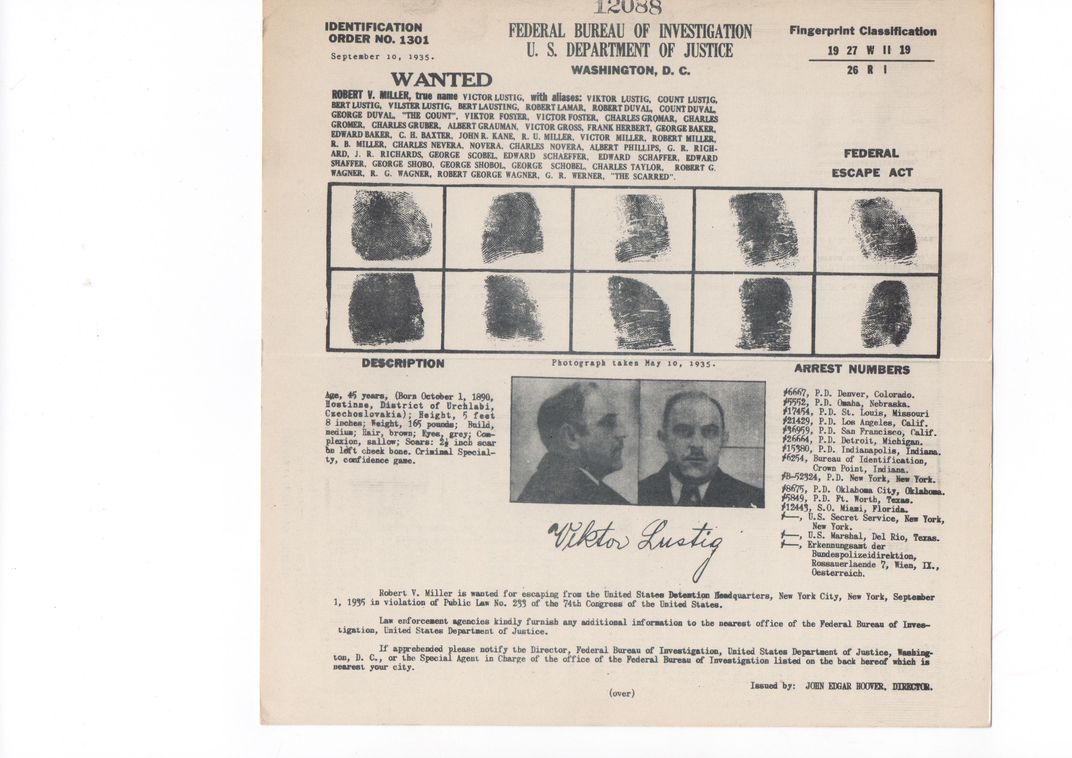
A con artist needs only one thing to get what he wants: a person, very intelligent or not very intelligent (that hardly matters), who is sure of themselves and of their own abilities. That is the profile of the ideal victim, and as far as we know, intelligent people and “foolish” people alike are sure of their decisions. And if they aren’t, the con artist will flatter their ego until they are.
So a con artist’s job is not really to convince anyone, but to avoid tipping them off while the other person deceives themselves. And what can we learn from the greatest con artists in history? Everything. After all, these people set out to fleece others.
People let themselves be fleeced by swindlers, while at times they hesitate to hire a service or buy a product from an honest salesperson. The thing is, good con artists understand the secrets of the human mind much better than the vast majority of honest salespeople and businesspeople.
(See: Some traits make you an easy target for a scam)
Take Victor Lustig, considered one of the greatest con artists in history: he managed to sell the Eiffel Tower twice and to fool none other than Al Capone. Without a doubt, he can teach us a great deal about the power of influence and persuasion techniques.
Victor Lustig used his time in prison to compile the ten keys, or commandments, that every good con artist should follow, and therefore the keys that any businessperson, salesperson or anyone who, for whatever reason, needs to influence and persuade someone for a specific purpose should bear in mind.
What are the commandments con artists live by?
1. Be a patient listener
Smooth talk doesn’t even work for picking someone up these days. That’s for charlatans and snake-oil salesmen, and even the least intelligent part of the population knows it by now. People like to feel listened to and to have our attention. Besides, while the other person is talking, they are giving us valuable information, sometimes without us even having to ask. Be patient and just listen.
2. Never look bored
We take it for granted that someone who talks non-stop is a bore, but if we make them believe they are fascinating, we will win their trust and they will feel good around us, because at last they are boring someone who appreciates their conversation. In doing so, we boost their confidence in themselves and their abilities.
Most people want to show off their intelligence and look like the smartest person in the room. Con artists, like seducers, know that the best thing is to make that person (the one you want to swindle) feel like the smartest one when they are with you.
3. Let the other person reveal their ideology and political views, then agree with them
A con artist’s aim is to swindle someone, not to marry them, so the more similarity there is between the two of you, the more easily you will win that person’s trust. The truth is that when people talk about politics they tend to say a lot of nonsense based on their political biases, but it is their ideology, and finding someone else who shares it creates an instant sense of familiarity, which is necessary for influence and, of course, for a con.
4. Let the person reveal their religious views, then hold the same views
It works the same way as political ideology. If this person belongs to one of those strange religions whose followers eat cow dung three days a year to take in the energy of the universe, all you have to say is: “How interesting! I’ve been wanting to take in the energy of the universe through cow dung for ages.”
5. Hint at sex, but don’t pursue it unless the other person shows a strong interest
One thing is true: if you manage to get “your victim” into bed, conning them becomes easy, but sometimes sex breaks the spell of the con. This is especially so with female swindlers, who need their “victim” to be strongly interested sexually without the act ever being consummated. A male con artist has to be very sure that the “female victim” is strongly interested, because if he makes a sexual advance and she rejects it, she will also be rejecting all the influence he has built up over her.
6. Don’t bring up general worries (hunger in the developing world, disease and so on) unless the other person shows a particular interest in them
We need to put out positive messages and not trigger negative feelings in that person’s mind. Remember that, for most people, their own toothache matters more than the cancer epidemic, and a small business achievement matters far more than hunger in the developing world. Keep conversations from drifting towards global social concerns.
7. Never pry into the person’s private circumstances; if you are a patient listener, they will tell you without being asked
Prying where you shouldn’t makes you “nosy”, and nosy people arouse suspicion, because the other person may wonder, “Why does this person want to know so much about me?”
8. Don’t talk too much about yourself
It’s better to keep an air of mystery about ourselves than to raise doubts. Above all, we shouldn’t act self-important. Remember that the point is to make the other person feel important.
9. Don’t be untidy
For some reason, our brains like people who are tidy, and we are deeply reluctant to trust people who are messy. Imagine you want to put your company’s accounts in the hands of an accountant, and when you walk into their office all you see is chaos. You will inevitably picture your company’s balance sheet and invoices getting lost in that office. In the same way, be clean and dress decently.
10. Never get drunk
Plenty of deals fall through in the world of sales because one party gets drunk and makes remarks or does things they never should have. A con artist knows he can never get distracted, even for a moment, or let his guard down, because all the work done over days or months can be lost in a few seconds.
And those, basically, are the ten simple commandments for being a good con artist. As we can see, they apply perfectly to the world of business and sales.
Featured image: FBI, Public domain, via Wikimedia Commons.



