

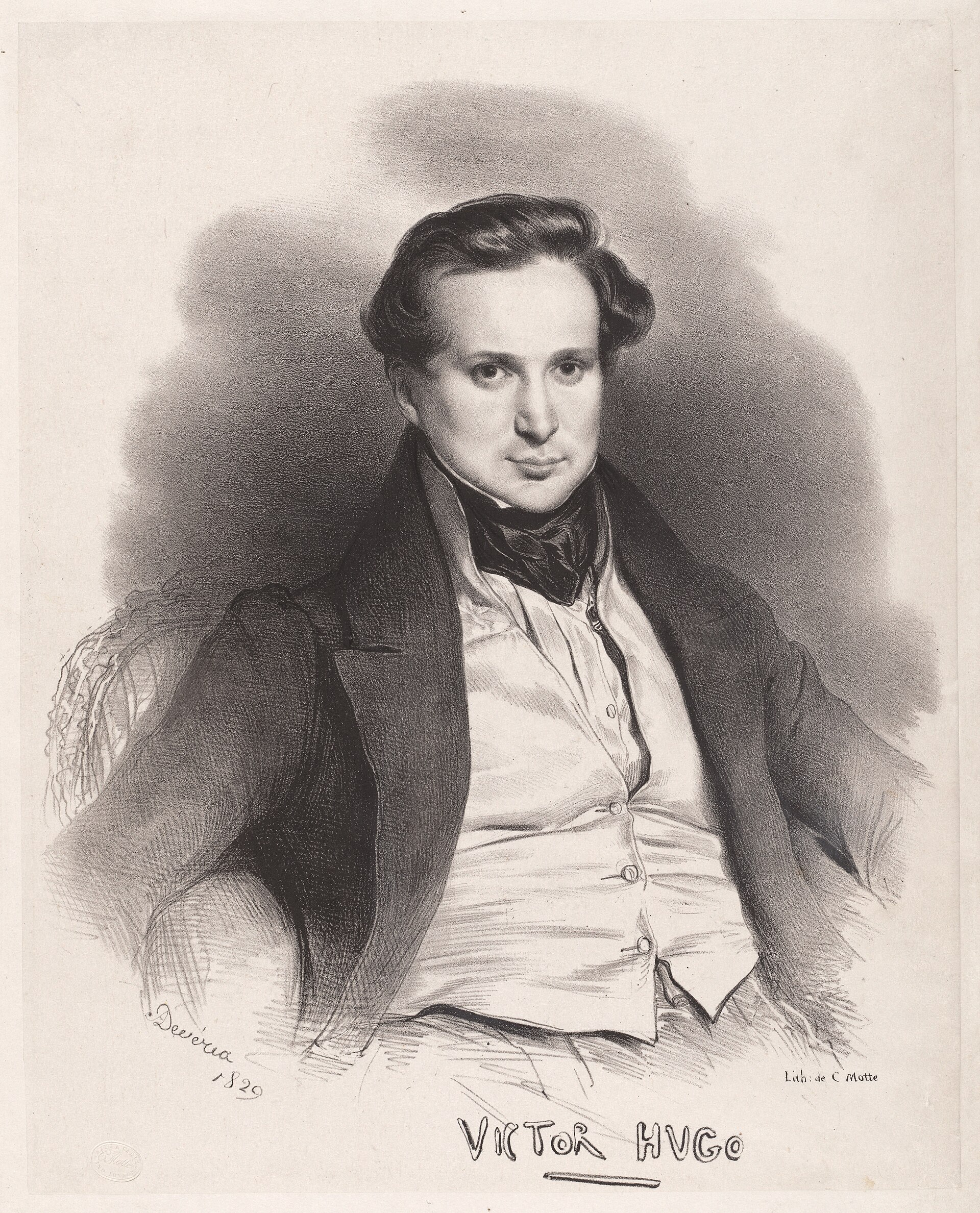
In the summer of 1830, a writer called Victor Hugo was facing a deadline. He had agreed with his publisher to finish a book by February 1831, but he had practically nothing written, and there were only six months left before it was due. For several years, Hugo had been frittering his time away on other matters, putting off the work he had committed to.
In the end, the book came out on the agreed date. I think you know it: it’s The Hunchback of Notre-Dame.
This week I published an article on how to avoid procrastination using a few tricks backed by neuroscience. As you can see, procrastination has been with many people since the beginning of time, and some of them fought it stoically.
Hugo came up with a plan to beat his procrastination.
He gathered up all his clothes and locked them away. He threw away the key and was left with nothing to wear except a large shawl. With no proper clothes to go out in, Hugo was forced to stay at home, and now, free of distractions, he wrote day and night until the book was finished.
By early January 1831 the book was done. And it became a huge success.
This kind of problem, which people have suffered from since the beginning of time, was called akrasia by the Greek philosophers Aristotle and Socrates.
What is akrasia, or procrastination, and how do you beat it?
Akrasia is the state in which we act against our better judgement. It’s when we do something even though we know we should be doing something else, or doing much more. What Socrates and Aristotle meant by this term is what we now call procrastination or a lack of self-control. Basically, akrasia is what stops you from following through on what you set out to do.
It’s setting yourself a goal and a deadline and then putting off the work until the deadline is upon us, whether we’ve made a commitment to someone else or to ourselves.
Time inconsistency
According to James Clear, akrasia, or procrastination, rules our lives because of something behavioural economics calls “time inconsistency“. Put simply, we prefer immediate rewards to long-term rewards, even if it means wrecking our long-term goal for the sake of short-term gratification.
It’s what happens to a university student who has to choose between partying and studying. Those who choose the party today over studying end up much worse off in the long run than the student who decided to study today so they could enjoy the parties later on.
When you draw up a plan or set yourself a goal, such as losing weight, writing a book or learning a language, you’re thinking of doing it to improve your future. That’s how your brain sees it at that moment.
(See: 9 things you should know about yourself and your brain)
But when the moment comes to make the decision that will bring you closer to that goal, you’re no longer thinking about your future. Your brain is now thinking about the present, and about everything you’ll miss out on now if you spend your time doing something that will only pay off in the long run.
In other words, in its natural state our brain doesn’t value long-term benefits, but it does value instant gratification.
That’s why the traits of successful people usually include the ability to delay instant gratification in favour of long-term work.
The antidote to akrasia: 3 ways to beat procrastination
Aristotle coined the term enkrateia as the opposite of akrasia, and these would be the ways to put enkrateia to work.
1. Design your future actions: the commitment device
Victor Hugo decided to leave himself without clothes to go out in, so that he could focus solely on what he should be doing, without any distractions. In our previous article we gave the example of the woman who set herself a specific rule: she could only listen to audiobooks on the treadmill, which forced her to exercise.
This is what’s known as a “commitment device”. Basically, it means recognising how little willpower we have and putting obstacles in our own way, so that we can’t do what we shouldn’t do and are forced to do what we should do but wouldn’t do of our own free will.
Some people have even given their television to a friend for months so it wouldn’t distract them; there are compulsive gamblers who report themselves to casinos and gaming halls so they will be refused entry; and there are people who switch the account their income is paid into to one in their parents’ name so they can’t spend the money they earn each month.
Whatever your circumstances, it doesn’t matter how you use a commitment device. The point is to prevent a possible future action that would harm you by taking a blocking action today.
See also: There are 3 fears you need to overcome if you want to get ahead in life
2. Understand friction
The guilt and frustration of procrastinating always cause more pain and are much worse than doing the work you should be doing. We all know it, and yet we still think about everything we’ll lose today if we don’t do what our body is asking for.
Some people say: enjoy today and spend all your money in case you die tomorrow. That way at least you’ll have enjoyed yourself. To that I always say: “Save in case you don’t die tomorrow, which is far more likely.”
Often it’s all about taking the first step. As you take steps towards your goal, it gradually becomes a daily ritual, a habit, and so it takes less and less effort.
3. Make it an action with a set date, not an intention for some time in the future
Saying “next month I’m going to exercise” is not the same as saying “on 15 January at 5 pm I’m going to go for a run”.
Saying “I’m going to lose 15 kilos” is not the same as saying “from tomorrow I’m going to eat salads and pasta, and exercise for an hour on Mondays, Wednesdays and Fridays”. The 15 kilos of weight loss come with it.
With these three strategies and what we discussed in the previous article, we would have a bit more control over ourselves: enkrateia.
Featured image: Achille Devéria, CC0 1.0, via Wikimedia Commons.



