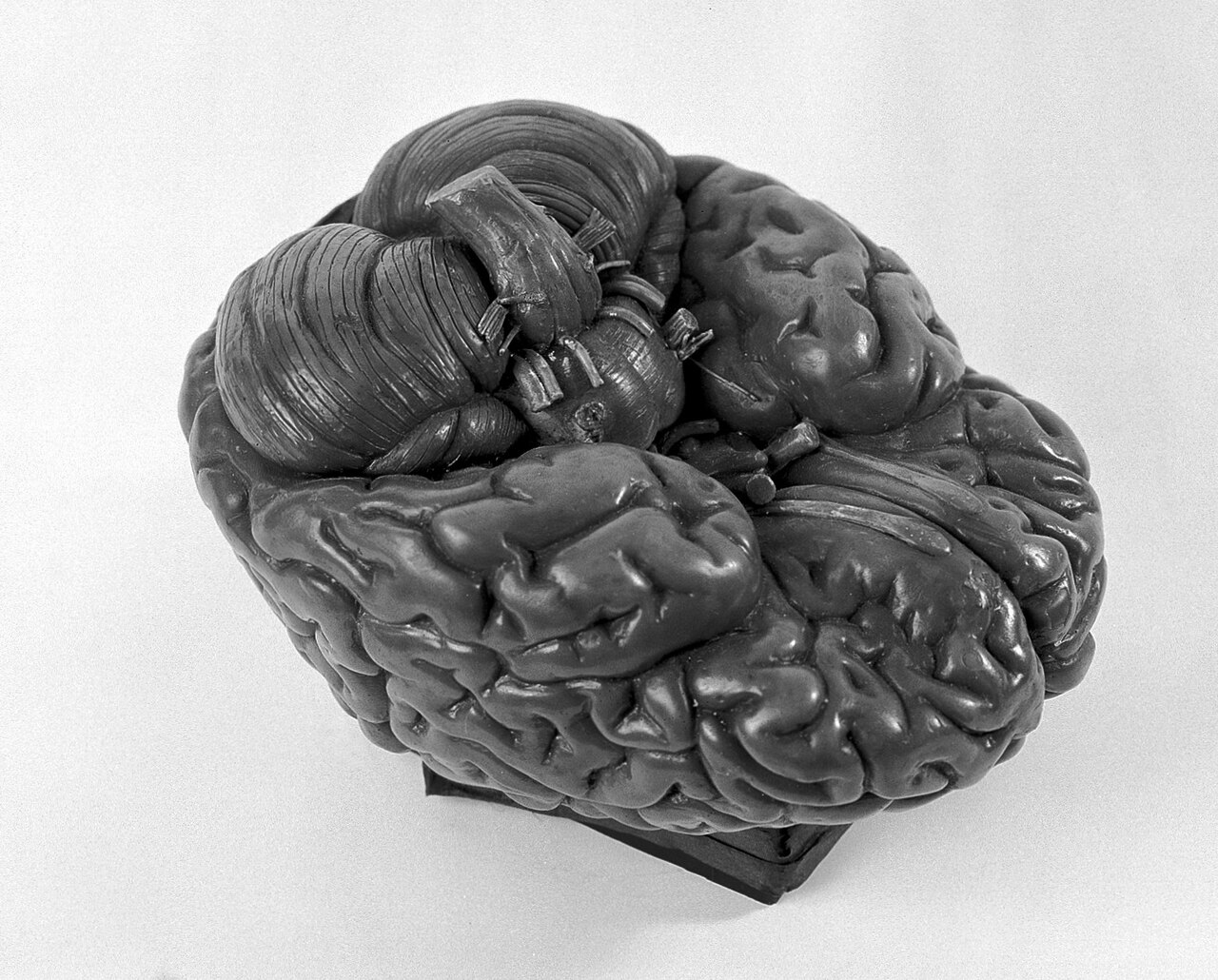
There are some myths about our brain, an organ that remains a mystery both to ordinary people and to scientists themselves. Here are 8 facts about the brain you probably didn’t know, mostly drawn from the research of Sandra Aamodt and Sam Wang, authors of the book Welcome to Your Brain. These researchers offer some advice for keeping our brain healthy, as well as some tips for avoiding other kinds of damage.
8 things you probably didn’t know about the brain
1. The myth that we only use 10% of our brain
Is it true that humans only use 10% of their brain? Even though this myth is more than a century old and researchers have tried to debunk it countless times, even today more than 50% of the population believes it. In reality, you use all of your brain every day. So where does the myth that we only use 10% of our brain come from?
Although it isn’t entirely clear and can’t be stated with absolute certainty, everything suggests that this myth was created by the first snake-oil salesmen of the self-help world. Telling people that they only use 10% of their brain sends a very inspiring message: “Imagine what you could achieve if you managed to use 90 or 100 percent of your brain.” It’s a fairly optimistic message for people who want to get ahead in life, and it’s without a doubt a blank cheque for the snake-oil salesman who tells you he can help you get there.
Although I wouldn’t count Dale Carnegie, the author of How to Win Friends and Influence People, among the snake-oil salesmen of his day, the fact is that he was one of those who used this myth to sell more books. What’s more, Carnegie cited one of the founders of modern psychology, William James, as the source of the claim. But no researcher has found it in any of William James’s writings or speeches. In other words, he was credited with an idea he never expressed.
More recently, one of the authors who has exaggerated the myth even further is Anxo Pérez, in his book Los 88 peldaños del éxito (“The 88 Steps to Success”), whose subtitle reads “We use 1% of our brain. Access the remaining 99%”. Not only has he fallen for a myth that has already been shown to be false, he has also exaggerated something already known to be untrue.
This theory has also been exploited by those who make a living from paranormal phenomena or extrasensory perception. If we only used 10% of our brain, there would be room for theories about telepathy or telekinesis, which would mean moving objects without touching them, using only the mind. Some of these people sell the myth that we could acquire these abilities if we learned to use a higher percentage of our brain.
2. Jet lag can be dangerous for your brain health
Repeated bouts of jet lag aren’t just annoying. They can actually be quite dangerous for your brain health. People who cross many time zones very often can end up suffering brain damage and considerable memory loss. These studies were carried out on flight attendants with at least five years on the job. Flight attendants whose breaks between flights were usually shorter than five days had a smaller temporal lobe than those who had at least two weeks between flights. The temporal lobe is the part of the brain involved in learning and memory.
According to the researchers, this brain damage could be caused by the stress hormones released during jet lag. Everything we know about stress hormones says they damage the temporal lobe and memory.
Although most people shouldn’t worry about this, since few people have to fly as often as a flight attendant, there is another lesson to draw from the study: stress damages your brain considerably, so we need to learn to manage our emotions properly so we don’t release these kinds of hormones.
And if you do have to travel across time zones, the recommendation is to leave at least a couple of weeks between flights to protect your brain.
3. How to prevent hearing loss
Remember when your mother told you not to play your music so loud because you could go deaf? Well, your mother was right. In fact, you don’t need heavy exposure to noise for it to take its toll over time. Most young people who regularly go to clubs, where music tends to reach considerable decibel levels, will lose their hearing early.
The recommendation is to avoid exposure to loud noise for more than one minute, whether it’s a concert, a chainsaw, an ambulance siren or a nightclub. Obviously, people go well beyond the recommended exposure time.
The damage to the hair cells is cumulative. Once these fine fibres, known as hair bundles, are damaged, there’s no going back, and progressive hearing loss begins. Experts recommend wearing earplugs when you have to be around certain noises to protect these hair cells, although the most advisable and effective thing is to avoid exposure to high decibel levels.
4. A trick for hearing better on your phone in a noisy room
You’ve probably done this. You get a call in a noisy place and you instinctively cover your free ear so you can hear better through the ear holding the phone. You’ve probably noticed that this doesn’t help much.
Counterintuitive as it sounds, don’t do that. Instead, cover the phone’s microphone. You’ll hear the same amount of noise around you, but you’ll hear the person you’re talking to much better. Just try it and see how it works.
Why does it work? It’s related to the so-called “cocktail party effect”, in which your brain draws on its ability to separate different signals. The phone makes your brain’s job harder by picking up sounds from the room through its circuits and mixing them with the signal coming from the other phone.
Put simply, the room noise and the voice of the person you’re talking to are mixed into a single source, which makes it very hard for your brain to separate the frequencies. But covering the phone’s microphone largely fixes the problem.
5. How pickpockets fool your brain
Pickpockets haven’t studied much about people’s brains, but their “profession” requires some practical knowledge of the subject. The double-impact pickpocketing technique shows this clearly.
One pickpocket bumps head-on into the victim, while a second one, almost at the same moment, slips a hand into the victim’s back or side pocket and takes their wallet without being noticed. They’ve simply fooled your brain.
Why don’t you notice the second pickpocket’s hand brushing against you? First, the pickpockets’ skill keeps the contact of their fingers with your skin and clothes to a minimum, but even if it were more “brazen”, the effect would be the same.
A stronger impact on your skin overrides a weaker one. Here’s a simple example: if, at the same time, someone hits your right knee with a hammer and your left knee with a feather, which knee will you grab?
The pickpocket who bumps into you head-on draws all of your brain’s attention: the impact and the eye contact. The second pickpocket has less than a quarter of a second to take the wallet from any pocket without being noticed, because the brain is still busy with the first impact and doesn’t register the smaller one, especially since there’s no eye contact either.
Magicians also use this trick to lift your wallet or watch, steering all your senses elsewhere. They simply fool your brain.
6. Does listening to classical music make you smarter?
This is another widespread myth. Until fairly recently, pregnant women were advised to play classical music to their unborn babies because it would stimulate the child’s brain in the womb. Unfortunately, this is completely false. No kind of music will make your baby smarter or help its brain develop better.
The only thing that helps a baby be born with a better-developed brain is for the mother to stay away from stress during pregnancy. If the mother relaxes by listening to classical music or reading a book, that will indeed be good for the baby. Not the music itself, but the mother’s calm.
Other studies went as far as suggesting that you could raise your intelligence by listening to classical music instead of other kinds of music, but those studies were poorly designed. It isn’t that music raises your IQ, but that people with a high IQ tend to appreciate good music, including classical music.
Recent research has found a lower IQ among people who listen to reggaeton compared with people who listen to pop, rock and classical music. So, once again, it isn’t that reggaeton lowers your IQ, but that people with a lower IQ tend to listen to reggaeton more than other kinds of music.
7. How to get something out of your head
In the personal development world, you often hear the advice to “visualise” your goal, to picture yourself having achieved it, and you’ll increase your chances of achieving it. Is there any truth to this? From a psychological point of view it’s entirely correct, and not for metaphysical reasons but because of something similar to the Pygmalion effect. This effect says that if someone has an opinion of us and makes us believe we’re worth a lot or very little, it will influence our actions to the point that we change our behaviour to match their view of us. Especially if that view has conditioned us.
This kind of technique (mentally visualising the desired result as already achieved) is used in sport, and it gives athletes extra confidence that increases their chances of success.
The problem is that many people tend to put their brain to work in the opposite direction. That is, they visualise the negative side of a situation, which creates insecurity and even pain. You could say that people mentally relive a problem or an unpleasant situation until it festers and ends up causing a disorder or trauma.
If a thought is causing you discomfort or pain, there are few tricks for getting it out of your head. The idea would be to try not to think about it, but of course we don’t always control our brain to that degree. The best approach is to replace those thoughts until you manage to push them out. And one of the most effective ways to do that is to distract yourself with other things.
Some psychologists recommend wearing a rubber band on your wrist and snapping it as soon as the unwanted thought appears. Even so, the most effective thing is to turn your mind to another activity and distract yourself with something you enjoy.
8. The best way to protect your brain from ageing
After many studies, the conclusion is that the best way to protect your brain from ageing and keep your executive functions healthy may lie in something you wouldn’t expect: exercise. Exercise is what keeps your brain fully active over the years.
Beyond the obvious fact that people who exercise are healthier in general, including their brain activity, exercise that makes your heart pump faster carries more blood and oxygen to the brain, which keeps neurons healthier.
The good news is that even if you’ve never exercised, if you start after the age of 60, you’ll be less likely to develop conditions such as senile dementia or Alzheimer’s than sedentary people.
And the second-best thing you can do to keep your brain healthy is to read and acquire new knowledge. In short, having physical and intellectual interests will keep your brain healthy for much longer and reduce the chances of developing diseases that affect its capacity.
See also: IQ: debunking some scientific studies on intelligence
Featured image: Wellcome Collection, CC BY 4.0, via Wikimedia Commons.