Editor’s note: This article was first published in November 2012. The Chinese labour costs, Chinese funds holding 10% of Spanish debt, the Spain-China trade figures and the seizure in Spain “this June” all date from 2012.
There was a time when Chinese products were a byword for quality (Chinese porcelain, Chinese silk…), but somewhere along the way China adopted a strategic plan to become the world’s number one exporter. It would do so by competing purely on price, regardless of the quality of its products.
First came the bazaars, along with supplying every kind of shop with products nobody could compete with, even though the vast majority would never have passed quality controls. Even so, they were let in. Then came clothing, where the rest of the world simply can’t compete on price, because labour costs in China border on the absurd (between €0.40 and €1.30 an hour). On many occasions toxic substances have been found in garments, potentially harmful to people, as well as footwear that literally rotted your feet. The authorities looked the other way. The economic damage caused would be incalculable. Now the alarm bells are ringing over Chinese food products, where it is no longer just a matter of economic damage but of potential health risks.
Paint residue in caviar, sweets that cause burns, ionising radioactive contamination in some products, antibiotics in rabbit meat, staphylococcus in oyster sauce, salmonella in powdered ginger, irradiated spices, toxic fungi in peanuts, harmful substances in chicken, arsenic in frozen squid, and we could go on to more than 200 food scandals.
The latest: 11,000 children sickened in Germany by 44 tonnes of Chinese strawberries served in schools. Fortunately, this time it stopped at vomiting and diarrhoea, but it could have been a repeat of the tragedy that, years ago, hit 300,000 babies because of melamine-contaminated milk from China, four of whom died.
If the Spanish police had not seized a 3-tonne shipment of frozen products in June of this year, fish, peas and mushrooms travelling in an unrefrigerated lorry would have been distributed across Spain and reached restaurants and shops in poor condition.
Another case affected pets rather than people: thousands of dogs died because of a chemical compound found in dog food.
And speaking of peas: since everyone knows a pea is supposed to be green, green paint has been found on the peas themselves.
Pork that glowed in the dark, which some bloggers dubbed “avatar pork”. Only they would know why the meat glowed a fluorescent blue. And finally, oil collected from sewers, filtered and bottled for use in restaurants.
Now there is talk of eggs on the market that don’t come from hens at all, but are fake eggs made from a chemical compound, at a cost of 1 cent a dozen. Given the profit margin a shop could make on that dozen eggs, it’s hard to imagine it wouldn’t be tempted to buy them, even without knowing the health risk.
That’s how prices are driven down and how they become competitive. Companies such as Walmart, Carrefour, Tesco and Metro admit that they can no longer trust Chinese distributors or Chinese food safety controls.
Even more worrying is the role governments play in all this.
In the end, the European Union, despite having been a victim of Chinese products on countless occasions, cannot cut trade ties with China. To take one example close to home, Chinese investment funds hold 10% of Spain’s debt.
According to the magazine XLSemanal, our trade with China looks like this: we export 3,300 million and import 18,600 million. Somewhat unbalanced, you might say.
US President Barack Obama has said he will not count on Chinese renewable-energy companies for his future projects, as he isn’t willing to take risks just to get a better price.
Eighty percent of the garlic sold in the world is Chinese. It is easy to recognise because it is low-quality garlic (some of it doesn’t even taste of garlic). Now China wants to become the world’s leading meat exporter, and that would be very dangerous, because meat, along with fish, is where the most incidents have been found.
So while the European Union has been permissive with textiles and bazaars, even accepting the economic damage done to thousands of entrepreneurs and business owners, I only hope it won’t allow in products that endanger people’s health. After the contaminated milk case, when the EU supposedly got “serious” with China, more than 200 major incidents involving Chinese food products have come to light.
Sources: XLSemanal, Der Spiegel.
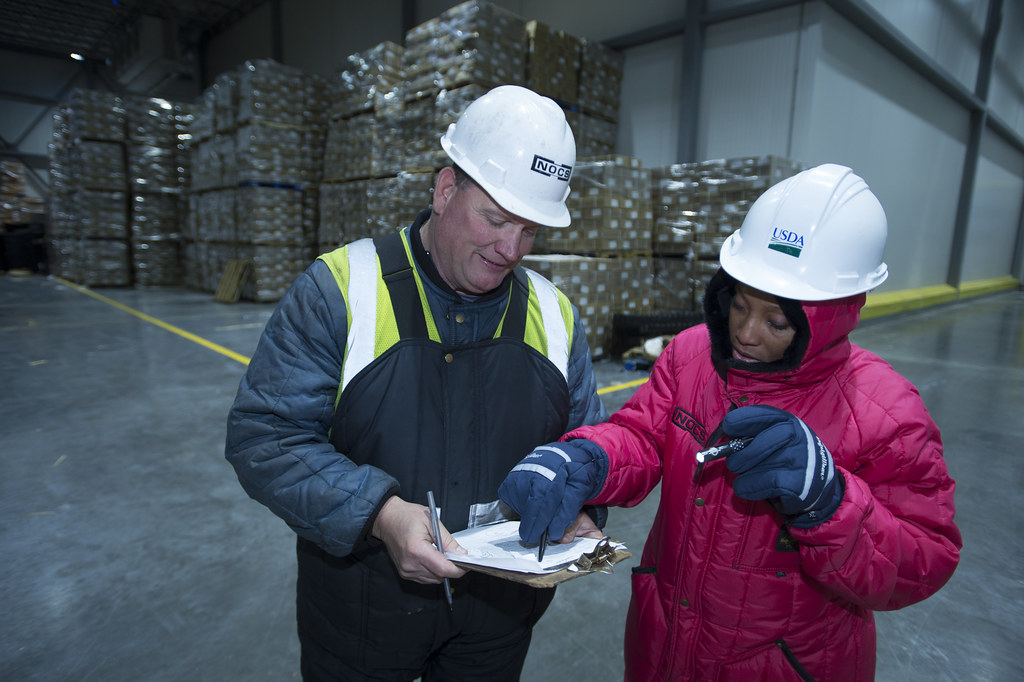
Featured image: U.S. Department of Agriculture, CC BY 2.0, via Flickr.