Editor’s note: This article was first published in June 2011, as an opinion piece on expected Spanish government measures; its predictions and the almost 5 million unemployed should be read as of 2011. VAT was later raised to 21% in September 2012, a pharmaceutical co-payment was introduced in 2012, and education and health budgets were cut.
In 2010 we made a forecast of what Spain’s situation in 2011 would look like, and without being a heavyweight financial analyst or an economics guru, we hit the nail on the head. We only got one thing wrong: we said Spain would hit rock bottom in 2011, when in fact, even though the situation is already dire, it is going to keep getting worse.
At this point the reasons that got us into this crisis no longer matter; we all know, to a greater or lesser extent, who was responsible. The problem now lies in the measures that will have to be taken, and those measures to shore up the Spanish economy are not going to please us at all.
Cuts in education and health care, and privatization
In times of recession, these two sectors are the hardest hit. Whenever governments want to cut public spending, they are the first target. Our health care model is under debate because it is not sustainable, so a health care co-payment is imminent. The only problem is that our current government doesn’t want to be the one to introduce it, with unfavorable polls ahead of the next elections.
Make no mistake: whether the current government stays or another comes in, we will all see the privatization of the health care system if Spain doesn’t manage to get out of the crisis, which probably won’t happen in the short to medium term.
There are proposals not to renew temporary teachers’ contracts and to increase the number of concertados, privately run schools funded with public money.
Higher VAT and energy prices
As we all know, the markets are demanding that Spain raise VAT and energy prices, so sooner or later Spain will have to accept those conditions, much to its regret, because of the loss of purchasing power for its citizens.
For the first time in Spain, a government will have to do the exact opposite of what it ought to do, knowing full well that it will be punished for carrying out these measures.
Advantages of these anti-crisis measures
The advantages are very clear: with a privatization policy, less money would leave the public coffers and more would come in as contributions. Raising VAT would further increase the cash flowing into the public coffers, and together with all kinds of revenue-raising measures, we would gradually manage to reduce the public deficit and win back the markets’ confidence.
Disadvantages
The disadvantages are even clearer. Trying to reduce the public deficit through higher VAT and taxes would shrink consumption because of the loss of purchasing power. Retail would become less profitable, which over time translates into more closures of small businesses and companies, and therefore more unemployment.
If health care were privatized, it would become a business, and like any business it would have more profitable, better-served customers and other, less profitable ones. Taken to the extreme, we could end up over time with a health system like the one we so envy in the US, where those who can pay live and those who can’t die.
If you are one of the almost 5 million unemployed and have to choose between a good school for your children and one with few resources, the money you have will decide whether your child gets a good education or not, narrowing their future career prospects.
As the title of this article says, Spain is heading toward becoming a land of opportunity for those whose finances are in good shape.
Other options nobody is looking at
Amid all the debate over creating social divides between the well-off and the poor, other ways of cutting spending are not being considered.
Spain is the country that supports the most governments with public money, and nobody talks about cutting spending on advisers, members of parliament and official cars, or about lowering public salaries that are three times higher than the average wage, not to mention the public money spent on political campaigns.
As the saying goes:
“Before changing the rest of the world, some people should take a look around their own house.”
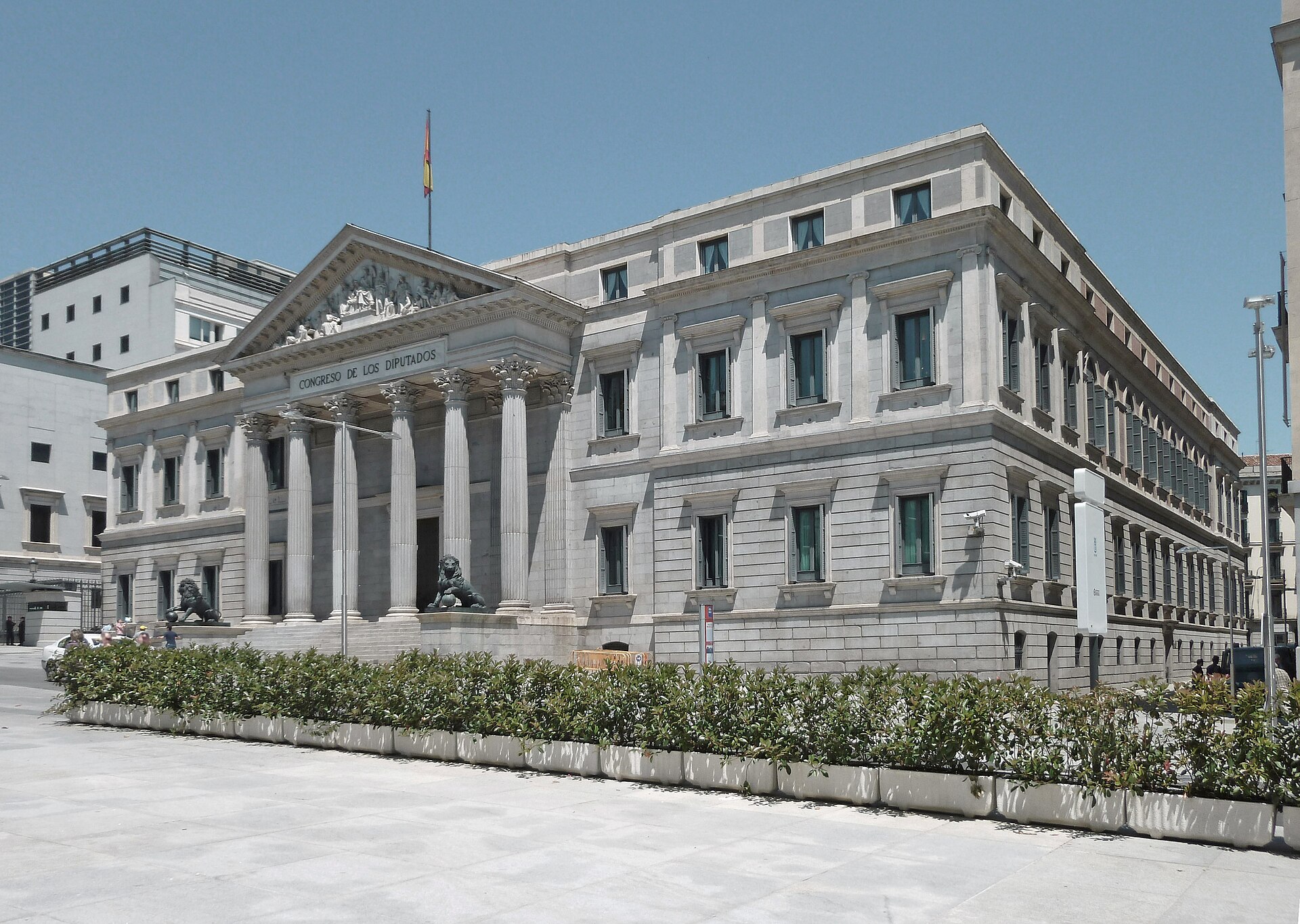
Featured image: Luis García, CC BY-SA 3.0, via Wikimedia Commons.