


Can we change how we perceive what we are going through when things aren’t as positive as we would like?
According to Jon Gordon, author of The Carpenter, it is easy to stop negativity from taking hold of us at those moments when everything seems to be going wrong, whether in business or in life in general. All we need is a kind of statement of intent, or pledge, in which we make very clear how we are going to behave (how we ought to behave) when difficulties appear, without letting them knock our spirits down.
Some may find this kind of statement of intent too simplistic, but they should know that these remedies are backed by neuroscience, which holds that our experience and perception of life can change according to the way we remember past events and mentally program future events and circumstances.
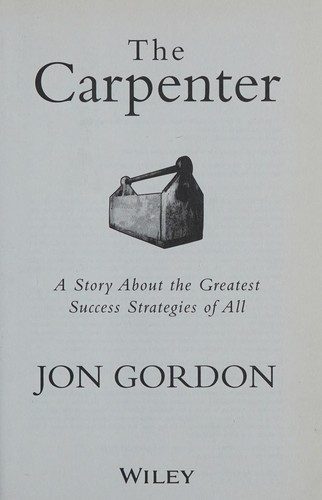
In The Carpenter, the main character wakes up in a hospital with his head bandaged, very frightened. He is there because the stress of building up his failing business made him collapse while he was out running. The man who saved his life is a carpenter, who soon shows him that he is much more than a simple carpenter. He is also a builder of lives, careers, teams and people, and he helps the main character rebuild his business in the midst of adversity and fear.
One of the carpenter’s secrets is to read this pledge on the bad days
- I commit to keeping a positive attitude in the face of negativity.
- When pessimism overwhelms me, I will choose optimism.
- When I feel fear, I will choose faith that everything will turn out well.
- When I am about to explode, I will choose to improve.
- When I face a challenge, I will look for the opportunity to learn and grow.
- When I suffer a setback, I will be resilient.
- When I meet failure, I will own the mistake and keep moving forward, towards future success.
- With vision, hope and faith, I will never give up and I will always move towards my destiny.
- I will always know that my best days are ahead of me, not behind me.
- I am here for a reason, and my purpose is bigger than my problems.
- I know that being positive doesn’t only make me better; it makes everyone around me better.
- Every day I will be positive and try to make a positive impact on people and on the world.
Source of the 12 pledges: Geoffrey James/Inc.com
According to neuroscience, many people fall apart when problems arrive because they weren’t expecting them, and in other cases because they don’t know how to deal with the situation.
With pledges like these burned into our minds, our mind is supposedly already prepared to know how to act: “When adversity comes, I must be positive and not fall apart. I must learn to solve this problem so that I can grow.” We swap a problem for a challenge, which for our brain is not remotely the same thing.
A problem can cause us stress, whereas a challenge can give us inspiration and the motivation to overcome it. Whether you see challenges as opportunities or as problems can make the difference between success and failure.
So, according to The Carpenter, if you read this statement of intent every day, your attitude towards your situation will keep improving, as long as you believe what you are saying. Within 2 weeks, this positive attitude will be ingrained in your brain.
Further reading
- How to radically change your life
- 16 hard things you will have to do to succeed
- Resilience: keys to success when things get tough
Featured image: Gustav Wentzel, Public domain, via Wikimedia Commons.



