

Editor’s note: This article was first published in July 2014; its market references are from mid-2014, with markets near highs, the VIX at crisis-breaking levels and the S&P 500 record of 23 May 2014. The Big Mac prices are from January 2014.
Global markets are still rising (calmer these days), although more and more economic indicators are predicting a major correction or even an imminent stock market crash. The problem with readings from all kinds of indicators is that they tend to be reliable about the event itself, but they don’t predict exactly when it will happen.
Some time ago we listed 10 unusual economic indicators whose effectiveness should not be underestimated. This time, several experts give their opinion in an article published by the Daily Mail on some formal indicators used by analysts, and others that might seem sillier but that some analysts take very seriously. Even so, and despite their effectiveness, these indicators should serve as a warning sign to take extra care, not as the sole basis for major investment decisions.
1. The VIX.
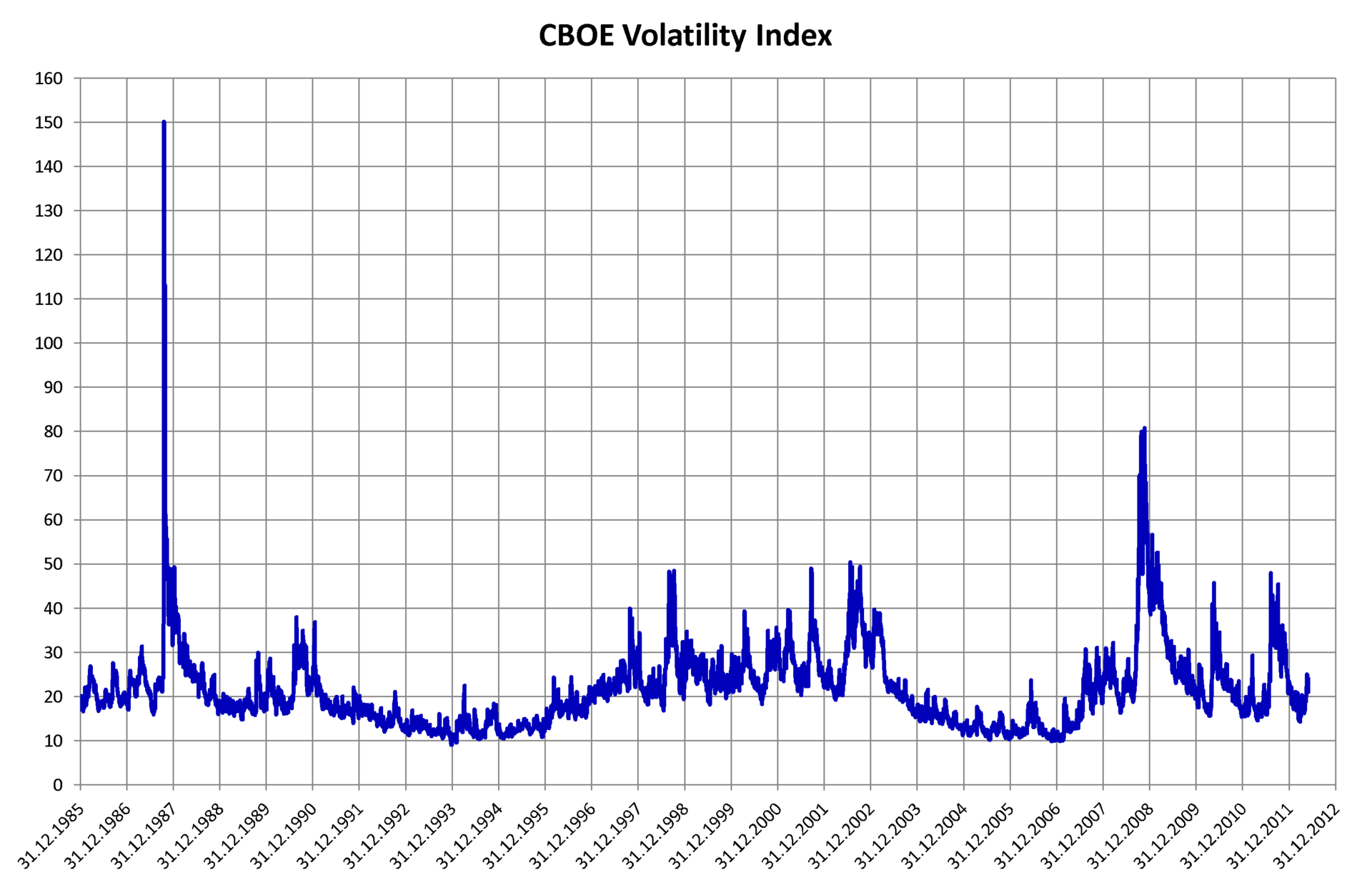
Also known as “the fear index”, this indicator measures the volatility of US stocks and is one of the most widely used gauges of global financial confidence. It ranges between 1 and 100. The higher the number, the more volatile the market.
You might think a VIX at its lows would be a good buy signal, since it means markets are calm and free of shocks. In reality, a VIX that is too low is what reveals overconfidence among investors.
When market prices are inflated, the VIX is usually at its lows, so every recession starts with the VIX at its lows. In fact, the level this indicator is at right now is the level it was at when the financial crisis broke out.
The VIX can also be used for speculation: if you foresee a huge crisis, you can invest in this indicator, which is known as “buying volatility”.
2. Market breadth.
If a market is rising but only on the back of a few stocks, that is a sign to tread very carefully. In the case of Spain’s IBEX, for example, stocks such as Telefónica, Inditex, Santander and BBVA are the ones that pull the index up most strongly. The IBEX could rise on very few stocks while the rest stay stagnant for months.
In the case of the S&P 500, the index hit an all-time high on 23 May, but analysts pointed out that only 20 of the 500 companies in the index recorded highs, which should not be a good sign for the market as a whole.
3. Investor leverage.
Investors often borrow money to finance or expand their share purchases. In fact, investor debt on Wall Street was extremely high before the 1929 crash. A high level of debt likewise signals extreme confidence among investors, who take on leverage expecting the market to rise even further.
4. Universal optimism.
Sentiment is probably one of the most effective indicators, according to Gavin Haynes, managing director of Whitechurch Securities. Optimism is a clear sell signal. Remember the famous line attributed to Rockefeller: “When your shoeshine boy buys stocks, sell yours.”
Now is when everyone is boasting about their stock market gains over these years, and courses and offers are popping up so that anyone can invest and take on high leverage.
Remember that investing follows certain stages: “first the smart and the visionaries invest, then the herd, and finally the fools.” If you can’t avoid being part of the herd, at least make sure you are not one of the fools.
5. Fashion trends.
Fashion has been a great economic indicator. And I say “has been” because this story has changed a lot with the internet and globalisation.
Skirts.
In 1920, the economist George Taylor suggested that when short skirts were in fashion, it was a good time to buy stocks at good prices. And not because of the savings on fabric.
Although nobody knows for sure what lies behind this indicator, which over time has proved effective, everything suggests that in the past, during good economic times, women could show off their silk designer stockings thanks to short skirts. When the economy faltered, they tended to wear long skirts because they probably weren’t even wearing stockings. That’s the theory.
Lipstick.
Leonard Lauder, chairman of Estée Lauder, said that lipstick sales tend to rise when the economy goes into crisis. The explanation behind this theory is that women will go shopping and spend money with or without a recession, but in hard times, instead of spending on clothes, shoes or handbags, they tend to spend it on make-up, and lipstick is an important part of make-up.
Higher heels, driven by a desire for glamour during a recession, and falling sales of men’s underwear are said to be other indicators of the state of the economy, as is the Japanese haircut among women.
In 2014, many of these silly indicators are coming true.
6. Fountains, helicopters and skyscrapers.
Tom Stevenson of Fidelity says that when you see a picture of a fountain or a helicopter in front of the headquarters of a company you hold shares in, in its annual report to shareholders, you should start thinking about selling those shares, because they are showing you the size of the CEO’s ego.
A chief executive who wants a fountain or a helicopter in front of the company’s headquarters is the same one who will want to fly in his own helicopter, and therefore the same one whose ego will drive the company into bankruptcy.
As for skyscrapers, there is little we can tell you that you don’t already know. Booms in skyscraper construction have historically coincided with severe economic crises. To take one example, the Empire State Building coincided with the Great Depression.
7. Burgers.
The price of a Big Mac can serve as an indicator of currency misalignment. For example, the average price of a Big Mac in the United States in January 2014 was $4.62; in China it was $2.74 at market exchange rates, from which you could deduce that the yuan was undervalued by 41% at the time.
We end with a passage from Greg Davies:
When it comes to indicators related to big projects, such as a new headquarters or taller skyscrapers, they can tell us something very useful about the arrogance of those involved in the project. A country that builds these things does so thinking it is on top of the world, and this is a kind of pride that in itself becomes a self-fulfilling prophecy of disaster.
Further reading
- What is the best advice an investor can get?
- The mother of all investing mistakes
- 3 investment ideas that can get you into trouble
Featured image: Jashuah, CC BY-SA 3.0, via Wikimedia Commons.



