Editor’s note: This article was first published in January 2012. Bayer acquired Monsanto in 2018 and retired the Monsanto name; Percy Schmeiser died in 2020.
We’re talking about Monsanto, the biotech giant that wants to become the Google of crops and, with its seed patenting system, a dangerous plague for humanity. Many people have already heard of this company and of how it intends to make money from its seeds. Today we learned about the case of Percy Schmeiser, a farmer who took this giant on in court and who appears in the video below.

Problem number one: If you buy seeds from Monsanto and sow them in your fields, you’ve taken on a lifelong commitment: if those seeds reproduce and sprout again years later, Monsanto can claim payment again because it holds the patent on them.
Problem number two: GM seeds may be responsible for destroying the soil’s fertility for natural crops. Once they’ve been let into your fields, the only seeds likely to grow on that land again for decades are those same genetically modified ones, with their accompanying chemicals.
Problem number three: It doesn’t matter whether you bought the seeds from Monsanto of your own free will, whether they fell there by accident, whether the wind carried them from a nearby crop, or whether the company itself scattered them on purpose while the farmer slept. Once those seeds grow, they belong to Monsanto, and it will demand compensation for patent rights, compensation that sometimes exceeds $100,000.
What about health?
Greenpeace talks about environmental damage, although that’s hard to prove because of the huge sums companies like this spend on scientific studies of dubious impartiality and origin. We’ve preferred not to get drawn into the science, since we take it for granted that there are other scientists warning of the serious consequences of GM farming, and not only for the environment. That said, we have spoken with Andalusian farmers who have been working the land for more than 60 years, and we’ve seen for ourselves the differences between an organic crop and a chemical, modified one. There’s simply no comparison.
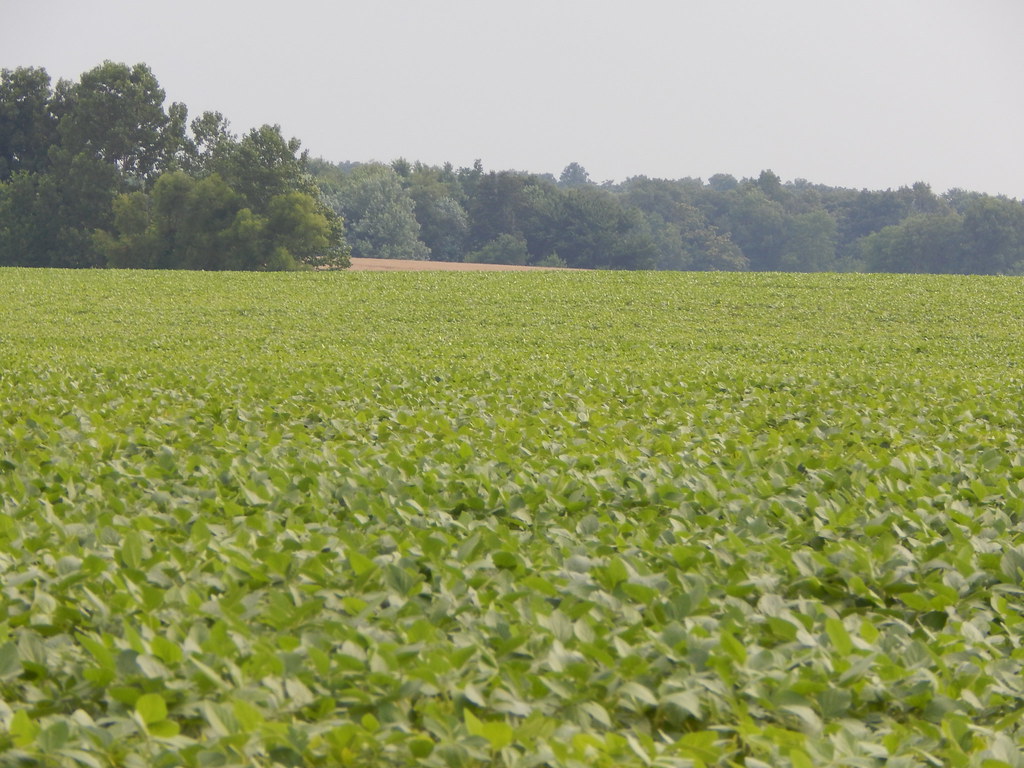
Soy is among the best-known patented genetically modified seeds. Until now we’ve been told that GM crops are harmless to human health. But… could a genetic alteration in a seed lead the human body to stop recognizing it as food and treat it as waste instead? That’s the question we put to a naturopathic doctor, who answered without a moment’s hesitation: “It could perfectly well happen, and it may perfectly well have happened already, unless there’s a more credible explanation for the recent E. coli case.”
Sandro Dutty also gave us a weighty argument: he believes the body is made up of bacteria, and that bacteria have only two functions, fighting infections and extracting the properties of the food we eat. The problem begins when the body can’t tell food from an infection. In that case, the organism itself can react in unpredictable ways.
Ask an old-school farmer and he’ll tell you that if you genetically modify an apple or an orange, you shouldn’t call it an apple or an orange, because it doesn’t have the same properties. I quote him word for word: “It’s crap that tastes like apple or orange.”
To sum up: Monsanto and companies like it are trying to put a copyright on crops. They’re doing a thorough sales job, getting their products into every corner of the world, to the point where, in time (and very soon), farmers will have no choice but to buy this kind of seed. Once it’s no longer possible to grow organic crops in the fields because of the environmental damage, we’ll have to put up with this kind of garbage that tastes of something, with the resulting health consequences, because make no mistake, there are consequences.
More information on the case of Percy Schmeiser and the giant Monsanto.
Sources: Gastronomía y Cía, Tierramérica
Featured image: United Soybean Board, CC BY 2.0, via Flickr.