

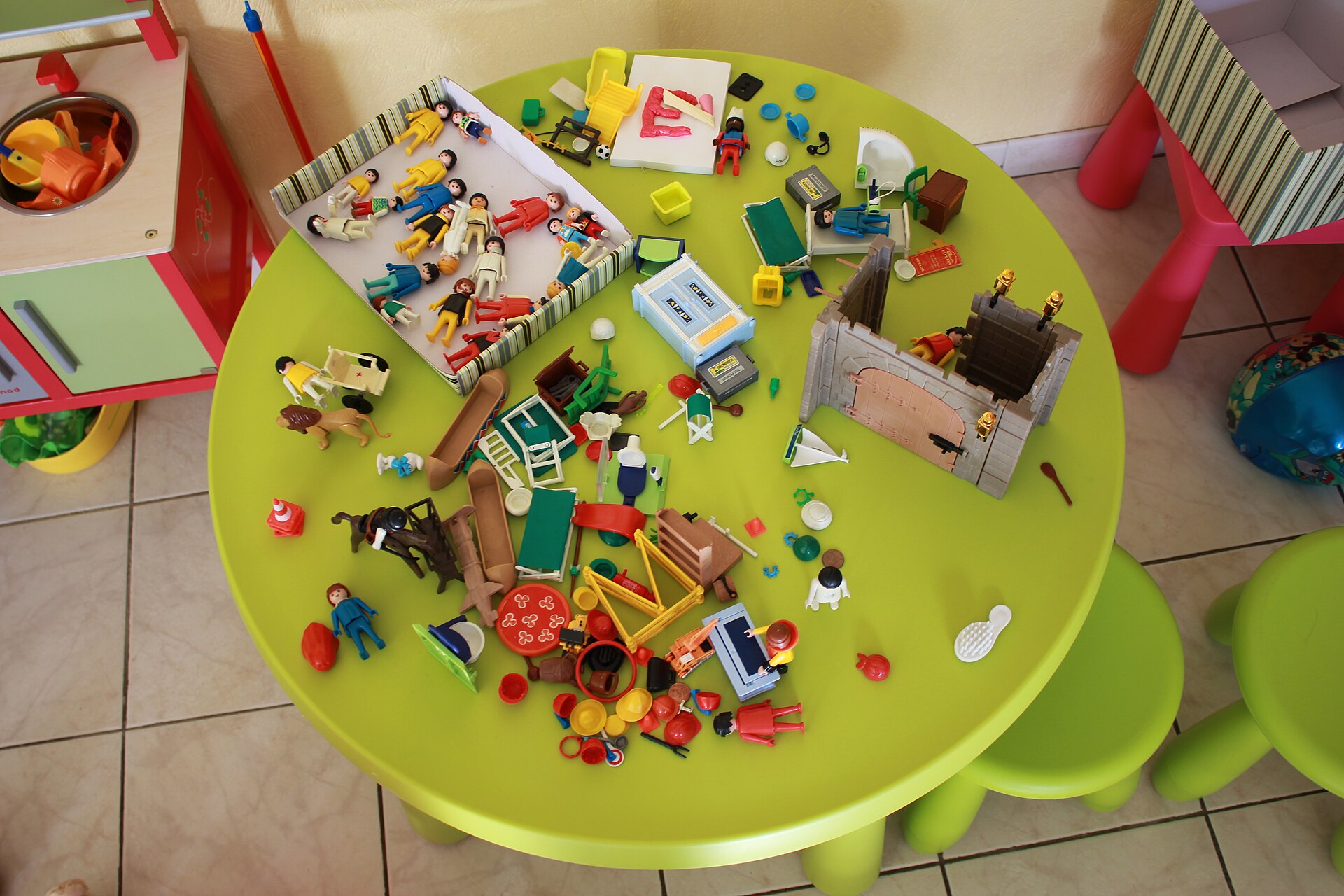
Editor’s note: This article was first published in October 2011. Horst Brandstätter died in 2015, so “currently the sole owner” no longer applies; the turnover figures (Lechuza’s 40 million euros in 2010) and “33 years in Spain” are from 2011.
To mark the 35th anniversary of Playmobil, those little figures that I’m sure almost all of us owned as children, we’re taking the opportunity to tell the story of their creator. Behind this “toy” is a visionary who backed an idea whose success is more than remarkable. Horst Brandstätter (Germany, 1933) didn’t change the world or alter the way society communicates, but he has been present in every one of our homes.
It’s estimated that more than 25 billion “klickies” (Playmobil figures) have been sold so far, which means that, with a world population of 7 billion, there are more than 3 Playmobil figures per person. Very few companies can claim a statistic like that. How did the idea for Playmobil come about? What was the secret of its success, and what steps turned a simple figure just over 7 centimetres tall into one of the most profitable businesses in the toy industry?
Horst Brandstätter was the head of Geobra Brandstätter and is now the sole owner of a company that has come through several crises. The key moment came in 1970, with the oil crisis, at a time when toy factories were betting on metal toys while other companies were reluctant to give up wooden ones.
Brandstätter drew up a business plan to cut the cost of raw materials for making toys. The new toy had to be small and, ideally, easy to manufacture, which would reduce the need for different production machines, since the “matrix”, or mould, would be the same for every unit. At first he was told the figure was very “ugly”, because it had no nose and wasn’t very flexible, but the accessories would make it eye-catching.
Brandstätter managed to grow the company’s turnover from 22 million to 100 million in just 3 years. Playmobil was already a worldwide success. The next step was to place the factory strategically to reduce distribution costs. That took turnover to 500 million, and during the 1980s the pirate ship and the “Playmobil fort” were among the best-selling toys in the world.
Few people bought just one Playmobil figure, because the company managed to sell small armies of them with their matching accessories. Brandstätter is considered a visionary of toys, just as Steve Jobs is of technology.
Even so, he didn’t want to put all his eggs in one basket, so in 2000 he registered the Lechuza brand, a self-watering system for plant pots that by 2010 was sold in more than 65 countries with a turnover of 40 million euros, while Playmobil figures are coming through the crisis with ease.
Playmobil’s arrival in Spain
Playmobil arrived in Spain 33 years ago, two years after production began. Few companies wanted to take on its distribution, because they saw no future in these figures. It was Famosa, a toy company from Alicante, that decided to distribute it nationwide. That’s where the toy’s original Spanish name, “Famobil”, came from.
Playmobil has never stopped innovating in the industry. In fact, it has adapted perfectly to the new technological era, so it will probably remain the favourite toy of our children and grandchildren.
Further reading



