Editor’s note: This article was first published in October 2011, as an opinion piece dated 31 October 2011, written around the news of zero economic growth in Spain and the November 2011 general election. Its predictions for 2012 have long since played out.
You don’t need to be an economist to know that the current economic situation is heading for a new recession, although I wouldn’t call it a new recession so much as a worsening of the crisis that had already started. The damage is done, and this economic cancer spread in 2008. Today’s news that economic growth is at zero has caused panic. I have two questions:
-
What’s new about it, when on 6 September we already reported that 6 of the world’s 7 largest economies were growing at 0%?
-
Is it possible for an economist to talk about economic recovery on 27 October and then announce a recession on 31 October, four days later? The die is cast, and the outcome can’t change whatever they announce tomorrow, because that’s not how the economy works.
I’m sorry to give my opinion without being an economist, though I’m good at maths and even better at common sense. And the only maths that counts is that Spain owes more than 3 trillion euros, and Spain doesn’t have 3 trillion euros. It’s true that other countries owe Spain money too, and it’s even truer that the countries that owe Spain money also have debts beyond their ability to pay.
In the same way, on 30 May 2011 we announced that financial CHAOS could arrive in 2012. It’s not that I like spreading panic with conspiracy theories. When I wrote that article I didn’t rely so much on maths (although I used it). I based my calculation more on the common-sense algorithm. I believe that in 2012, once the elections are over, once we realise that the economic problem is not a problem of political parties (though it is one of politicians), once every excuse has been used up and there are no more temporary patches left, the real disease will come to light: the financial system is already dead. We pushed it until it went into cardiac arrest, but we’ve strapped it onto a warhorse, like El Cid, to show society that it’s still alive and could still recover.
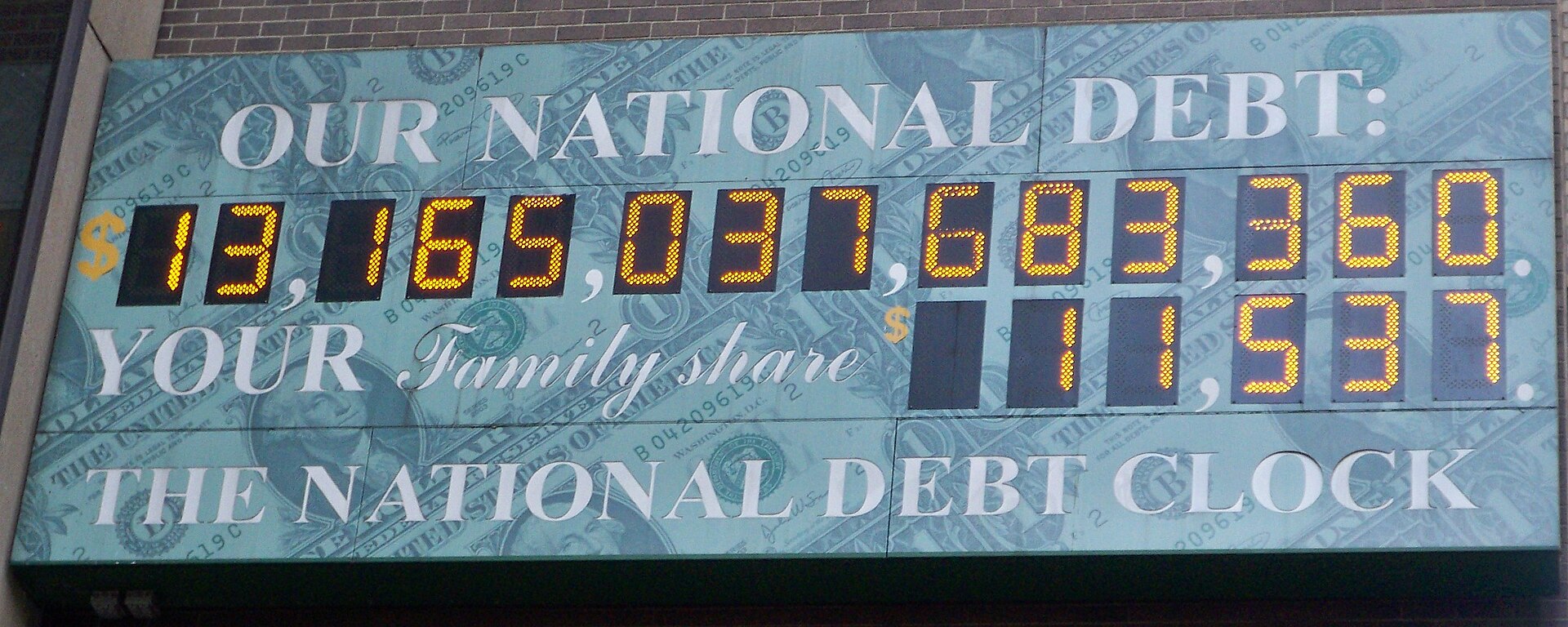
The United States had a debt of 16 trillion. Maybe it’s higher now, or a little lower, but at the end of the day… can that amount of money be paid off in 15 years? Probably not even in 30 years, bearing in mind that financing debt adds interest to it while inflation rises, unemployment grows and we are called on to tighten our belts.
We’re not going to get into financial jargon, using language that society sometimes claims to understand when the reality is that nobody has a clue what’s going on. I have to agree with Mario Conde who, in his interview on the “educational economics programme” La Noria (a Spanish TV talk show), said that economists use language much like politicians do: they’ve mastered the art of saying a lot without actually saying anything, using terms few people understand.
The economic situation explained for ordinary people
The world invented money that didn’t exist through the financial system. That invented money is debt. When that invented money (debt) was lent to people, the debt multiplied. The debt began trading on the stock market through various financial derivatives. That debt came back to the banks through other financial products and was lent out to people again. Let’s say that for every real dollar, 10,000 fictitious dollars were created (debt, invented money, money that doesn’t exist).
Now the world (banks, governments, all of us) has to pay back money that doesn’t exist with money we don’t have, because there is more debt circulating in the world than real money. That is the only reality, and to understand how serious it is you don’t need to study economics. You just need to know that you can’t get blood out of a stone.
The best economic forecast I’ve heard this week came from an investor in Andalusia. As you may know, people in Andalusia often have a very particular way of speaking, but this man’s message was clear and simple, even for the most advanced economists:
“This is going to blow up. If it doesn’t blow up today, it’ll blow up tomorrow, but blow up it will.“ So there you have it: it’ll blow up 🙂
Featured image: Matthew G. Bisanz, CC BY-SA 3.0, via Wikimedia Commons.