Editor’s note: This article was first published in April 2011. The film’s limited release in Spain (14 cinemas in 6 cities), the remark that nobody has gone to prison, and the points about the Obama administration and Bernanke’s reappointment reflect the situation in 2010-2011.
Inside Job, the documentary we strongly recommend everyone watch, leaves a bad taste in viewers’ mouths. They go to the cinema expecting a film that will teach them something about the world economy and finance, and come out feeling they have just watched a horror movie.
No wonder, given the malice and greed of some of the real people involved, and above all considering that our politicians and the banking system are implicated. The documentary discusses how the financial system was interested in money from drug trafficking in countries bordering the United States. In short, this documentary is a must-see.
Javier Gil Sanz, author of the blog Economía a lo claro, has written an excellent summary of the conclusions that can be drawn from the documentary. He sets them out in 10 points, which I couldn’t have summarized better myself.
-
The crisis was brewing earlier, in the 1980s and 1990s. After forty years without crises, thanks to the controls imposed on banks in the 1930s in response to the Crash of 1929, the financial system began to grow stronger and to speculate, helped by deregulation and the power of investment banking.
-
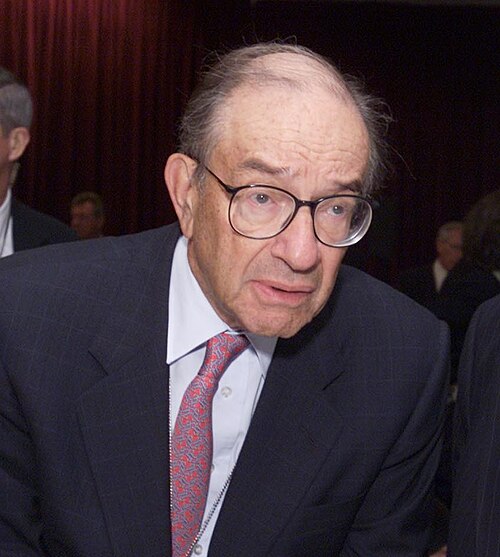
Financial power settled in the White House, the Federal Reserve and Wall Street under Reagan (1981–1989), Bush senior (1989–1993), Clinton (1993–2001) and Bush junior (2001–2009). All four had one man in common: Alan Greenspan, chairman of the Federal Reserve from 1987 to 2006. His maxim: fewer laws and more market. No to financial regulation. The cop leaves the field to the speculators.
-
The credit free-for-all and the speculative bubble of the early 2000s were the result of a lack of regulation and of the power of investment banking, far removed from the real economy. The banks sold smoke (subprime mortgages) and ended up selling insurance on bits of paper (CFDs).
-
The rating agencies (Moody’s and others) gave them technical cover in exchange for millions in fees, awarding the top rating (triple A) to assets that were junk. And they kept doing so until the day before the crisis broke.
-
The speculators were high on profits, with multimillion salaries, luxury homes, yachts, planes, drugs and high-end prostitution. And greed dragged ordinary people into taking out mortgages and living like the rich in this speculative bubble.
-
There were experts who warned that the bubble could burst, and they were attacked. And many “serious” economists from Harvard and Columbia sold themselves, producing reports and studies in favour of deregulation and the speculative bubble that reassured investors.
-
In 2007 and 2008, the investment banks themselves saw the risk and started betting against it, making money by wagering on the collapse of the junk bonds.
-
When the crisis broke, the regulators, the very people who should have prevented it, gave them 700 billion dollars of public money and let them collect multimillion bonuses in 2008. Many of the people in government in 2008–2009 had worked at investment banks and rating agencies during the previous three decades.
-
Obama brought many of them back into his administration, reappointing Ben Bernanke, chairman of the Federal Reserve since 2006 (under Bush junior). And many of the economists and politicians who looked the other way while the crisis was brewing, and who helped those responsible, are still calling the shots in the White House.
-
Nobody has gone to prison. And the American financial system is once again making a lot of money and has more power than before, according to the final conclusion of Inside Job.
Bear in mind that in Spain Inside Job is only showing in 14 cinemas in 6 cities.
According to Javier Gil, Sony has taken an interest in the documentary’s message and has prepared a teachers’ guide, in the hope that schools will teach the real reasons behind this crisis, so that our children will be able to recognize the symptoms of a speculative bubble in the future.
Further reading
Featured image: International Monetary Fund, Public domain, via Wikimedia Commons.