

We can define them as “the set of attributes a person has that allow them to act effectively in a given field”. Put into practice well, they lead to effective recruitment processes and successful people and/or talent management in the business world.
We have already written about some of them (they’re listed at the end of this article) and will keep doing so. A competency is “the harmonious interaction of each person’s own skills, knowledge, values, motivations, personality traits and aptitudes, which determine and predict the behaviour that leads to achieving the results or goals set in the organisation”.
What competencies are
Each person has a set of personal and professional traits shaped over their working life and personal history. Jobs, in turn, come with a definition of the professional competencies needed to carry out their productive tasks successfully.
Bringing the two together produces the best person–job fit, whether for recruitment or for managing people and talent.
A practical example is a broad, detailed test of the person and of the job, carried out separately: the greater the match, the better the person’s performance in the role. The big difference is that companies define jobs and their requirements in as much detail as they wish, while people bring their professional abilities, shaped by their previous personal and working life.
Broadly speaking, competencies fall into four main groups:
- Technical knowledge, which comes from the person’s academic and supplementary training, set against the knowledge the job requires.
- Behavioural traits related to leadership, teamwork or how work is organised, set against the characteristics of the job: individual work, teamwork or even a management role.
- Personality traits such as willingness to learn, initiative and autonomy, matched against the job description.
- Intellectual abilities of the candidate in terms of analytical, conceptual and relational judgement, as defined in the assessment of the work to be done.
Defining job competencies
Before defining them, we as a company need to be clear about a few logical considerations:
- Every organisation is different: what works for one may be adapted to another company, but it won’t be the same.
- The same goes for how competencies are assessed and for the assessment methods themselves.
- Each job or recruitment process assesses different competencies, even if some are shared.
- Each person may value a competency differently.
We’ve talked about assessing competencies; now we add grades or levels of requirement for each one.
Each competency should be divided into several grades or levels of requirement for the job. A possible scale is basic, intermediate, higher and advanced, or a wider one if needed. Each grade or level should come with a definition, as detailed as possible, because it makes clear what behaviour is expected at each level.
Let’s take leadership as an example. We covered its definition in a previous article, and the levels required might be:
- Basic: leads meetings well, sets the agenda and objectives, and keeps control of the time and of turns to speak. Keeps people informed and explains the reasons behind decisions.
- Intermediate: promotes the group effectively, using complex strategies to motivate it and reach good levels of productivity. Makes sure an effective communication system is in place.
- Higher: looks after and protects the group and its reputation. Makes sure good results are achieved so that duties are performed well, and pays attention to the group’s needs and satisfaction.
- Advanced: makes sure team members share and take part in the group’s objectives, mission and policies, and acts as a role model to achieve its aims, securing the tasks and building a relationship of trust and credibility.
How HR uses competencies
When competency-based management is used well, the company benefits in both recruitment and people and/or talent management.
A recruitment process needs a defined job. That job must have a set of competencies, from any of the groups above, each with a minimum level of requirement. The recruitment process is then built around these competencies, with candidates demonstrating their level through tests. The degree of match between candidate and job is what makes the process a success.
Good people and talent management comes down to using wisely the tools that competency management of the workforce provides. We all know leaders, and we could surely place them in the four levels described above. We’d put each leader in their place, but we’d also find out who the best leader is: the one whose leadership skills reach the advanced level.
Further reading
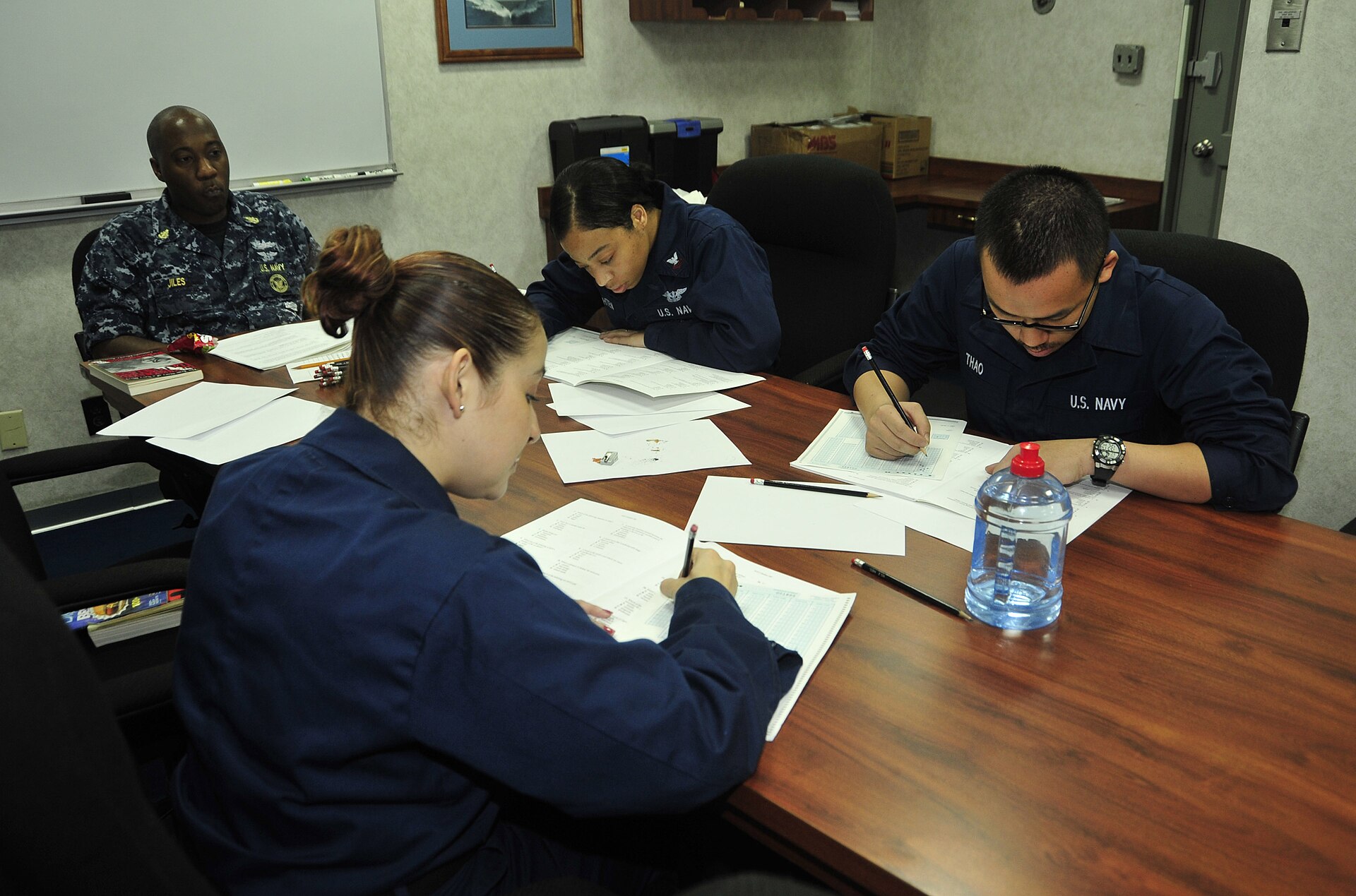
Featured image: U.S. Navy photo by Mass Communication Specialist Seaman Cheng Yang, Public domain, via Wikimedia Commons.



_take_the_Armed_Service_Vocational_Aptitude_Battery_(A.jpg)