An increasingly competitive job market and new recruitment methods mean that candidates cannot leave anything to chance in an interview. It does not matter what you know or what you have done: the smallest mistake in the interview can get you ruled out. We have already covered the most outrageous mistakes people make, even in interviews for executive posts. For group interviews, we gave you some tips and techniques to stand out. Now we are going to focus on small details that recruiters pay more and more attention to, and that we should at least be aware of.
1. If you are offered anything to drink other than water, say no.
If you are offered coffee, politely decline. The interviewer does not want to waste time making coffee or bother their assistant. Besides, if you felt like a coffee, you should have had one before the interview. Among other things, simply drinking a coffee while being interviewed can be distracting, especially if you spill it or stain the interviewer’s desk. Some experts would tell you not to accept even water.
2. Do not sit down until you are asked to.
This is a basic rule of good manners, and yet many people who know it are so nervous when they walk into the room that, on seeing the empty chair in front of the interviewer’s desk, they sit straight down, even before the interviewer does. And even if the interviewer is already seated, stay on your feet until you are invited to sit.
Once you are seated, remember your body language. Head up and shoulders straight. Do not lounge back in the chair (arrogance) or hunch your shoulders (shyness). Look the interviewer in the eye at all times. Above all, be careful not to come across as shy, because rarely has someone who considers themselves shy landed a position of responsibility or a job that calls for people skills.
3. When there is more than one interviewer
Sometimes more than one person conducts the interview, even if only one of them does the talking throughout. When asked a question, follow the good communicator’s protocol:
When you are asked a question, start by looking the person who asked it in the eye, and during your answer make eye contact with the other interviewers at random. Finish your answer with your eyes back on the person who asked the question.
4. If they play mind games with you, do not let on that you know the game.
Job interviews sometimes turn into a circus where interviewers try out new techniques they have learned, which are supposedly more innovative and meant to catch us off guard. More and more people know these games, and some try to look clever by telling the interviewer they recognise that particular mind game.
Congratulations, you have shown you are smart, but you have screwed the interviewer over by leaving them wrong-footed. They will probably not take it well. Play along and use the fact that you know the game to gain an advantage, because knowing the game or the type of interview can work in your favour. (Read: A tough job interview? You haven’t been interviewed on Wall Street.)
5. If you are not sure how to dress…
Here, perhaps, men have it easier than women, since it is women who face the doubts: “Will I look too sexy or provocative? Or, on the contrary, will I come across as too conservative? Should I wear dark or light clothes?”
Our colleague Victoria Bernal advises that, when in doubt, both men and women should wear light colours. And women should be very careful about dressing too provocatively, as there are more and more cases of women even being fired for provocative clothing or for showing off their curves.
For men, given the choice between a black suit and a grey or cream one, go for the cream suit, followed by the grey. Winter or summer, wear the full suit (jacket included) and never short-sleeved shirts; always long sleeves.
6. Gestures that could give you away or be misread
Continuing with how our body language might be interpreted, here are some things that some interviewers pay more attention to than others:
-
Accompanying our words with hand movements, showing the palms of our hands, signals sincerity (nothing to hide).
-
Putting one hand in your pocket while talking on your feet shows nervousness or secretiveness. Both hands in your pockets shows insecurity or passivity. Standing with your hands on your hips signals poor social poise or extreme shyness.
-
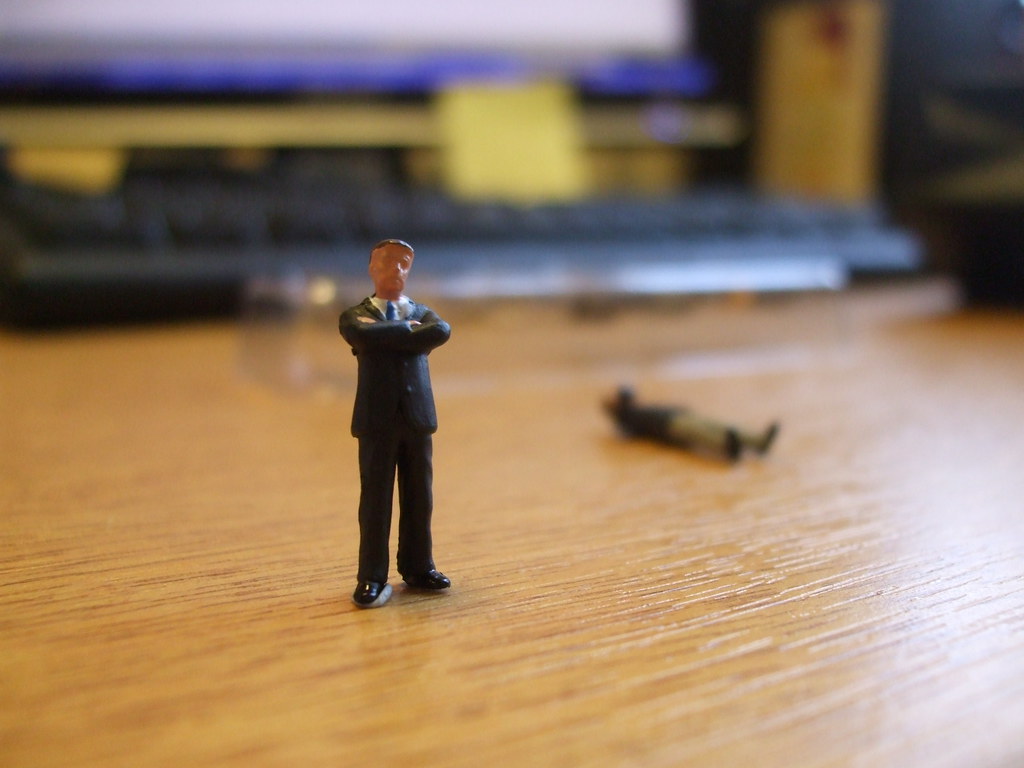
Crossing your arms over your chest signals defensiveness or disagreement.
-
Moving your hands too much signals excessive dominance and is also distracting.
-
Touching your ear or nose signals a lack of sincerity.
-
Tilting your head forward or down is shyness.
-
Holding your head too high or tilted back reflects too much pride (arrogance).
-
Tilting your head to one side signals that we are thinking about something else (distraction) or that we are bored.
-
Blinking too much means lying, lack of sleep, a hangover, tiredness or a nervous tic. Either way, try to avoid it.
Signs that give the interviewer away, and the likely outcome of the interview
1. How can you tell if the job interview went well?
The interviewer kept showing interest in us with increasingly probing questions, and we even noticed them gradually relaxing and smiling more and more.
While interviewing us, the phone rang and they decided to put it on hold.
They asked when you could start work and even spent quite a lot of time explaining some details about the company.
They talked to you about salary.
2. How can you tell when it did not go so well?
The interview had more interruptions than a TV programme has ad breaks.
While you were talking, the interviewer was looking for papers, opening drawers and did not hesitate to answer every phone call.
They did not talk about salary or go into detail about the job or the company. Nor did they ask when you would be available to start (they did not care; they were not going to call you).
They said something like: “We are still interviewing, so we will call you if you are selected.”
Or something like: “Well, we will be in touch. It has been a pleasure.”
Final tip: if at some point we notice some of these signs, where the interviewer is not listening or starts looking for papers, do not hesitate to politely try to get their attention and steer the interview back on track. Something like “Would you prefer us to start again?” will do. That said, once an interviewer shows rudeness and indifference towards a candidate, you could say the battle is already lost, for any of the reasons above, and as the saying goes, “You never get a second chance to make a first impression.”
Further reading
- How to spot a bad candidate before hiring them
- Awkward questions in a job interview
- The best excuses for being late to work, ranked
Featured image: ben dalton, CC BY-SA 2.0, via Flickr.