Editor’s note: This article was first published in December 2013; the prices quoted ($1,200 peak, $535 low, an 8,000% gain in 2013) and the Chinese measures are from that month. Williams’s forecast failed: bitcoin traded in the hundreds of dollars in 2014 and later rose far above its 2013 highs.
Mark T. Williams, a finance professor at Boston University School of Management and a former Federal Reserve bank examiner, says that in the world of bitcoin a week can be the equivalent of a decade.
In early December, bitcoin rose above $1,200, pushed up by the digital currency’s “evangelists” and their promises of its heavenly glories and endless possibilities for the world economy. They even compared it to advances not yet seen since the start of the internet revolution.
Bitcoin’s beneficiaries and backers claimed that the disruption to the market would bring credit card companies and payment services such as Western Union to their knees. Better still, bitcoin could supplant the dollar as the new global reserve currency.
The Winklevoss twins of Facebook fame predicted in their own book that bitcoin would reach the staggering figure of $40,000 per coin. And the curious thing is that some people believe it. What is clear is that from January to December 2013 bitcoin gained 8,000%.
(Read: Bitcoin explained in 4 quotes.)
But in this revolutionary landscape, where some see a transformation of the economy that would put central banks out of work and create new millionaires who don’t come from finance, bitcoin has shown, according to this finance professor, that it has flawed DNA.
For a start, bitcoin, which hit $1,200, fell to $535 in just a few days. That is a drop of more than 55%. And the hype about how big bitcoin is going to be cannot sustain its irrational prices on its own.
In his view, bitcoin is not a legitimate currency; it is not even a currency. It is just a very risky bet on a virtual commodity.
Bitcoin has had flawed DNA since its creation. It was devised in a virtual world by computer experts, but it fails when it is carried over into the real world.
(Read: Greenspan: bitcoin is a bubble.)
Bitcoin is built on anti-Fed libertarian dogma, but it does not understand how the global economy, central bank policy and financial markets work. It was born to fight speculation, yet bitcoin is nothing but pure speculation.
To assume that a computer-generated currency can exist, running in a decentralised way outside central banks and their controls, is a sham and economically very dangerous.
From a basic operational point of view, the digital currency’s structure has major weaknesses. For example, miners are supposed to behave responsibly and not game the system for greater financial reward, so the need for controls to prevent cheating is constantly ignored.
Fraud is also on the rise: right now there are $220 million in stolen bitcoins that have not been recovered. There is no legal protection for investors and no guarantee if someone steals your digital wallet.
If you make a mistake in a transfer and the payment details are wrong, bitcoin transfers are not easy to reverse.
If bitcoin ever became a widely accepted currency, the economic uncertainty it would create would be enormous.
When will the bitcoin bubble burst?
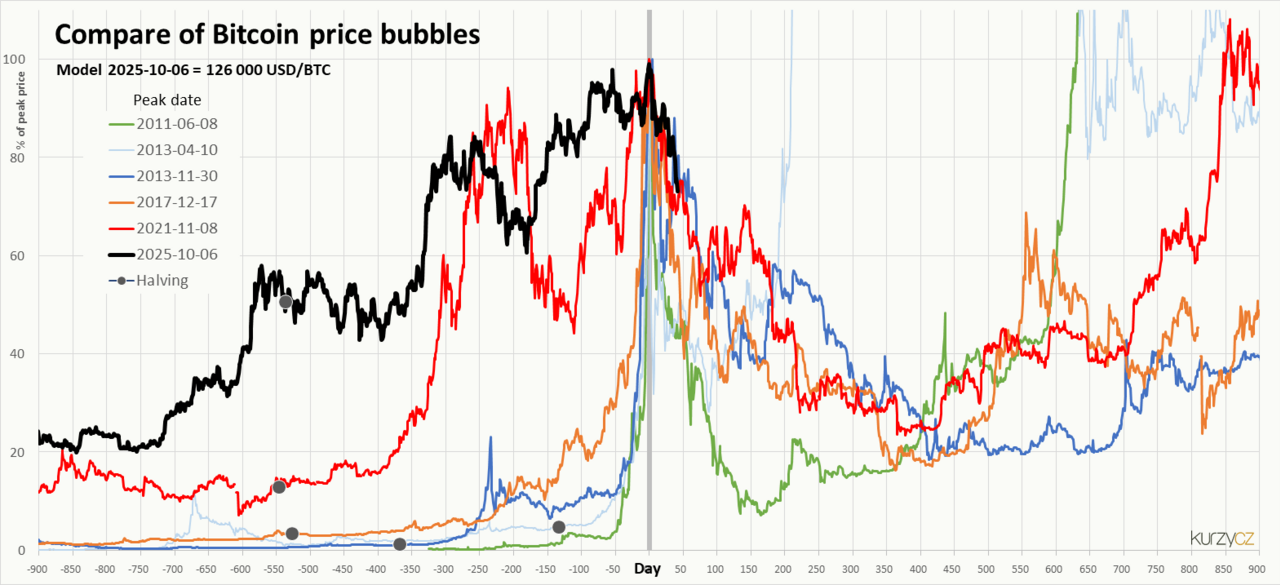
Every asset bubble has three stages: growth, maturity and the “pop”. (See: The 4 phases of a financial bubble.) The growth of the bitcoin bubble began in 2011, followed in 2013 by maturity and madness, and now, in 2014, the “pop” should come. China has already set that scene.
Ironically, China, the world’s second-largest economy, helped send bitcoin prices sky-high, and now China itself is bringing the price crashing down.
- First, China’s central bank has barred banks from accepting bitcoin as a currency.
- Baidu, China’s equivalent of Google, announced that it would stop accepting bitcoin.
- Finally, China has banned payment intermediaries from carrying out bitcoin transactions.
Given that China had the largest bitcoin “exchange”, the scepticism this has unleashed has dealt bitcoin a heavy blow.
Other rich and powerful countries are taking a similar position, warning about the risks of this currency.
What does the professor base his $10 price for bitcoin on?
Mark T. Williams says bitcoin’s run is already over, since it has been unable to keep its price reasonably within a normal range. Gold, unlike bitcoin, has tangible value. Bitcoin is backed only by hopes and dreams of what people will be willing to pay.
As it becomes more and more obvious that bitcoin is not going to be the currency some have promised (or anything close to it), prices will collapse. When the big bitcoin holders and the miners and speculators realise the sham has been exposed, they will rush to sell, knocking the price down for good, and with a bit of luck bitcoin will be trading at around $10 by the end of the first half of next year or shortly afterwards.
As we have said before, the only difference between bitcoin and tulip mania is that with tulip mania people were at least left with a tulip when the bubble burst.
See also: What bitcoin is and what it isn’t
Featured image: Kurzycz https://www.kurzy.cz/, CC BY-SA 4.0, via Wikimedia Commons.