Editor’s note: This article was first published in January 2012, days after US authorities shut down Megaupload and during the debate over the US SOPA bill. Mariano Rajoy had just become Spain’s prime minister, succeeding Jose Luis Rodriguez Zapatero.
Last night I walked into a shopping centre. The door was open and there was no security guard, so I called a friend of mine and asked him to bring a truck. We took 300 laptops, 100 televisions and 50 desktop computers. This very morning we sold every one of those products, each worth more than €300, for just €20 apiece, so we were never short of customers.
Halfway through the operation the police turned up and took us to the station. When they asked me what I was doing, I told them I was exercising my right to freedom of expression: those products are very expensive, and I had taken it upon myself to share them with people in need for a much lower price. Besides, the door was open, so I concluded that the products were there for someone to take.
My customers came in to defend me, shouting that the police were censoring us, since we weren’t doing anyone any harm. Quite the opposite: we were putting these products within everyone’s reach. I couldn’t believe what I was being accused of, although after a long explanation they gave me to understand that I had stolen. Can you believe it? It’s outrageous. If we carry on like this, the day will come when we have to pay even for the coffee we drink in a café.
That, basically, was Megaupload’s business: taking a product made by someone else and profiting from it without giving the maker anything in return. Looking for any other explanation is turning reality upside down. Of course we like having free films and music. As consumers, it suits us not to pay anything, and it suits the download sites, because they make money from it, but there is one part of the chain that it doesn’t suit at all. Let’s move on to another point so we can see what we are turning into.
Lucía Etxebarria (a best-selling Spanish novelist) announced that she would stop writing because her books had been downloaded thousands of times while she had earned hardly anything from them. That was when comments like this one appeared:
“You writers have to accept that you can’t make a living from book sales anymore, and you’ll have to give talks instead. If nobody calls you to give talks, it’s because you’re a crap writer, and that’s why nobody calls you.”
I completely agree with that comment, so two hours ago I sat down for a serious talk with the accountant who handles my paperwork. I told him, very seriously:
“From now on you’ll keep doing my accounts, but I’m not going to pay you for it. That’s just how it is.”
He asked me why. I told him plainly:
“You accountants have to forget about getting paid for your work. Did you know there are accountants who give talks all over the world? If nobody calls you, you must be a crap accountant.”
The thing is, he didn’t take it well; he was even offended. At this rate people will expect to be paid for doing their jobs. This country has gone mad.
I’d like the person who wrote that comment to work for me, but on exactly the terms he demanded of Lucía, no more and no less. If he wants a salary, let him give talks about whatever he does, whether it’s plumbing, bricklaying or catering. And if nobody calls him to give talks, it’s because he’s a “c” at whatever it is he does.
That’s the reality, folks, to the point that I don’t understand what freedom of expression has to do with any of this. If legal e-commerce is already going to end up hurting many industries, imagine the consequences of illegal e-commerce, where anyone can profit from someone else’s work or product without giving them anything back.
I’m not in favour of SOPA
That said, I’m not in favour of the SOPA bill (the Stop Online Piracy Act then being debated in the US Congress) because of the way it works. Any wrongdoing has to be proven through the same judicial process that has been followed until now: first prove guilt, then pass sentence. Still, with or without SOPA, the truth is that Megaupload was crossing that line.
I think the problem is that we talk about copyright instead of business. To understand what copyright is and the law around it, we would have to get up to speed, whereas business is something everyone understands. Nobody would like someone else to stand at the door of their shop giving away their product or service for free. That alone is annoying, and it would be doubly annoying if the product being given away were the one you made yourself and you received nothing for it. Put that way, we all understand it.
Let’s talk about freedom of expression and censorship
First we have to distinguish between democracy and extreme anarchy. Democracy is sending Mariano Rajoy (Spain’s new prime minister) a tweet telling him you disagree with what he has done, complaining, saying you prefer the PSOE (the Socialist party), and so on. Anarchy is insulting him, because that is neither ethical nor polite, and nobody has to put up with it. Not Rajoy, not Zapatero (his predecessor), not you, because you should know that out on the street, insulting someone can get you fined.
The other day I was joking with someone, wondering how politicians must be adapting to the times now that people insult them on social networks. This person told me they aren’t adapting, and that in time serious measures will be taken to make an example of people. When that happens, we’ll say we’ve been censored and that our freedom of expression has been curtailed. But the thing is, as an editor at Pizcos.net rightly said in the article “Let’s not confuse freedom with illegality“, we ourselves are the first to delete a comment if it insults us, not to mention deleting spam and doing everything we can to stop junk mail. Don’t spammers have the right to make a living by flooding our inboxes? Of course they do (or maybe not), but they bother us, and a lot.
I know I’m not approaching this article from the popular point of view, since the vast majority of internet users are proclaiming that their rights are being violated by attempts to find a solution to piracy. But if we’re honest with ourselves, we know that this situation is neither healthy nor viable for any kind of business, let alone for the economy.
“We need to find a profitable business model for producers and users alike, a model in which music and films can be consumed at a lower price than today and in which creators receive their fair share of the profits. Piracy on the internet is unstoppable, as David Bravo showed with his experiment, but when it comes to governments and industries, believe me, they can stop anything. So the key will be to negotiate in time, before measures and laws arrive that hurt the end user.”
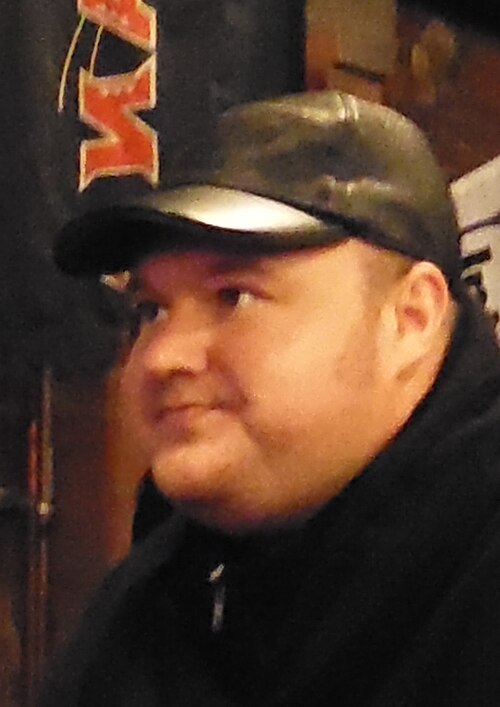
Featured image: William Stadtwald Demchick, CC BY 3.0, via Wikimedia Commons.