Editor’s note: This article was first published in July 2013. Its reference to Murphy’s “latest book”, Hiring for Attitude (2011), and its remark that the method “has already reached Spain” reflect that year.
The Mark Murphy method has already reached Spain, so it is only a matter of time before the techniques of this “attitude-hunting” coach are taken up by recruiters at Spain’s trendy companies. Murphy is the author of several books, all on the same theme: helping recruiters use the interview to spot the best attitudes. His latest book, Hiring for Attitude, reveals some of the mind games recruiters should use to get their hiring decisions right.
Although I’m not personally in favour of these methods, I’m aware that this is probably what you will come across in your next job interviews. So here are some of those mind games:
1. Create an awkward silence
For Murphy, simply going to a job interview puts a person under stress, so he wants to combine that stress with a little extra discomfort, which is usually produced by an awkward silence, since the candidate then has to find a way to get the interview back on track. According to Murphy, when people face an awkward silence they start talking non-stop, and the situation is worth it if it brings out the facts the recruiter was looking for.
2. Specific questions about your boss at the start of the interview
Murphy advises creating this situation. Imagine that as soon as you walk into the room, the interviewer asks you: “What was your boss’s name? How do you spell that, so I can write it down? How did you get on with him?”
This makes the candidate realise that the recruiter is going to call the boss no matter what. So if you had a problem with your boss, knowing that the call is coming, in a high percentage of cases the candidate can’t hold back and opens up about the problems they had. Murphy also advises hinting that the interviewer has already spoken to the candidate’s former boss before the interview. So even if you were clear that you shouldn’t badmouth a former boss in a job interview, with this twist you may end up tearing your ex-boss to shreds.
3. Vague questions
If a recruiter asks you to describe a time when you faced a difficult situation but doesn’t ask you to explain how you solved it, your answer will show whether you are someone who brings problems or someone who brings solutions. That is why this question is used to reveal the candidate’s real attitude.
4. Analysing the use of pronouns
Using “I” has never been well regarded: “When I was at the company, I did… I analysed…”. While you should avoid saying “I”, saying “we” tends to go down well: “When I was at the company, I carried out an analysis so that we could reach… we were the first company to…”.
Using the pronoun “we” shows company spirit, teamwork and loyalty to the organisation. The pronoun “I” only reflects self-centredness. Of course, to bring this out Murphy advises a bit of trickery, with questions like “And what did you do to…?”, which force you to answer “Well, I…”.
5. The use of adverbs
Murphy says that high performers don’t tend to embellish their sentences with unnecessary adverbs; their answers are direct. He says that when people embellish their sentences, it is because the sentence on its own wouldn’t say enough about them.
An example: if your partner never gives you more explanation than necessary, and one day, when you ask “Where have you been?”, they tell you where they went, who they saw, what that person told them, what they bought and the funny story about the shop assistant, they’ve probably been cheating on you :-). But relax, it isn’t an exact science.
6. The words “always” and “never”
Murphy believes that people who regularly use the words “always” and “never” tend to be low performers or not very honest. “They never did things properly in that department” (surely they got it right now and then) and “They always asked for my help” (surely they managed on their own sometimes). For Murphy, these words also reflect a great deal of insecurity about one’s own abilities.
Further reading
- Job interviews: a protocol for the battlefield
- HR directors share the main reasons they reject candidates
- How to stand out in a group job interview
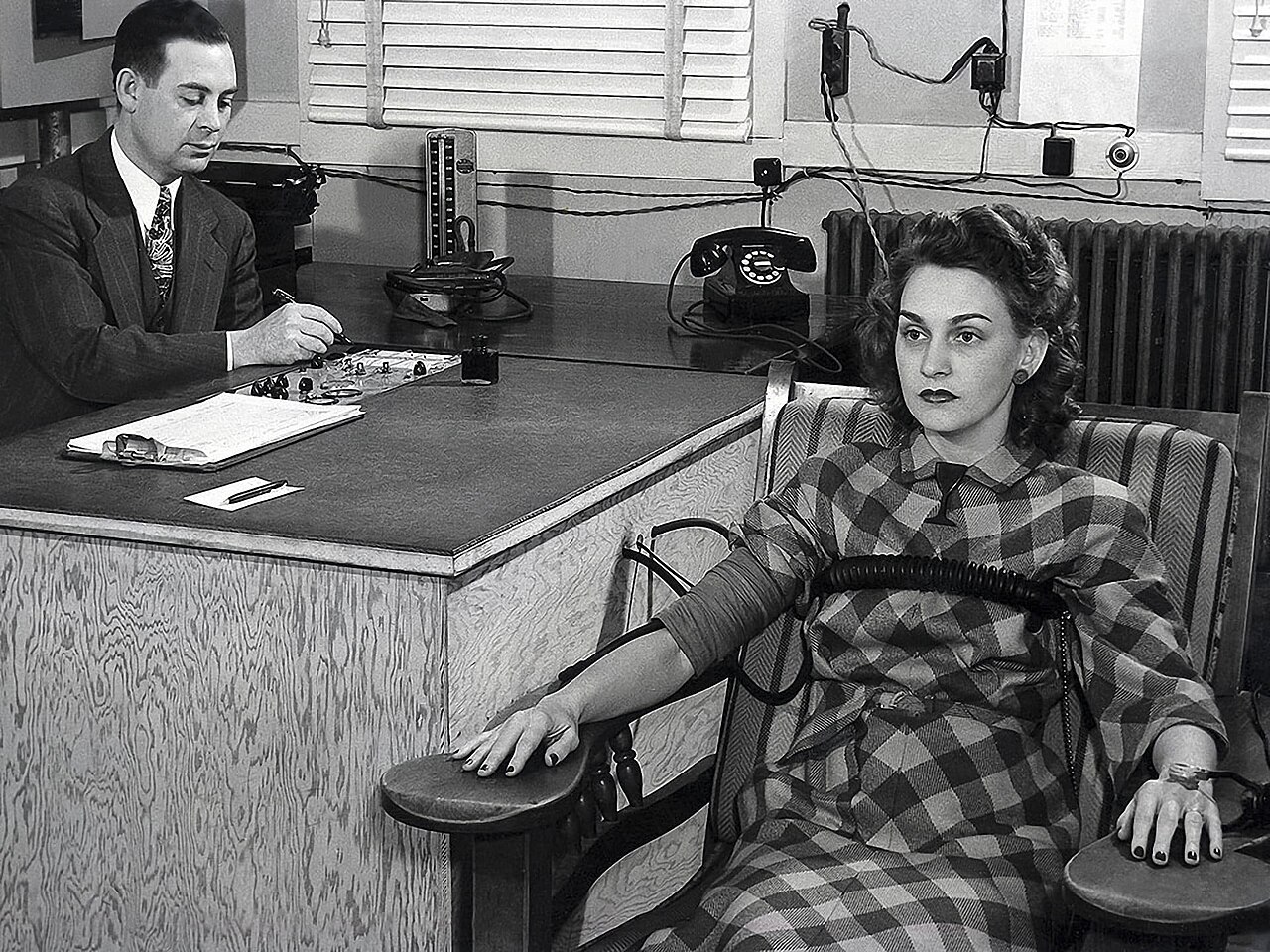
Featured image: Ed Westcott, Public domain, via Wikimedia Commons.