I have probably spent more time on the hiring side of the table than on the candidate’s side, and although on this blog I have always made a point of publishing advice for both interviewers and candidates, I usually remind people that a job interview should happen as naturally as possible, not as an analysis or an interrogation. Otherwise, awkward and even surreal situations can arise, like the ones I have lived through myself.
My first job interview
It never really became a job interview. I had just turned 18 and, not knowing what I wanted to do in the short term, I decided to look for a job. A friend told me to take my CV to El Corte Inglés (the Spanish department store chain), so that’s what I did.
I got my CV ready and went to the store. I asked the girl at reception how and where I could leave my CV to work there. She kindly pointed me to the office I should go to. When I went in, there was nobody in the office.
A door opened and in came a very serious man in a very sharp suit, who said to me: “Yes, what did you want?” I simply replied: “I was told to leave my CV here, in this office.” To my amazement, he asked me with a very sour face: “What do you mean, you were told to leave your CV here?” After spending 5 seconds wondering which part either of us might not have understood, I finally answered with the obvious: “Well, I asked the girl at reception where I could leave my CV and she told me to leave it here.”
Inexplicably, this man, very grudgingly and rudely, explained the procedure for handing in a CV. Apparently it had to be delivered between 10 and 11 in the morning (there was a one-hour window), and I had arrived 9 minutes outside that time. But I didn’t take kindly to the way this suited brute ended his explanation: “…so leave, and come back another day within the hours. Good morning.”
Back then I had a “don’t push me, don’t push your luck” kind of temper, and I didn’t think it was right to stay quiet and not answer, so as I tore up my CV I said to him: “You must be very good at something I don’t know about, because they certainly didn’t hire you for your charm.”
That day I promised myself that if El Corte Inglés were the last company left open in Spain and my finances depended on them, I would rather rob them than work for them.
The view I have of this company today has only got worse in every respect. Because of the twists and turns of life in the business world, we have more than once received visits from this company, which would send “negotiators” whose airs of grandeur exceeded their competitive ability, and I personally made sure the negotiations went nowhere. Not because of what happened to me, but because of the way they sink a business the moment they get involved.
My second job interview
After my failed attempt to get a job at El Corte Inglés, two weeks later I started working as a sales rep for a publishing company. It was the best university I ever had in sales and in managing sales teams, and a place where you were promoted on merit. The company went bankrupt 3 years later. After that I spent 3 months without looking for work, and that was when I started learning about investing in the stock market, and even made quite a lot of money investing. It was a good time. I went to a job interview for a plain sales rep position, because they had a product that was very easy to sell.
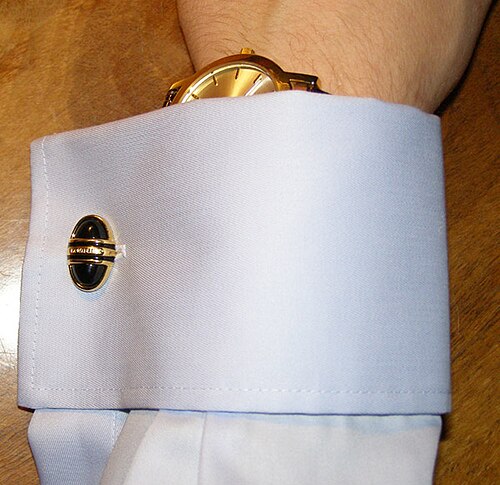
In that interview I think I made a serious mistake, which was to dress too elegantly: a shiny suit, cufflinks and an elegant overcoat. Of course, my mistake was nothing compared with the number of mistakes made by the woman who was going to interview me.
As we all know, you should shake hands firmly and confidently. That woman gave me her hand in such a way that I didn’t know whether to shake it or kiss it. It’s rude to sit down without being asked, but I had to, because she sat down first and it didn’t look as if she would invite me to sit at any point in the near future.
Lots of closed questions, with room only for one-word answers:
Interviewer: You say you’ve managed people?
Me: Yes.
Interviewer: How many people did you manage?
Me: 5 in the second year and 23 in the last year.
The interviewer’s voice grew shakier and shakier. She kept staring at my cufflinks and my hands and rarely looked me in the eye, while every now and then she went back over my CV. When she reached the line “National Best Team Leader award”, she asked me: “What vacancy did you come to interview for?”
The question struck me, and I felt I had to ask with a smile (in case it might cheer her up a bit): “What other vacancies do you have?” For some reason she didn’t take that question well. I could tell from her gestures. The final question, though, nearly killed me: after looking me up and down again, she asked: “But are you really looking for a job?” I had to stop myself from answering with the irony that sometimes defines me and saying something like: “Not at all, I was bored walking down the street and thought I’d drop into a job interview to kill some time.”
After an uncomfortable interview (probably more uncomfortable for her than for me), the usual words came: “As we’re still interviewing people, we’ll call the successful candidates at the end of next week.”
I knew I had already been ruled out, not least because that woman had found out absolutely nothing about me. She didn’t ask a single question that would be useful when hiring someone, and she was tremendously nervous throughout the whole interview.
My third job interview
My third job interview was a very different matter. In fact, it promised to be the kind of interview I like, because you are not the one looking for the job; the company has come looking for you. Even so, there is always some jerk ready to screw up something that should have been easier.
While I was having lunch in a restaurant, the owner of a rival company came over with flattering words. He told me to drop by his company and ask for him, because he wanted to negotiate with me to come and work for them. He also said the words I like so much: “Come over, I’m sure you’ll be interested in the terms.”
So I went to the company and asked for the owner, but it seemed he was out. The company was in the middle of a recruitment process, in other words, there were job interviews going on, so the interviewer came out to meet me personally and asked whether I was there for the job interview. I said yes, but that I had come to see Mr X.
This person seemed offended and told me that Mr X didn’t handle recruitment and that he was the one who should interview me. I didn’t want to insist or put my foot in it by telling him that I had arranged to meet the owner personally, in case the owner… who knows. So I agreed to be interviewed by him.
After dozens of mechanical questions came the question: “Why should we hire you?” I didn’t hesitate to answer: “I think there’s been a mistake, and the question should be: why should I come and work for you?”
At that moment the interviewer looked at me as if I had killed one of his relatives and asked me the wonderful question: “But do you really want to work here?” I replied: “I don’t know, you’ll have to tell me the terms so I can see whether it’s worth my while to move.”
So he invited me to come back when I was clearer about it, before giving me any more information, and I was genuinely annoyed that he had made me waste my morning.
These were my 3 most surreal interviews, and they taught me not to make the mistakes these people made, letting slip a professional in the sector who would probably have achieved very positive results for the company.
In the case of El Corte Inglés I also learned a lesson: if you let a jerk onto your company’s staff, people may come to see yours as a company of jerks.
Further reading
- How to stand out in a group job interview
- Job interview: protocol for the battlefield
- How to spot a bad employee before you hire them
Featured image: Kili, CC BY 3.0, via Wikimedia Commons.