Editor’s note: This article was first published in September 2013; it was written during the Federal Reserve’s quantitative easing programme and after Spain’s 2012 bank bailout, and its forecasts, a new recession when the Fed eases off and Spanish wages falling below China’s, should be read in that context.
We’ll hear many voices saying that the poor are being robbed to give to the rich, and that this is the biggest global economic swindle in history.
Meanwhile, some economists keep quiet like the system’s hired hands, others endorse the measures taken as accomplices of the system, while the economists who disapprove of these economic measures are branded reds, populists or anti-system. One thing is clear: today the economy is doing much better. You can see that in the state of the markets. So the question now would be… to what extent is it true that the poor are being robbed to give to the rich?
There are two forces that can drive an economy, and they tend to be at odds with each other. These forces would be socialism and capitalism, and in theory each of them has its advantages and… criticisms (so as not to call them drawbacks).
I’ve always said that capitalism shouldn’t be bad, because it basically consists of giving power and wealth to private companies so that they in turn create jobs. Of course, the moment a capitalist system causes extreme poverty or deaths, it’s no longer capitalism but homicide (also known as murder). Socialism would basically be a distribution of wealth. The problem is that, from what we’re seeing, right now we’re neither in a capitalist system by definition nor, obviously, in socialism, because what we’re living through isn’t a distribution of wealth but a transfer of wealth, which is not the same thing as distribution.
Even more serious is that this transfer of wealth is happening like a funnel, where for some reason the middle class and the poor keep getting poorer while the upper class keeps getting richer. In other words, through some kind of financial magic, the poor are transferring money to the rich, and unfortunately the situation is going to get much worse.
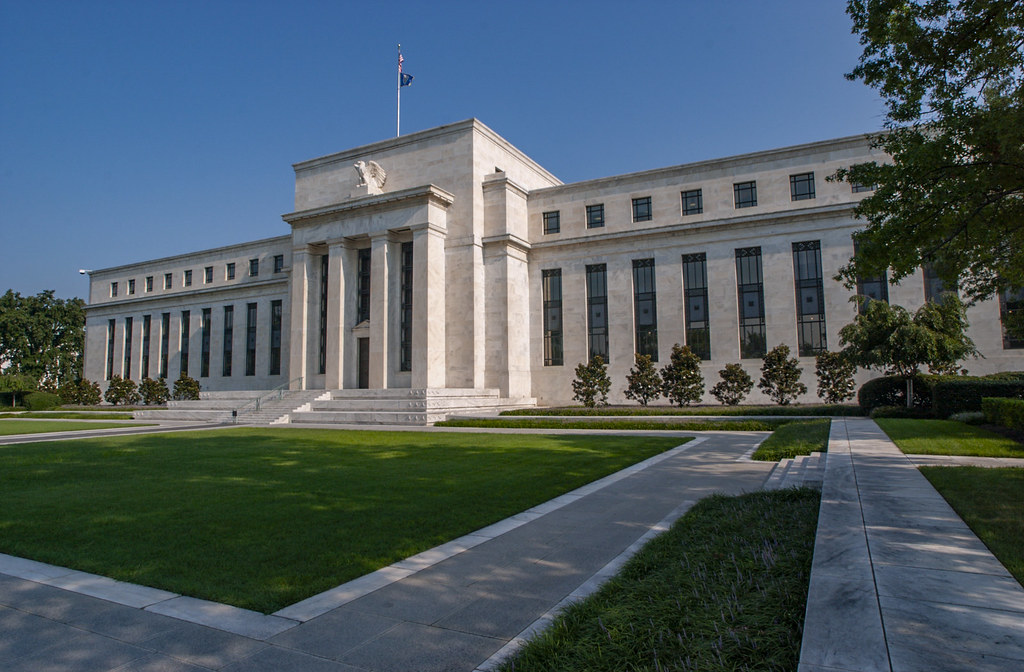
The Fed (United States) robs the poor and enriches the rich. How is it done?
I’d like you to remember those conversations that sometimes come up among financially illiterate people when the subject of poverty comes up, where the most ignorant of all says something like: “Well, just get the money-printing machine running and we’ll be out of the crisis.” That’s when an economics expert comes out with his favourite line: “You clearly don’t have a clue about economics. That can’t be done because money would lose its value, because money is pegged to… blah, blah, blah…” And the thing is, the economist is right. It shouldn’t be done, but it’s what the Fed is doing.
The whole optimistic boom on Wall Street and in US corporate earnings hangs on the money-printing machine. This practice goes by many names, but basically it consists of creating money out of nothing, in large amounts, something that in normal circumstances could cause hyperinflation and sink the dollar. It’s a short-term patch that all of us will end up paying for sooner rather than later, and whose consequences could be disastrous even for our children if the real problem isn’t tackled at the same time.
The problem (and this is where the transfer of wealth from the poor to the rich happens) is that this money isn’t reaching the middle class and the poor. Instead, it’s funding companies’ needs in the hope that they’ll start hiring again and bring unemployment down, which hasn’t produced all the results that were expected.
Of course, it’s clearly been wonderful for companies, especially listed ones, because in stock market terms companies are already past the recession, and as a result the people who own shares in those companies have grown richer. That’s why the rich have got richer: it’s the rich people’s assets that have gone up in value, while the middle class and the poor are being taxed to the hilt, making them poorer and poorer.
What will the real bombshell be?
Any economist knows this situation is unsustainable and that there will be serious consequences, especially if the Fed finally takes its foot off the accelerator of the money-printing machine and the rich sell their shares or bonds, take their profits and also open short positions against the markets again, returning to a recession in which the rich would once again get richer while the poor wouldn’t even be able to breathe.
Of course, in the United States, even though the gap between rich and poor keeps widening, the situation isn’t as serious as in many other countries.
What’s happening in Spain?
In the land of the tambourine (Spain, as the old cliché has it), the situation is much worse. While in the United States it’s been done through a financial trick that takes some analysing, in Spain they haven’t even bothered to disguise the robbery, the hold-up of the population.
I remember how some people summed up the bank bailout very well, comparing it to the Titanic: in Spain, instead of rescuing the ship’s passengers, our government rescued the iceberg.
Spain has thumbed its nose at the rules of capitalism, under which, if a private company, whether a consumer business or a financial one, doesn’t do well, it must never be rescued with public money, because that’s socialism, not capitalism. If a company doesn’t do well, it’s wound up or bought by a larger company.
While many economists (the kind who got their degree by doing some favour of an unknown nature) said the solution was to bail out the banks, the truth is that a few economists held the view that liquidating them would have been cheaper for Spaniards. Of course, then thousands of investors (supposedly rich ones) would have lost a lot of money. And that mustn’t happen, so they came up with a way for the population to fix the banking mess, at the cost of making the population even poorer.
You don’t need to be a mathematical or economic genius to see that in Spain the poor are being robbed every day through brazen taxes and extortionate price rises on essential goods and services.
Since we can’t devalue our currency to become more competitive, our clever leaders now talk about bringing about an internal devaluation, which we could define in economic terms, but which basically consists of cutting Spaniards’ wages even further, with the idea of becoming more competitive in foreign markets.
That’s why I’m still surprised by those Spaniards who keep worrying about working conditions in China and India.
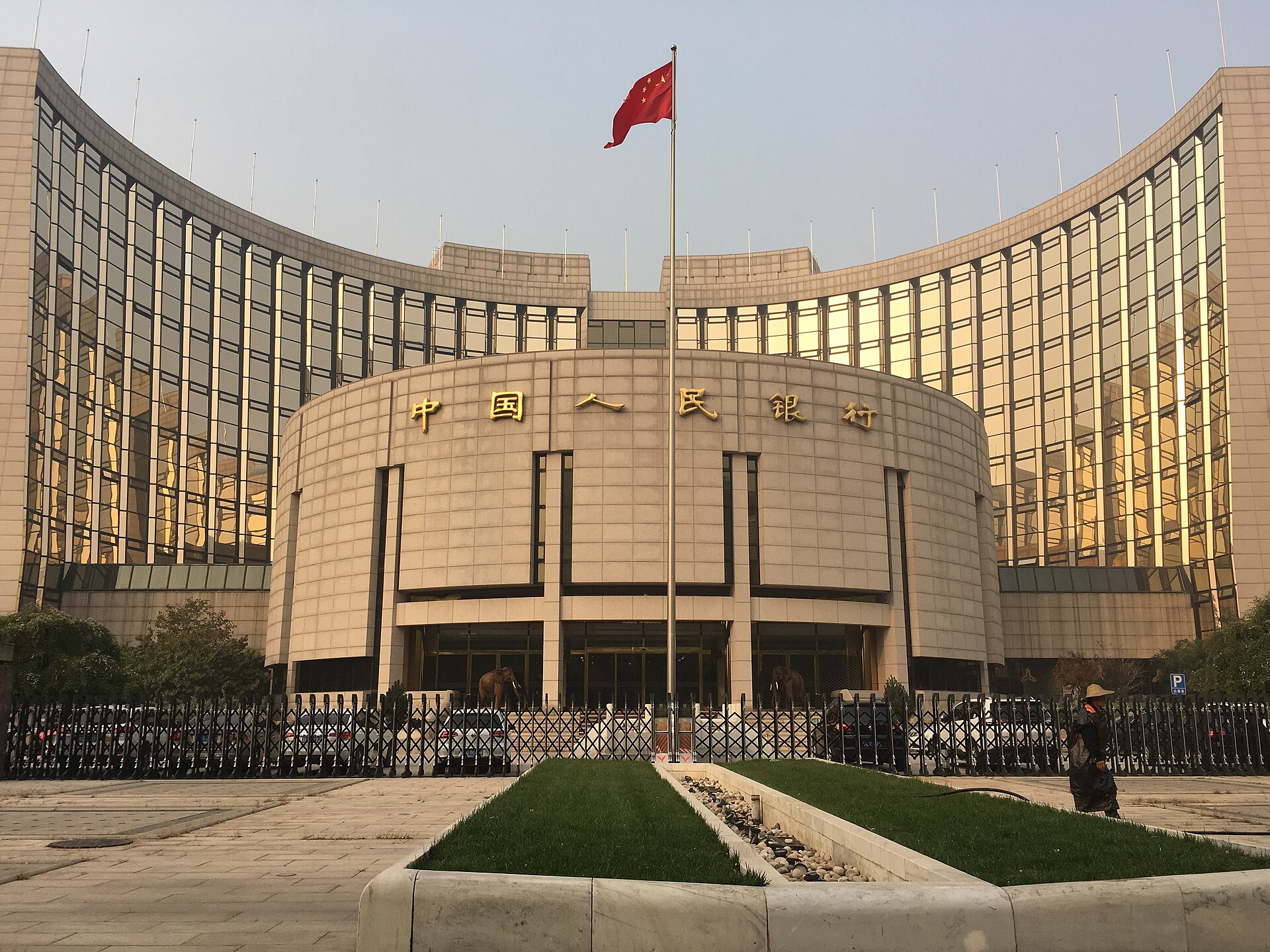
“My friend, stop looking at the Chinese and the Indians, because in a few years it’ll be the Chinese and the Indians who feel sorry for Spaniards’ working conditions, while you pray to find a vacancy in one of those Chinese factories where Apple makes its products.” (Please note the irony.)
And it’s basically for these reasons that big companies and large fortunes are out of the crisis, while for everyone else the worst isn’t over, nor anywhere near over. Have the poor been robbed to give to the rich? Draw your own conclusions.
PS: That’s why we always insist on the importance of financial literacy: even if you’re not a millionaire, if you know how to manage your money properly, you can minimise the impact of a crisis and even come out of it better off.
Further reading
- The richest 1% control 39% of global wealth
- The 400 richest Americans hold more wealth than the GDP of entire countries
Featured image: Federalreserve, Public domain, via Flickr.