Editor’s note: This article was first published in May 2012, as a forecast that has since expired: neither Spain nor Greece left the euro. It reflects 2012 context, with Spain as the fourth-largest eurozone economy, talk of cutting unemployment benefits and pensions, and Spain on the verge of a bailout.
Another bucket of cold water arrives with the opinion of Matthew Lynn, chief executive of Strategy Economics, who gave his view in MarketWatch (WSJ). He thinks that while we are all focused on, and worried about, the uncertainty over Greece leaving the euro, it is much more likely that Spain will get there first and return to its own currency (the peseta, in this case). His view, which adds to that of Jonathan Tepper, can be summed up in a few points:
Spain cannot be rescued. Lynn reminds us that Spain is the fourth-largest economy in the eurozone, which makes it too big a country to be bailed out. If it could be rescued, it would have been rescued already, since it is now technically on the verge of needing a bailout.
Spaniards are about to explode. So far Spain has seen peaceful demonstrations. A movement like 15-M (the anti-austerity protests that began in 2011) has made a lot of noise, but it has always been very peaceful, unlike in other parts of the world such as Greece. How long before Spaniards behave like the Greeks out on the streets? All it would take is a little more austerity, and Spaniards will erupt. There is already talk of cutting unemployment benefits and pensions to reduce the deficit. Which will run out first, the deficit or Spaniards’ patience? Lynn believes that unless other kinds of decisions are taken, we won’t have to wait long to find out.
Spain’s economy is strong enough not to depend on the euro. In Lynn’s view, Spain is economically strong and has companies with potential all over the world, above all a potential market in Latin America. So Spain should not be afraid of leaving the euro but of staying in it, since he believes that not being able to use our own currency is holding back the economic recovery. Spain can get ahead thanks to exports and tourism.
Finally, Matthew Lynn points to something he considers no less important. He notes that the debate is already open and that, unlike Greece, a country that needs Europe to get back on its feet, Spain has no such dependence. Quite the opposite: our country has potential, whereas Greece’s potential looks rather bleak in the current crisis.
That is why Lynn thinks Greece will ultimately stay in the euro, as it doesn’t have many other options, whereas sooner or later Spain will decide to go back to the peseta in order to recover its economic potential. In any case, he seems clear that if one of the two countries has to leave, Spain will do so before Greece. Whether he is right or not, I don’t think it will be long before we find out.
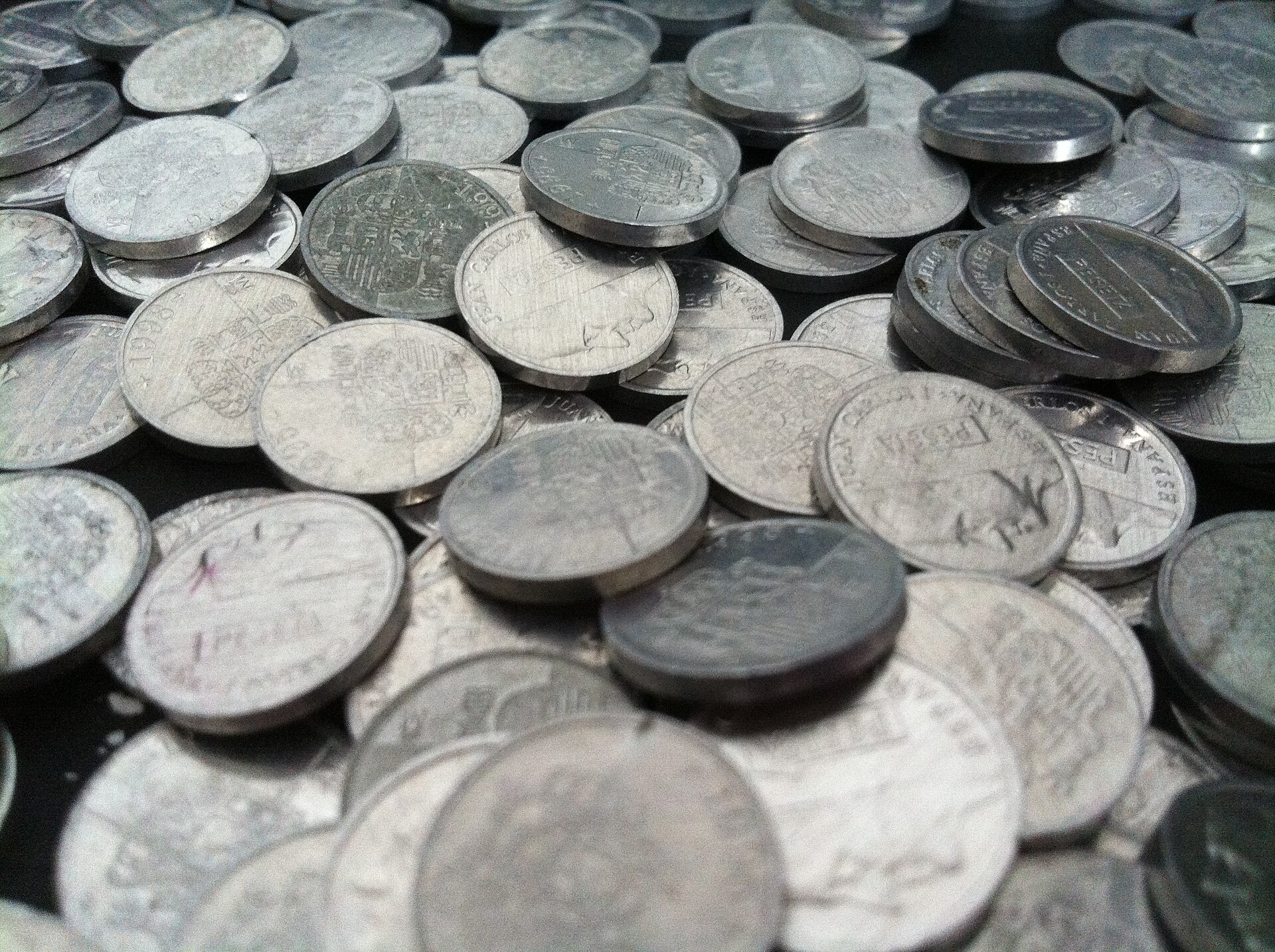
Featured image: Kippelboy, CC BY-SA 3.0, via Wikimedia Commons.